Share this article and save a life!
Asking patients about their smoking history is an important part of cancer screening because smoking is a major risk factor for many types of cancer. Studies have shown that smoking is responsible for approximately 30% of all cancer deaths in the United States, and it is the leading cause of preventable cancer deaths worldwide.
When a patient is screened for cancer, healthcare professionals want to identify any potential risk factors that may increase the patient’s chances of developing the disease. Smoking is a well-established risk factor for a variety of cancers, including lung, throat, mouth, esophagus, bladder, kidney, pancreas, and cervix cancers.
By asking patients about their smoking history, healthcare professionals can determine if the patient is at an increased risk for these types of cancers and may need additional testing or more frequent cancer screenings. They can also provide information about the benefits of quitting smoking and offer resources to help patients quit, which can significantly reduce their risk of developing cancer and other smoking-related health problems.
Overall, asking patients about their smoking history is a crucial part of cancer screening that can help healthcare professionals identify and prevent the development of cancer.
Lung cancer screening questions checklist
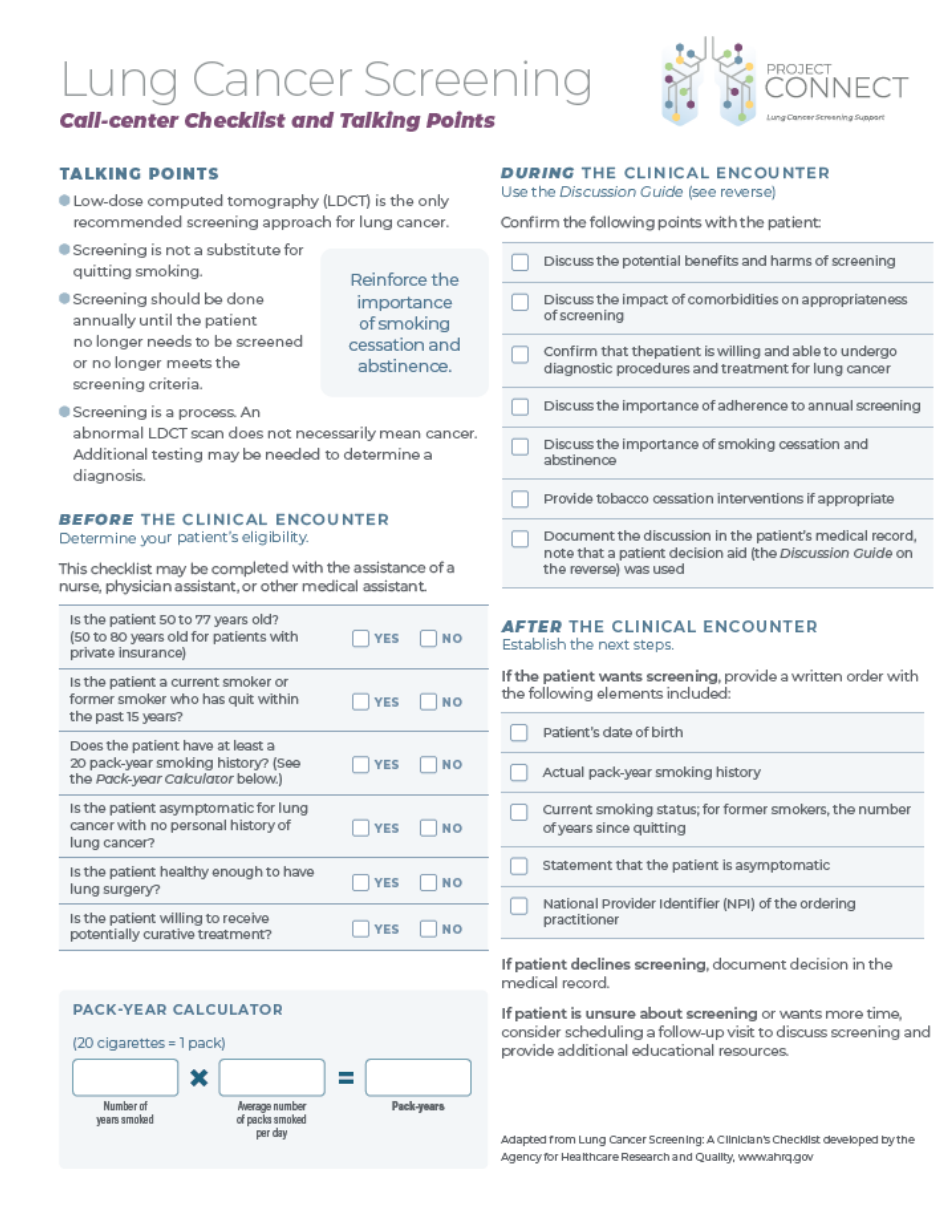
Full source: Download Project Connect PDF.
Share this article and save a life!
Author:

CEO/Co-Founder @ Oatmeal Health | AI Lung Cancer Screening | Almost Became a Doctor | Engineer | Follow to Share What I’ve Learned Along the Way
I help patients get the care they need earlier, preventing late-stage cancer.
That’s been the throughline across three companies and almost 20 years in healthcare. At ReferralMD, we fixed broken referral networks so patients didn’t fall through the cracks. At Oatmeal Health, it’s lung cancer: building the diagnostic and screening infrastructure so the 85% of cases caught too late get caught early instead.
Today as CEO of Oatmeal Health, I lead a team embedding AI into radiology workflows to turn routine lung CT scans into reimbursable cancer risk assessments. We partner with FQHCs to reach underserved communities, and with health systems and payers to make early detection economically sustainable. Think HeartFlow or Cleerly, but for lungs.
Between companies, I advised at Techstars and Plug and Play, mentoring founders building in digital health. That experience shaped how I think about what separates companies that ship from companies that stall: distribution, reimbursement, and clinical trust, not just technology.
I’m a CancerX alumnus, a 3x healthcare founder, and someone who believes the biggest problems in cancer aren’t scientific. They’re operational.
We’re hiring mission-driven builders at Oatmeal Health. If you want to work on something that matters, reach out.
When I’m not working, I’m traveling, mentoring, and keeping up with one very energetic husky. 🐾
Substack – The Oatmeal Bite:
Millions of patients get less care because of who they are, where they live, or how they look. I’m fighting to change that. CEO @OatmealHealth, a startup built for the underserved. The Oatmeal Bite: intel for clinicians, investors, and advocates.
Jonathan Govette
CEO of Oatmeal Health
Substack:
https://oatmealhealthjonathangovette.substack.com/