
FQHC Financial Sustainability Crisis
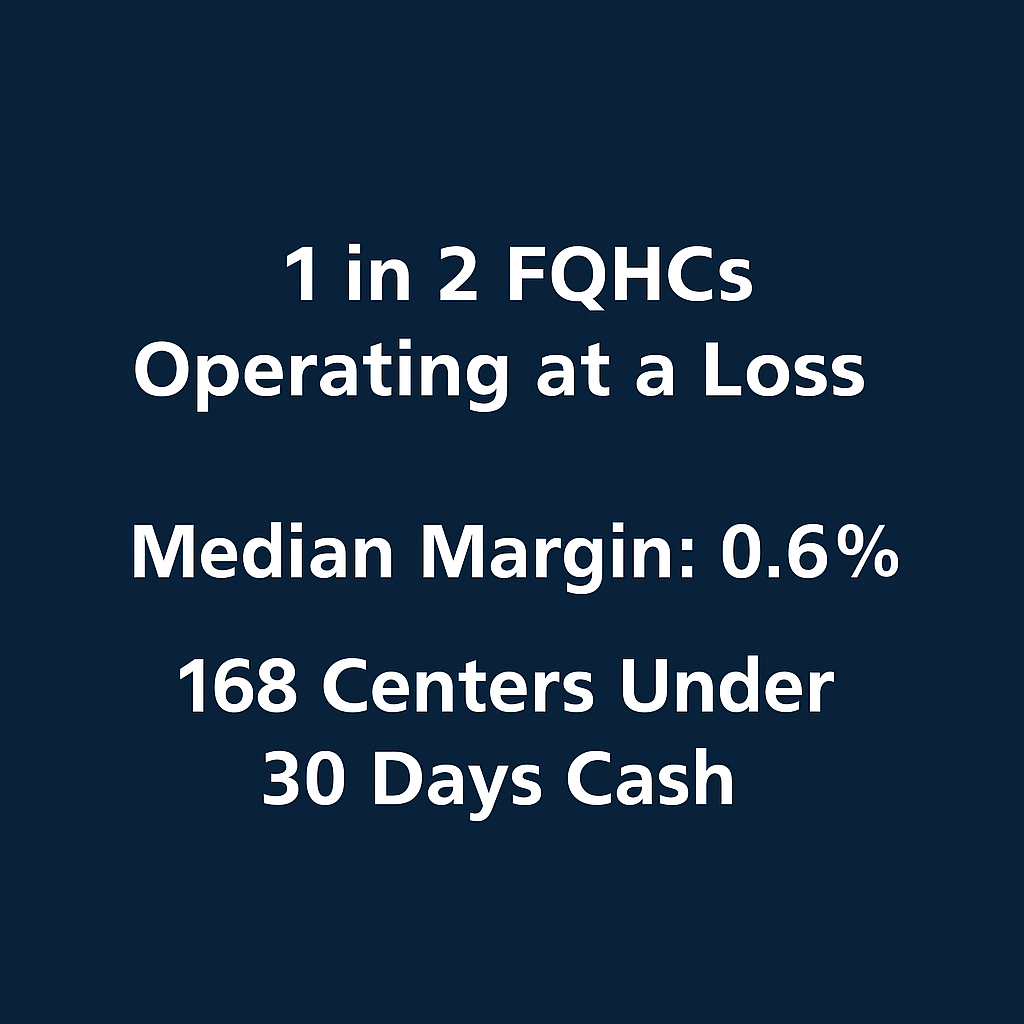
Everyone calls FQHCs resilient. The numbers say something else. 📊 Synergy Billing just released The FQHC Benchmark Report, a national analysis combining HRSA Uniform Data System data with verified IRS Form 990 filings from 1,139 health centers. The research universe covers 1,356 HRSA-funded centers serving 32.7 million patients. Three numbers stood out to me immediately. 🔹 0.6%: The median operating margin among eligible health centers. 🔹 45.9%: The share that reported an operating loss. That is 523 of 1,139 centers. 🔹 168: The number of centers operating at a loss with fewer than 30 reported days of cash on hand. Nearly half of these organizations are in the red. Right now. Not as a future projection. And yet the public ...
CMS Removes 189K Duplicate ACA Enrollees
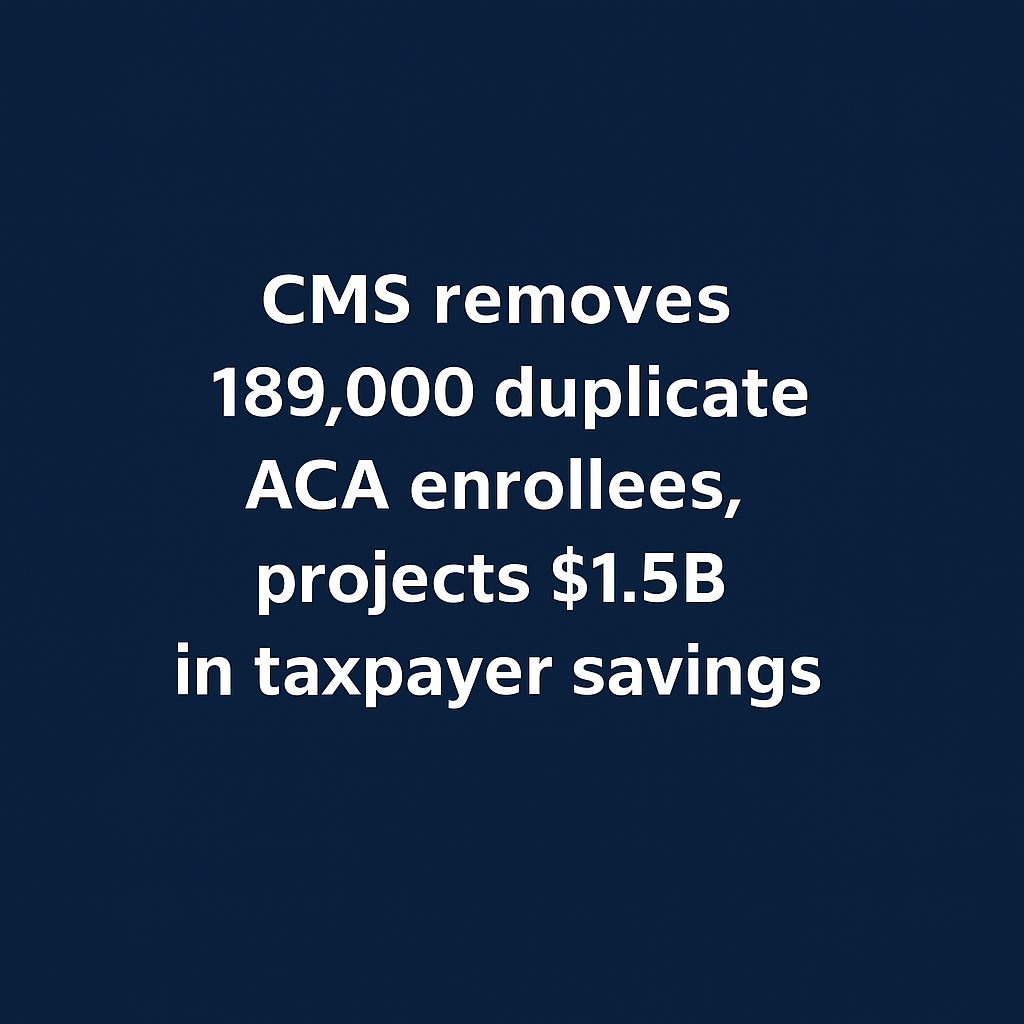
CMS just removed 189,000 people from ACA coverage. Here is what that means. This is not a small audit finding. It is a signal that the rules of federal healthcare enrollment enforcement are being rewritten in real time. According to a CMS press release published October 14, the agency identified 189,000 people in 2026 who had subsidized Obamacare coverage through the Federal Marketplace while also enrolled in Medicare, Medicaid, or CHIP, or who were listed as deceased. CMS ended their subsidies. The projected savings: approximately $1.5 billion over the next year. That number gets bigger when you zoom out. CMS Administrator Dr. Mehmet Oz stated the administration has already saved nearly $6 billion since restoring duplicate enrollment enforcement in 2025. ...
Pope Leo XIV: Lung Screening’s Missed Millions
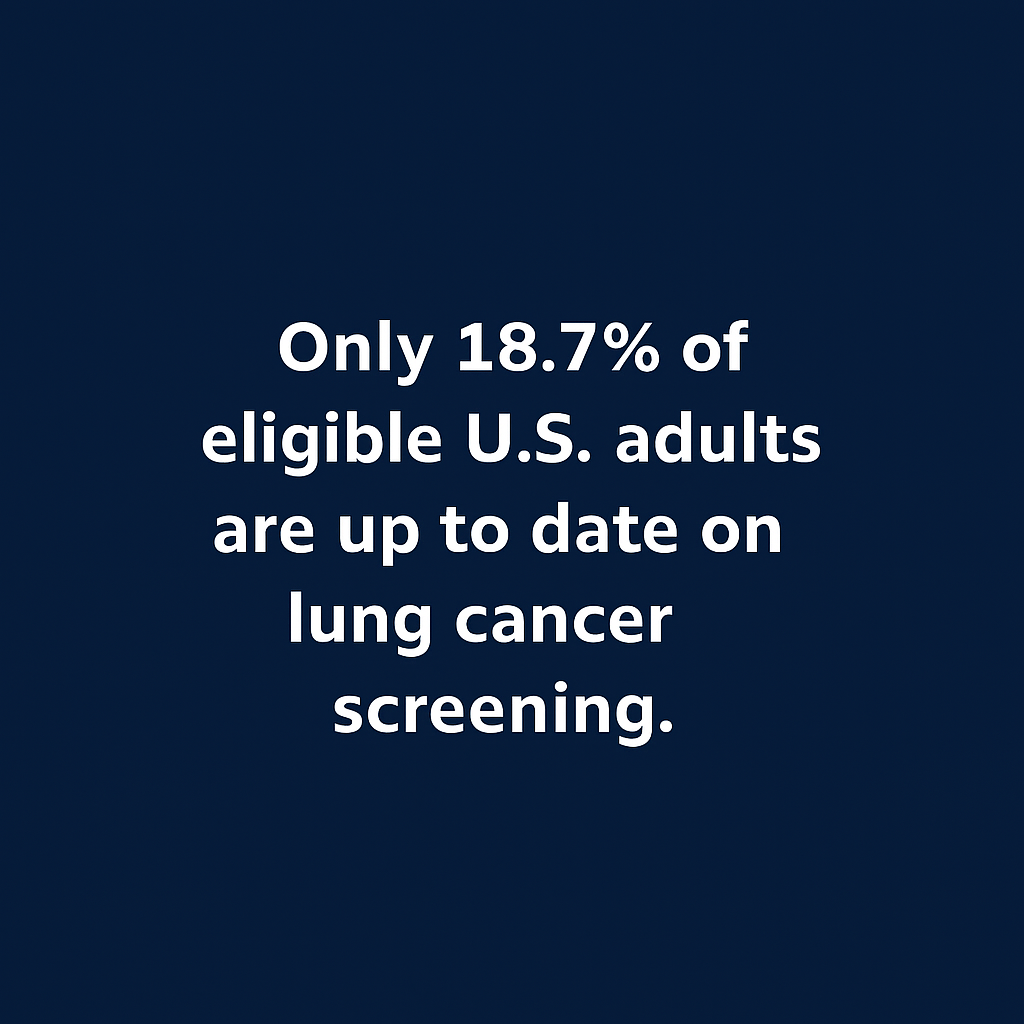
A surgeon in Rome removes the lower lobe of a pope's right lung. 🫁 The Vatican calls the surgery successful, no complications, cancer caught at a very early stage. That news traveled around the world in hours. And buried inside it was the statistic that keeps me up at night. According to Managed Healthcare Executive, only 18.7% of U.S. adults eligible for lung cancer screening are up to date. That is fewer than 1 in 5. Out of 12.76 million people who qualify, the vast majority never get the scan designed to find this disease early. Pope Leo XIV is 71 and reportedly not a smoker. His nodule was found incidentally during routine medical checks. He had access, follow-through, and ...
Medicare Advantage Mass Exit 2027
193 counties will have zero Medicare Advantage prescription drug plan options in 2027. 😳 That number was 123 counties in 2026, and it will keep climbing. According to reporting by Quartz and KFF data published this week, the average Medicare beneficiary can now choose from 35 plans for 2027, down from 39 in 2026. The typical beneficiary looking specifically for a prescription drug plan will see just 28 options, down from 32. Those numbers sound like minor rounding. They are not. Look at the county-level carnage: 🔹 UnitedHealth Group is exiting 228 counties and entering just 9 new ones 🔹 Health Care Service Corporation is leaving 498 counties and entering none 🔹 Centene is exiting 359 counties and entering 15 ...
Healthleap $38M: AI Flags Hidden Diagnoses
Revenue up 10x. Sequoia and First Round both said yes. 🔬 When I read that Healthleap's revenue grew more than tenfold over the past year, I sat with that number for a minute. That is not typical Series A traction. That is a signal that hospitals are not just piloting this platform. They are paying for it at scale. Healthleap just closed $38 million in combined seed and Series A funding, according to TechCrunch. The $8 million seed was co-led by Sequoia Capital and First Round Capital. The $30 million Series A was led by Hummingbird Ventures. The company is not disclosing its valuation. Founded in South Africa in 2022 by siblings Jemima and Josiah Meyer, Healthleap started as a ...
2026 Radiation Oncology Coding Overhaul
Most radiation oncology programs missed the most expensive coding change of the decade. They are still reading the 2026 Medicare fee schedule. The real threat lives in commercial payer contracts that have not caught up. According to ECG Management Consultants, the AMA and CMS implemented the most significant overhaul of radiation oncology treatment delivery and image guidance coding in over a decade, effective January 1, 2026. These changes affect how EBRT, IMRT, and IGRT services are reported and reimbursed across all plans. That last part matters. Across all plans. Not just Medicare. 🔍 Here is what actually changed: 🔹 EBRT delivery codes were restructured into three complexity tiers: 77402, 77407, and 77412. The old structure was based on technical criteria ...
California Prop. 44 FQHC Spending Mandate
Could a ballot measure close hundreds of California clinics right when they need every dollar to survive? 🤔 California's Proposition 44 is on the November ballot. On its face, the pitch sounds reasonable: require nonprofit FQHCs to spend at least 90% of their total annual revenue on program services, or face a financial penalty equal to the shortfall. But the numbers behind it are brutal. According to Patch, an analysis commissioned by the California Primary Care Association estimates that clinics could face about $1.7 billion in first-year penalties if their spending patterns do not change. A separate Berkeley Research Group analysis finds that 88% of clinics across the state would operate at a loss under the measure. This is hitting ...
AIRS Medical AI Body Comp MRI Cleared
AI just turned a routine MRI into a full body composition report. 🧠 No new scanner. No technologist manually measuring tissue slices. Five minutes. AIRS Medical received FDA 510(k) clearance this week for SwiftSight Body Composition, an AI-powered platform that extracts quantitative body composition data directly from standard MR images. SimonMed Imaging is already lined up as the first customer to deploy it. What it actually measures: 🔹 Visceral and subcutaneous fat 🔹 Abdominal and thigh muscle quantity, quality, and bilateral balance 🔹 Liver fat via proton density fat fraction (PDFF) with automated region-of-interest mapping 🔹 Percentile rankings benchmarked against age- and sex-matched reference populations All of it delivered in a structured Body Composition Report, produced through automated AI segmentation, ...
No Surprises Act Arbitration Overhaul
A law meant to protect patients is now funding a $1.3B arbitration machine. 🔍 Picture a 2021 hospital discharge. A patient gets their explanation of benefits, no surprise bill in sight. The No Surprises Act worked exactly as promised. Six years later, that same law is powering something its authors never intended. This week, Rep. Frank Pallone (D-N.J.), one of the original authors of the No Surprises Act, introduced the Lower Premiums, Faster Payments Act. His own verdict on the arbitration system he helped create: "clearly not working." The numbers behind that conclusion are worth sitting with. According to Holland & Knight's analysis of the announcement: 🔹 15 arbitration firms received $1.3 billion in fees in 2025 alone, compared with ...