🎗️ Revolutionizing Early Detection

AI for the Full Lung Cancer Journey, From Patient Identification to Diagnosis

We help Community Health Centers (FQHCs) close screening gaps (e.g., breast, lung, colorectal, and annual wellness visits) and provide radiologists with reimbursable AI lung cancer screening diagnostics (CADx) embedded into your current PACS/CADe.

AI Analysis
Size 8.2mm
Risk 73%

The U.S. Is Failing at Cancer Screening and Early Detection

Cancer affects every family: around one-third of us will face a diagnosis, and one-half will lose their life to the disease.
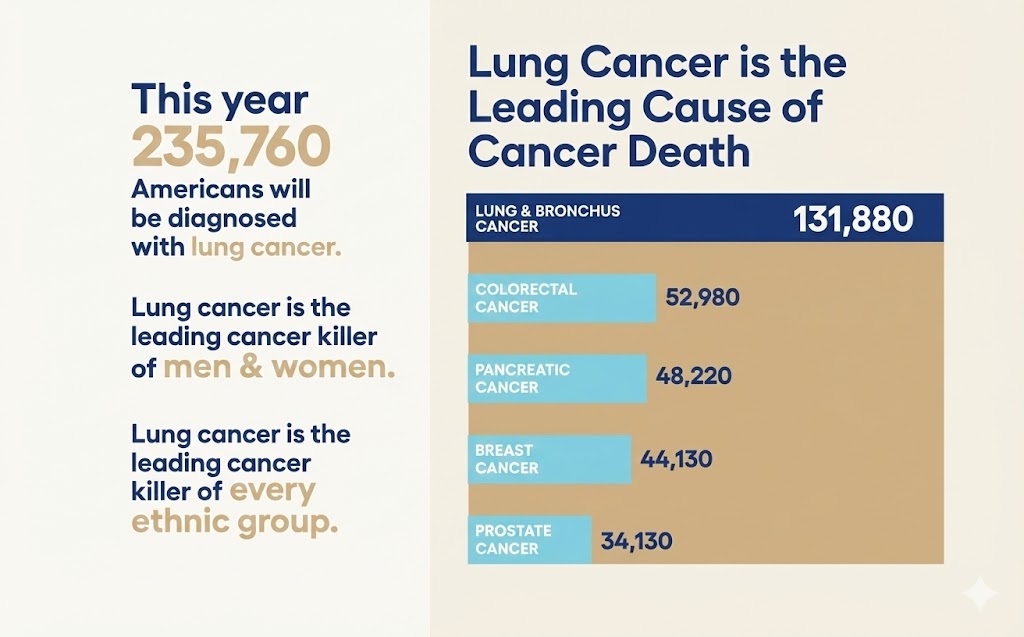
 

Low Screening Rates

Fewer than 18% of eligible patients receive lung cancer screening, and at FQHCs, that number drops below 6%

Late-Stage Diagnoses Dominate

85% of lung cancer cases are detected too late for effective intervention.

Limited Uptake of Billable AI

Imaging centers lack CPT-reimbursable AI tools to improve diagnostic yield.

Access Gaps Are Widening

FQHCs and rural health systems are under-resourced, understaffed, and overwhelmed.

Late Diagnoses Are Financially Devastating

Failing to detect lung cancer early results in over $150 billion in annual healthcare spending

AI-Powered Lung Cancer Screening Workflow

From patiaent identification, education, to diagnosis


AI
AI Screening
Step 1
Identify
AI identifies eligible patients for primary care teams
AI
AI Navigation
Step 2
Navigate
AI-powered care navigation guides patients to complete their LDCT scan
RISK AI
AI CADx
Step 3
Evaluate
AI analyzes scan to assess nodule malignancy risk for radiologists
Actionable insights delivered to care team

Current State of LungRADS v2022

LUNG–RADS V2022 is currently the standard of care for predicting lung malignancy on low-dose CT, but it has a 9% false-negative and 18%+ false-positive rate.

  • Missed cancer diagnosis

  • Unnecessary invasive biopsies

  • Increased patient anxiety, complications, and cost

Stage
Category
Description
0
Incomplete
Prior CT not available or lung(s) not fully imaged
Management:
Additional imaging or comparison with prior studies needed
1
Negative
No nodules or definitely benign nodules
Management:
Continue annual screening with LDCT in 12 months
2
Benign
Benign appearance or behavior nodules
Management:
Continue annual screening with LDCT in 12 months
3
Probably Benign
Probably benign nodules, short-term follow-up suggested
Management:
Follow-up LDCT in 6 months
4A
Suspicious
Suspicious nodules with low malignancy probability
Management:
Follow-up LDCT in 3 months; PET/CT may be considered
4B
Suspicious
Suspicious nodules with high malignancy probability
Management:
Chest CT with or without contrast, PET/CT, and/or tissue sampling
4X
Suspicious
Additional features or imaging findings increase suspicion
Management:
As appropriate to the specific finding(s)
Click any stage to learn more

There is an urgent need for improved, data-driven, interpretable approaches to early lung cancer risk stratification

Join the Oatmeal Health Community

Oatmeal Health collaborates with nonprofits, governments, pharma/medtech, and philanthropist organizations to tackle complex healthcare challenges nationwide, providing trusted cancer screening services.

Oatmeal Health Expands Cancer Screening Services to Arizona and Announces a Partnership with El Rio Health

Read More…

Coreline Soft and Oatmeal Health Accelerate North American Business Diversification Through Entry into the US Insurance Reimbursement Market

Read More…

Stigler Health & Wellness Center in Oklahoma Partners with Oatmeal Health

Read More…