

Medicare AI Reimbursement Breakthrough
Medicare might finally pay for AI that catches cancer earlier. Right now, AI tools that can spot tumors months before human eyes can see them sit unused in hospitals across America. Why? Medicare won't pay for them. But that could change. The bipartisan Health Tech Investment Act, now in Congress, proposes something radical: a 5-year reimbursement pathway for FDA-approved AI diagnostics. 🎯 Think about what this means: • AI that detects pancreatic cancer 3 years early (Mayo Clinic's tool) • Algorithms diagnosing lung nodules in underserved communities with tools like Oatmeal Health that reduces false positives and false negitives • Breast cancer screening that reduces false positives by 40% • Heart conditions found on routine ECGs, years before symptoms These ...
700K Medicaid Records Exposed for Years
700,000 Medicaid patients just learned their data was public for 3 years. Illinois Department of Human Services accidentally published internal planning maps with patient data to a public website. The breach ran from 2021 to 2025 before anyone noticed. Think about that: 3+ years of exposed addresses, case numbers, medical assistance plans, and demographic data. All because someone clicked the wrong privacy setting. 📊 The damage: • 672,616 Medicaid/Medicare recipients exposed • 32,401 rehabilitation services patients compromised • Data included addresses, case details, referral sources • Breach discovered September 2025, announced January 2026 (102 days later) Here's what keeps me up at night: This wasn't sophisticated hackers. This wasn't ransomware. This was human error with privacy settings on a mapping ...
FQHC Digital Transformation Success Story
This FQHC just proved digital transformation isn't just for big hospitals. Sun River Health serves 245,000 patients across New York. They're federally qualified, which means they see everyone, regardless of ability to pay. Last week they revealed something remarkable: A complete cloud communications overhaul that's actually working. No more dropped calls during critical patient conversations. No more staff juggling multiple systems to find information. No more patients waiting on hold because the system crashed. Here's what they achieved: • Unified access across all 40+ locations • Real-time analytics for instant decision-making • HIPAA-compliant security without sacrificing usability • Significant cost reduction (yes, they're saving money) But here's what really matters: While Congress debates whether to maintain the $4.6 billion in ...
AI Breast Cancer Detection Breakthrough
Your mammogram just got 21.6% better at finding cancer. But here's the twist: patients don't trust AI alone. A groundbreaking study of 579,000 women just revealed that AI-supported breast cancer screening boosts detection rates by over one-fifth compared to standard 3D mammography. That's thousands of cancers caught earlier, when treatment works best. Even more impressive? AI can now identify women at high risk for interval cancers (those sneaky ones that appear between regular screenings). Focus supplemental imaging on the top 20% of AI risk scores, and you catch 42.4% of these hidden cancers. 📊 The numbers are staggering: • Market growth from $320M to $441M by 2031 • Mayo Clinic radiologists reading mammograms 35% faster with AI • One AI ...
CMS AI Reimbursement Breakthrough 2026
Medicare just cracked the code on AI reimbursement 🎯 For years, hospitals bought AI diagnostic tools that sat unused. Why? No billing codes. No payment pathway. No ROI. That changed this month. CMS rolled out Category I CPT codes for AI diagnostics in 2026: • AI-assisted cardiac imaging interpretation • Retinal imaging analysis for diabetic screening • Algorithmic ECG analysis for atrial fibrillation • Burn wound multispectral imaging classification But here's what makes this revolutionary: These aren't experimental Category III codes that might disappear. These are permanent Category I codes with national Medicare rates through the Hospital OPPS system. The timing couldn't be better. Mayo Clinic's AI can now detect pancreatic cancer 475 days before clinical diagnosis. Cleveland Clinic uses ...
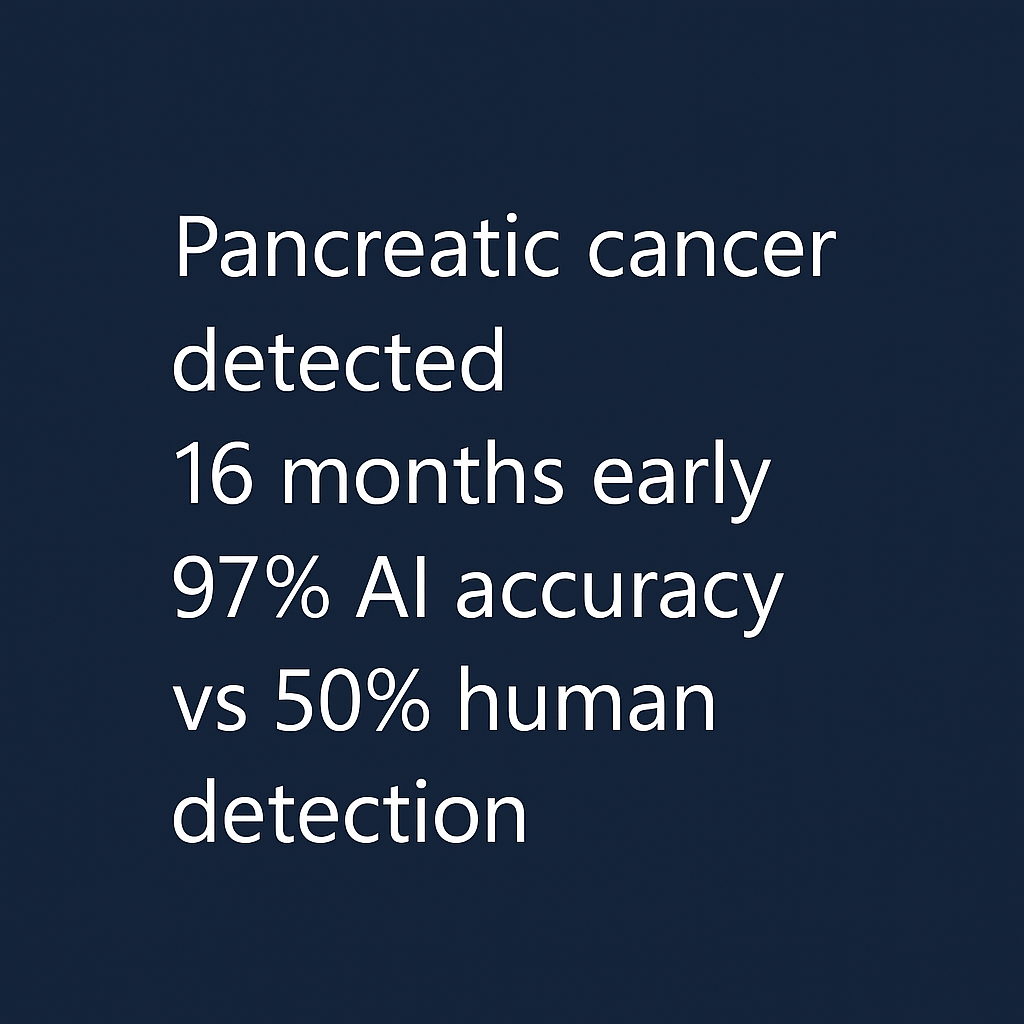
AI Detects Pancreatic Cancer 16 Months Early
97% vs 50%. That's AI beating radiologists at finding pancreatic cancer. Mayo Clinic just announced something extraordinary. Their new AI model detects pancreatic cancer 438-475 days BEFORE clinical diagnosis. That's over a year of lead time for a cancer that typically kills within months. The numbers are staggering: • AI detection rate: 97% • Radiologist detection rate: 50% • Overall accuracy: 92% • Analysis time: Under 1 second (vs 20-30 minutes manually) Why this matters 🎯 Pancreatic cancer has a 13% five-year survival rate. Half of all cases are diagnosed at stage four, when it's already too late. But catch it early? The survival rate jumps to 44%. That's a 3X improvement in survival odds. The AI was trained on ...
CMS Radiology Cuts Despite Medicare Boost
A 3.26% Medicare boost that's actually a 2% cut for radiologists? Yes, you read that right. CMS just dropped the 2026 Medicare Physician Fee Schedule, and the math doesn't add up the way you'd think. Here's what's happening: 📊 The conversion factor jumped to $33.40 (up 3.26%) 📊 Diagnostic radiology: DOWN 2% 📊 Nuclear medicine: DOWN 1% 📊 Interventional radiology: UP 2% Wait, what? The culprit: CMS halved facility-based indirect practice expense RVUs compared to non-facility settings. Translation: Your overhead costs just got devalued, and your total RVUs took a hit. But here's where it gets interesting. Interventional radiologists scored big: • 46 new lower extremity revascularization codes • Higher reimbursement for drug-coated balloons and stents • New angiography supply ...
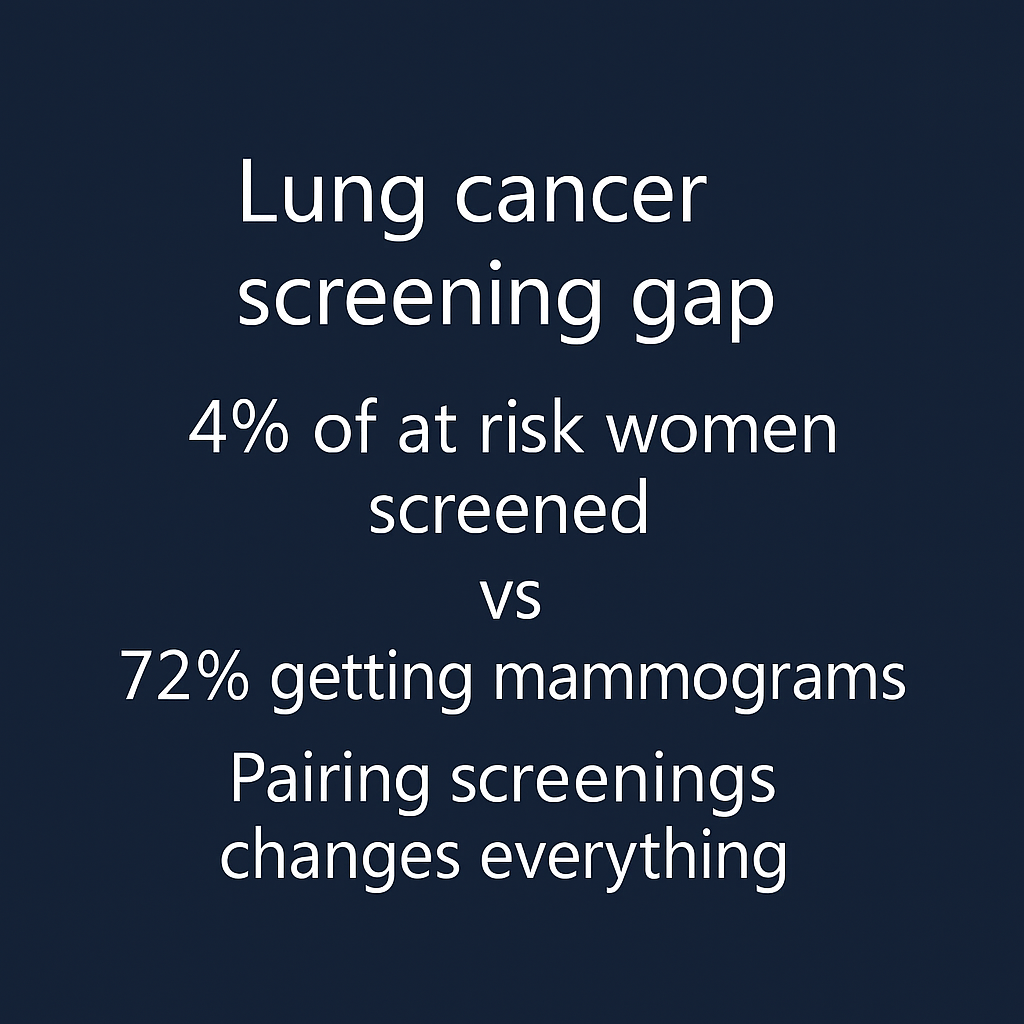
Lung Cancer Screening Breakthrough
4% vs 72%. This gap is killing women. Only 4% of at-risk women get their recommended lung cancer screening. Yet 72% get their mammograms. Why the massive difference? Same population. Same risk factors. Same healthcare system. A groundbreaking study from December 2025 just cracked the code: Pair lung screening education with mammography appointments. Simple. Brilliant. Life-saving. The results? 🎯 • 84% of women who received dual screening education said they'd do it again • 93% found the educational visit helpful • Enrollment in lung cancer screening programs surged Here's what makes this approach genius: Women are already coming in for mammograms. They're already thinking about cancer prevention. They're already in the imaging center. Why not maximize that moment? The stakes ...