Share this article and save a life!
18% of eligible patients get lung cancer screening. At FQHCs, it’s under 6%.
Let that sink in.
Lung cancer kills more Americans than colorectal, pancreatic, and breast cancer combined. This year, 235,760 people will be diagnosed. 85% will be found at a late stage, when 5-year survival drops below 9%. Catch it at Stage I: 77-92%.
The math on early detection is not complicated. The execution is.
Even when patients do get scanned, the tools being used to read those scans have real limits nobody talks about.
🔬 The Lung-RADS problem
Lung-RADS is the current standard for classifying lung nodules: a rule-based system built on size thresholds alone. No shape, texture, density, or patient history. A radiologist reading 8,000 scans a year will miscategorize roughly 2,400 with no AI safety net. Two radiologists reading the same scan disagree on risk category nearly one-third of the time.
The result: up to 40% false positives driving unnecessary biopsies, 10% false negatives where real cancers get missed, and a system that treats a nodule scoring 61 the same as one scoring 98 on actual malignancy probability.
That is where Oatmeal Health is building.
🫁 What a malignancy score changes
Our Pre-FDA AI, layers a continuous 0-100 malignancy probability onto each nodule inside existing CADe and PACS systems. No new login. No workflow change.
For radiologists: read time drops from 5-10 minutes to 1.5-3 minutes (CADe+CADx), fewer unnecessary biopsies, and net-new revenue via CPT 0721T.
For pulmonologists: you can down-triage nodules that look worrisome under Lung-RADS but carry low actual malignancy probability, safely extending follow-up from 3 months to 6 months where appropriate. Less radiation, fewer visits, less patient anxiety.
Most importantly: the highest-risk patients get prioritized first. When appointment slots are limited, the nodule scoring 94 should not be waiting behind the one scoring 63. AI makes that triage systematic instead of anecdotal.
More screening gets patients in the door. Smarter reads ensure the right ones get seen first.
Are your nodule workflows built for volume, or built for accuracy?
♻️ Repost if every eligible patient deserves a fighting chance at early detection.
👉 Follow me for daily healthcare updates and get the deeper analysis in my newsletter: https://oatmealhealthhttps://oatmealhealthjonathangovette.substack.com//
Share this article and save a life!
Author:
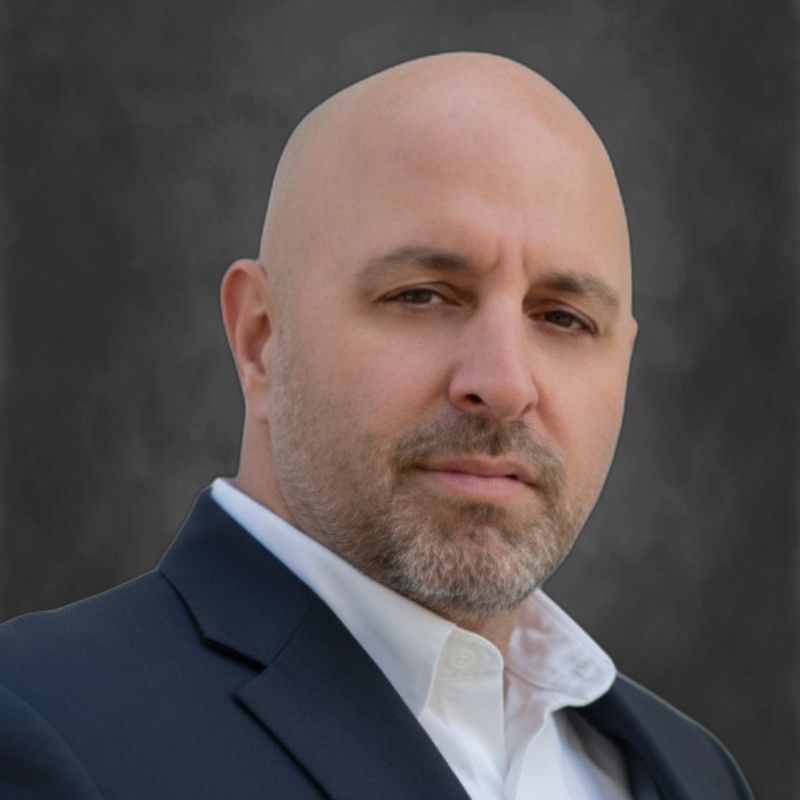
CEO/Co-Founder @ Oatmeal Health | AI Lung Cancer Screening | Almost Became a Doctor | Engineer | Follow to Share What I’ve Learned Along the Way
I help patients get the care they need earlier, preventing late-stage cancer.
That’s been the throughline across three companies and almost 20 years in healthcare. At ReferralMD, we fixed broken referral networks so patients didn’t fall through the cracks. At Oatmeal Health, it’s lung cancer: building the diagnostic and screening infrastructure so the 85% of cases caught too late get caught early instead.
Today as CEO of Oatmeal Health, I lead a team embedding AI into radiology workflows to turn routine lung CT scans into reimbursable cancer risk assessments. We partner with FQHCs to reach underserved communities, and with health systems and payers to make early detection economically sustainable. Think HeartFlow or Cleerly, but for lungs.
Between companies, I advised at Techstars and Plug and Play, mentoring founders building in digital health. That experience shaped how I think about what separates companies that ship from companies that stall: distribution, reimbursement, and clinical trust, not just technology.
I’m a CancerX alumnus, a 3x healthcare founder, and someone who believes the biggest problems in cancer aren’t scientific. They’re operational.
We’re hiring mission-driven builders at Oatmeal Health. If you want to work on something that matters, reach out.
When I’m not working, I’m traveling, mentoring, and keeping up with one very energetic husky. 🐾
Substack – The Oatmeal Bite:
Millions of patients get less care because of who they are, where they live, or how they look. I’m fighting to change that. CEO @OatmealHealth, a startup built for the underserved. The Oatmeal Bite: intel for clinicians, investors, and advocates.
Jonathan Govette
CEO of Oatmeal Health
Substack:
https://oatmealhealthjonathangovette.substack.com/