Share this article and save a life!
7 million kids could lose health coverage this year.
Not because they no longer qualify. But because the system processing their eligibility can’t keep up.
The House-passed reconciliation bill, moving through Congress in late May 2026, includes provisions that would accelerate CHIP and Medicaid redetermination cycles for children, reduce the federal matching rate floor for CHIP in certain states, and eliminate continuous eligibility protections that were put in place post-pandemic.
Here is why this matters more than most headlines are letting on.
CHIP covers roughly 7.2 million children in the U.S., most of them from working families who earn too much for Medicaid but too little to afford private insurance. These are kids in households where a parent works a full-time hourly job, often without employer-sponsored coverage.
When redetermination timelines shorten and paperwork burdens increase, children lose coverage not because they are ineligible, but because families miss a notice, miss a deadline, or cannot navigate a process designed for people with time and resources.
This is called procedural disenrollment, and research from KFF and Georgetown’s Center for Children and Families consistently shows it is the number one driver of coverage loss among children who are legally entitled to benefits.
For FQHCs and community health centers, this is not an abstract policy fight. It is a patient volume and revenue reality.
Approximately 30% of FQHC patients are children. When CHIP coverage lapses, those visits shift to uncompensated care or disappear entirely, meaning kids skip well visits, miss vaccine schedules, and show up sicker later.
For imaging centers and pediatric subspecialty practices, the downstream effect is just as real. Referrals dry up when primary care access collapses.
🔍 The bigger question no one is asking loudly enough: If we are serious about reducing long-term healthcare costs, why are we cutting the program with the strongest evidence base for preventing expensive adult chronic disease?
CHIP has one of the highest return-on-investment profiles of any federal health program. Children with consistent coverage have better educational outcomes, lower rates of adult hospitalization, and lower lifetime Medicaid costs.
This is not a partisan talking point. It is health economics.
What is your organization doing to prepare for potential coverage disruptions among pediatric patients this year? Are you building outreach capacity now, or waiting for the drop to show up in your numbers?
♻️ Repost if every child deserves coverage that does not expire because of a missed envelope.
👉 Follow me for daily healthcare updates and get the deeper analysis in my newsletter → https://oatmealhealthhttps://oatmealhealthjonathangovette.substack.com//
Share this article and save a life!
Author:
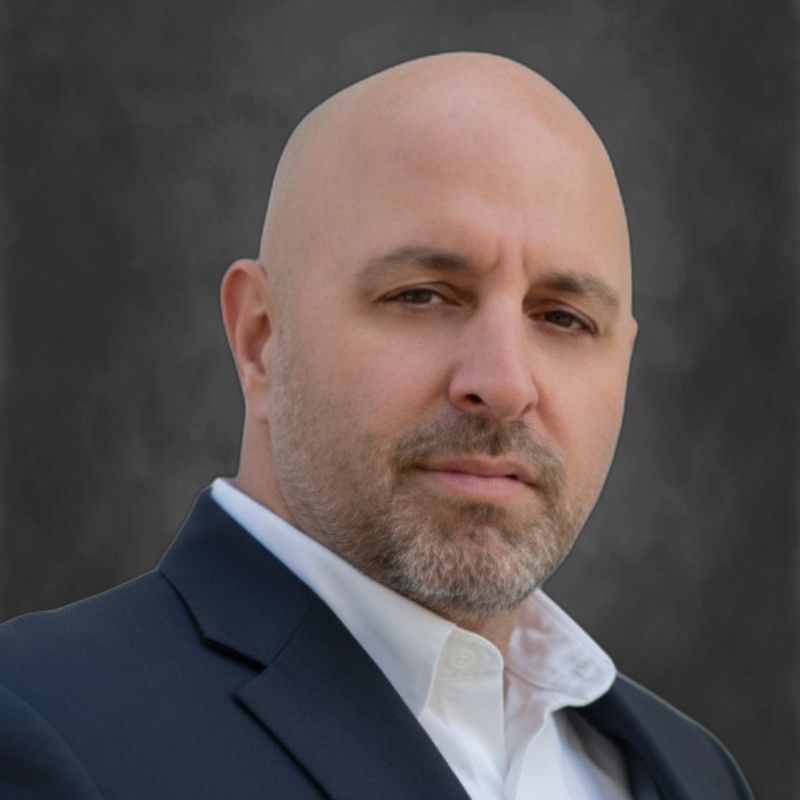
CEO/Co-Founder @ Oatmeal Health | AI Lung Cancer Screening | Almost Became a Doctor | Engineer | Follow to Share What I’ve Learned Along the Way
I help patients get the care they need earlier, preventing late-stage cancer.
That’s been the throughline across three companies and almost 20 years in healthcare. At ReferralMD, we fixed broken referral networks so patients didn’t fall through the cracks. At Oatmeal Health, it’s lung cancer: building the diagnostic and screening infrastructure so the 85% of cases caught too late get caught early instead.
Today as CEO of Oatmeal Health, I lead a team embedding AI into radiology workflows to turn routine lung CT scans into reimbursable cancer risk assessments. We partner with FQHCs to reach underserved communities, and with health systems and payers to make early detection economically sustainable. Think HeartFlow or Cleerly, but for lungs.
Between companies, I advised at Techstars and Plug and Play, mentoring founders building in digital health. That experience shaped how I think about what separates companies that ship from companies that stall: distribution, reimbursement, and clinical trust, not just technology.
I’m a CancerX alumnus, a 3x healthcare founder, and someone who believes the biggest problems in cancer aren’t scientific. They’re operational.
We’re hiring mission-driven builders at Oatmeal Health. If you want to work on something that matters, reach out.
When I’m not working, I’m traveling, mentoring, and keeping up with one very energetic husky. 🐾
Substack – The Oatmeal Bite:
Millions of patients get less care because of who they are, where they live, or how they look. I’m fighting to change that. CEO @OatmealHealth, a startup built for the underserved. The Oatmeal Bite: intel for clinicians, investors, and advocates.
Jonathan Govette
CEO of Oatmeal Health
Substack:
https://oatmealhealthjonathangovette.substack.com/