Share this article and save a life!
Health AI just had its biggest funding month of 2026.
And the money is not going where most people think.
Let me break down what happened in the last few weeks and why it matters for everyone in healthcare.
🚀 The deals that stood out:
Abridge, the ambient clinical documentation company, closed a $250M Series D, bringing its total funding to over $450M. They are embedded in Epic workflows at dozens of health systems and processing millions of clinical conversations per year.
Waystar, the revenue cycle AI platform, continues expanding after its 2024 IPO with new AI modules focused on prior authorization automation. Health systems report 30 to 40 percent reductions in denial rates using AI-assisted coding.
Hippocratic AI, which builds AI agents for patient communication and care navigation, raised a $141M Series B at a $1.64B valuation. They are targeting FQHCs and safety-net providers specifically, where staff-to-patient ratios are the worst.
Daybreak Health, focused on youth behavioral health, secured $40M to expand mental health access in school-based and FQHC settings.
📌 Here is what the pattern tells us:
Investors are no longer funding AI for the sake of AI. They are funding AI that sits directly inside clinical workflows, solves reimbursement problems, or addresses the staffing crisis that every provider organization is drowning in.
Ambient documentation alone is projected to save physicians 2 hours per day on average. At current physician burnout rates, that is not a nice-to-have. It is an operational survival tool.
Revenue cycle AI is getting serious attention because denials are up 67 percent since 2020 according to AHA data. Every percentage point of denial rate reduction translates to millions in recovered revenue for mid-size health systems.
And the safety-net focus is new. Companies like Hippocratic AI are explicitly building for FQHCs because the unmet need is massive and the reimbursement models are finally maturing enough to support it.
The honest question nobody is asking:
Are health systems building internal AI capacity fast enough to actually absorb and govern all of this technology, or are we funding tools that will sit unused because the change management infrastructure does not exist?
Every major health AI company needs a clinical champion, an IT integration pathway, a compliance review, and a reimbursement strategy. Most hospitals struggle to execute even two of those at once.
Funding is not adoption. Adoption is not outcomes.
The smartest leaders I talk to are not asking which AI tools to buy. They are asking how to build the internal muscle to evaluate, implement, and measure AI at scale.
That is the real competitive advantage in 2026.
♻️ Repost if your organization is still trying to figure out which AI tools are actually worth implementing.
👉 Follow me for daily healthcare updates and get the deeper analysis in my free newsletter → https://oatmealhealthjonathangovette.substack.com/
Share this article and save a life!
Author:
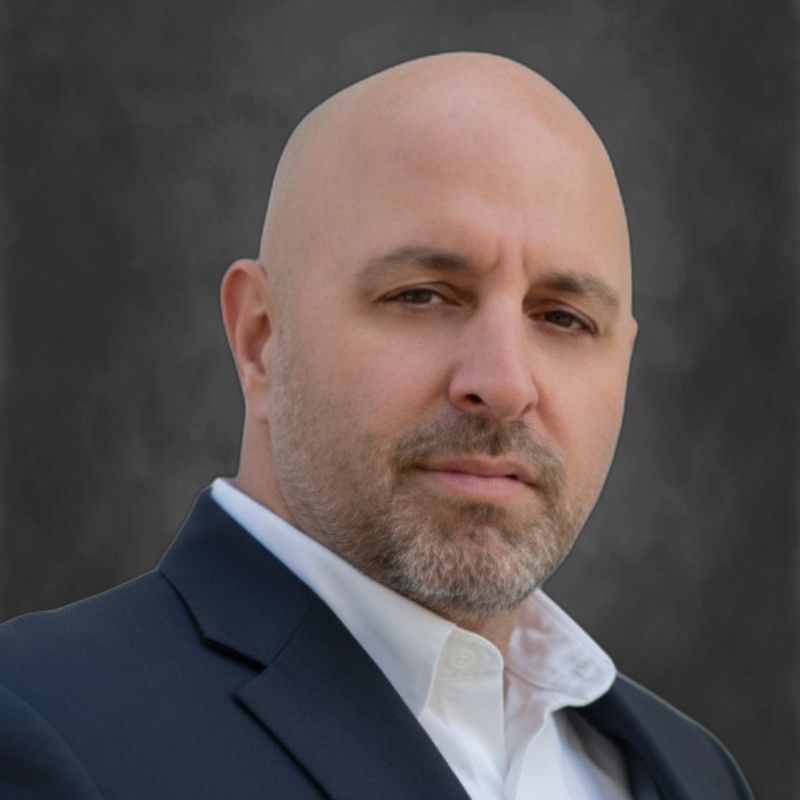
CEO/Co-Founder @ Oatmeal Health | AI Lung Cancer Screening | Almost Became a Doctor | Engineer | Follow to Share What I’ve Learned Along the Way
I help patients get the care they need earlier, preventing late-stage cancer.
That’s been the throughline across three companies and almost 20 years in healthcare. At ReferralMD, we fixed broken referral networks so patients didn’t fall through the cracks. At Oatmeal Health, it’s lung cancer: building the diagnostic and screening infrastructure so the 85% of cases caught too late get caught early instead.
Today as CEO of Oatmeal Health, I lead a team embedding AI into radiology workflows to turn routine lung CT scans into reimbursable cancer risk assessments. We partner with FQHCs to reach underserved communities, and with health systems and payers to make early detection economically sustainable. Think HeartFlow or Cleerly, but for lungs.
Between companies, I advised at Techstars and Plug and Play, mentoring founders building in digital health. That experience shaped how I think about what separates companies that ship from companies that stall: distribution, reimbursement, and clinical trust, not just technology.
I’m a CancerX alumnus, a 3x healthcare founder, and someone who believes the biggest problems in cancer aren’t scientific. They’re operational.
We’re hiring mission-driven builders at Oatmeal Health. If you want to work on something that matters, reach out.
When I’m not working, I’m traveling, mentoring, and keeping up with one very energetic husky. 🐾
Substack – The Oatmeal Bite:
Millions of patients get less care because of who they are, where they live, or how they look. I’m fighting to change that. CEO @OatmealHealth, a startup built for the underserved. The Oatmeal Bite: intel for clinicians, investors, and advocates.
Jonathan Govette
CEO of Oatmeal Health
Substack:
https://oatmealhealthjonathangovette.substack.com/