Jonathan Govette, CEO of Oatmeal Health, Explains the Future of AI-Powered Lung Cancer Diagnostics
Watch Jonathan Govette, founder and CEO of Oatmeal Health, explain how the company is using artificial intelligence, longitudinal CT imaging, and workflow-integrated diagnostics to improve lung cancer screening and help physicians identify cancer earlier.
About This Oatmeal Health Video
In this presentation, Jonathan Govette walks through Oatmeal Health's approach to one of the most persistent challenges in cancer care: catching lung cancer early enough to treat it effectively. Today, 85% of lung cancers are diagnosed at a late stage, when five-year survival falls below 9%. When the same cancer is caught at Stage I, survival rises to 70 to 90%. The difference between those outcomes is largely a question of timing and diagnostic consistency.
Govette explains why the current screening process, which relies on rules-based assessment tools like Lung-RADS, produces inconsistent readings. Studies show that radiologists disagree on the same scan's risk category nearly one-third of the time. That inconsistency leads to missed cancers, unnecessary biopsies, and delayed follow-up for patients who need it most.
Oatmeal Health's technology, called LungAI, is designed to analyze the full 3D low-dose CT scan, incorporate patient history, and compare the current scan with prior imaging to identify whether a nodule is changing over time. That temporal comparison is one of the strongest clinical indicators radiologists use when assessing cancer risk, and LungAI is built to perform it automatically.
Govette also describes how the platform is designed to integrate directly into existing radiology workflows, so physicians receive information inside the software they already use, without additional logins, extra steps, or workflow disruption. The video covers the company's partnerships with imaging platforms, its clinical validation work with academic medical centers, and the broader vision for expanding access to AI-powered lung cancer screening.
What Jonathan Govette Covers in the Video
- 0:00 Introduction to Jonathan Govette and Oatmeal Health
- 1:30 The personal story behind Oatmeal Health
- 2:15 The lung cancer screening challenge
- 3:10 How inconsistent readings affect patient outcomes
- 4:30 The Oatmeal Health team and vision
- 5:30 How LungAI works: AI-powered lung nodule assessment
- 6:30 What makes Oatmeal Health unique
- 7:00 Why now: the regulatory and market opportunity
- 7:45 Go-to-market strategy and distribution
- 8:15 Current partnerships and clinical validation
- 9:00 Business economics and capital efficiency
- 9:45 Roadmap and closing
Full Video Transcript
0:00
We founded Oatmeal Health in 2022: an AI-powered lung cancer risk assessment that helps radiologists determine whether a pulmonary nodule is malignant. Over the past few months, our business has accelerated dramatically.
It's not surprising that we've been getting more investor interest than we can keep up with, so we're going to do something pretty atypical: we're sharing our entire investor presentation with the world. More than anything, we hope this transparency builds trust with the health systems and patients we're here to serve.
Our goal is simple. Give radiologists a more accurate, data-driven assessment that helps identify cancer earlier, when treatment is most effective.
If after watching you happen to want to invest, visit oatmealhealth.com/invest.
Read Full Transcript
1:30
I'm Jonathan Govette, co-founder and CEO of Oatmeal Health. In 2022, I lost my mother to a devastating chronic disease. Before her, my grandfather and grandmother died of lung cancer. In all, I've lost more than ten people in my family to cancer, most of them caught late, when there was nothing left to do but say goodbye.
I'm building Oatmeal so other families don't go through what mine did.
2:15
Here's the category we're entering, and why it's already proven. Mammograms changed breast cancer. PSA tests changed prostate cancer. FIT tests changed colorectal cancer. Lung cancer kills as many as all three combined, yet even with lung screening being reimbursed since 2013, the readings stayed inconsistent: a third of radiologists disagree on the same scan. So Medicare created a new code, CPT 0721T, to pay for an AI second read that makes it reliable. That code is the door we walk through.
3:10
85% of lung cancers are caught at a late stage, when five-year survival is under 9%. If caught at Stage I, survival is 70 to 90%. Whether you live is mostly a question of when we find it.
When a radiologist reads a low-dose CT scan, the results are not always consistent. The standard used today is a rules-based system called Lung-RADS, which relies heavily on measurements like nodule size and appearance to estimate cancer risk.
The problem is that small differences in how a nodule is measured or interpreted can lead to very different conclusions. Some cancers are missed until it's too late. Other patients are told they may have cancer when they don't, leading to repeat scans, invasive biopsies, unnecessary procedures, and months of anxiety, only to discover they were healthy all along.
In fact, studies have shown that up to 4 in 10 diagnoses can be wrong, and when two radiologists read the same scan, they disagree about the risk category nearly one-third of the time. The challenge is not a lack of expertise. It is that subtle changes over time are incredibly difficult for humans to measure consistently, which is exactly where Oatmeal's LungAI can help.
4:30
Our vision is to make lung cancer a disease you survive.
Building the right team was the first decision. A Harvard MD-PhD professor of medicine and AI built the model. A four-time founder with a Nobel laureate PhD and NIH research background runs operations. A practicing pulmonologist leads clinical strategy and research. A Stanford-trained clinical neuroscientist and diagnostics executive runs medical affairs. Engineers from Mayo Clinic and Amazon built the infrastructure. Advisors who designed the lung programs at UCLA, the VA, and the University of Chicago validate the science. And myself, a three-time founder and CEO that scaled my last company to 650 health systems, leading partnerships.
5:30
What's LungAI? It's an AI-powered lung nodule malignancy assessment. It works by providing a second read on every lung CT scan. It analyzes the entire 3D scan, not just a nodule's size, along with patient factors like age, sex, smoking history, and other clinical information.
Most importantly, it compares the current scan with prior scans to determine whether a nodule is actually changing over time, one of the strongest indicators clinicians use to assess cancer risk. The result is a malignancy risk score delivered directly inside the radiology software physicians already use. No new workflow. No extra clicks.
One of the biggest barriers to healthcare AI adoption is workflow disruption. LungAI eliminates that challenge by integrating directly into existing PACS and CADe platforms through partners like Coreline Soft. Radiologists use the same viewer and workflow they already know, with no new software, logins, or extra clicks.
6:30
What makes us unique? Three things. Distribution: we don't sell hospital by hospital; we embed inside the detection software they already run, so one integration lights up a whole network. Focus: we're detection-agnostic and built specifically for lung screening, which is what lets every scan bill under the dedicated AI code, post FDA clearance. And temporal modeling: we're the first platform to read the prior scan automatically and flag what's actually changing, the signal radiologists trust most.
7:00
People ask, why now? Because the pieces took twelve years to line up, and they're finally all here. In 2013, low-dose CT screening became the standard of care. In 2021, eligibility expanded to 20-pack-year histories, putting 14.5 million Americans in the screening population. And in 2022, Medicare created CPT 0721T, a brand-new code to pay for exactly the AI second read we provide. Patients, payment, and distribution are all in place. The only switch left to flip is FDA 510(k) clearance, and that's next.
7:45
Our go-to-market strategy is channel distribution. We don't sell hospital by hospital. We embed inside the detection software that hospitals already use. Our partners' sales teams are our sales team. One integration switches on an entire network.
The math: 20-plus million eligible Americans, about half of scans show a nodule that needs a risk read, at $667 a scan. That's $8 billion a year in the US, $147 billion globally.
8:15
Where are we? Start with what's signed. Coreline, a publicly traded company live in 20+ US health systems, signed a six-year joint venture, plus an additional 100+ health systems globally. That's our distribution, locked. On top of that, our model is being validated at some of the top academic centers in the country: Mass General Brigham, Mount Sinai, and NYU Langone. And behind that, we are in talks with two more CADe distribution partners, over a thousand hospital footprint, including the VA network. Signed distribution, tier-one validation, and a pipeline already in motion. The revenue switches on the day we clear the FDA 510(k).
So let's step back. We've signed a six-year commercialization agreement embedding LungAI into an existing CADe platform, representing an estimated $35 to $100 million annual recurring revenue opportunity as hospitals adopt the product. Combined with our broader pipeline, that's more than $1 billion in potential revenue opportunities.
9:00
And the economics are about as clean as it gets. Every scan bills $667, and because we run inside infrastructure the hospital already owns, gross margins are over 90%. Our customer acquisition cost is zero. We've never paid to land a partner, because we make them money on scans they're already running. This isn't a business that needs to buy its growth. Once we're cleared, every scan is high-margin revenue on rails that are already built.
And we've done all of this on almost nothing. $1.27 million total since 2022. $675,000 of that was non-dilutive grants, so the dilution is tiny. We burn under $20,000 a month. For comparison, HeartFlow raised over $700 million to build the same kind of business. We've built signed distribution and a validated model for less than one percent of that.
9:45
Clinical study now. FDA submission this year. Clearance and launch in 2027, then we scale through partners we've already signed.
HeartFlow proved this exact playbook in cardiology: AI read, CPT code, hospital distribution. They IPO'd at $2.27 billion with only 250,000 scans. We already have more than that under contract.
10:10
I lost my grandfather to lung cancer, caught too late, like 85% of cases still are. That's the number we exist to change. Mammograms made breast cancer survivable. PSA tests for prostate. We're going to do the same for lung cancer. If you want to be part of it: oatmealhealth.com/invest.
And grandpa, this one's for you.
About Jonathan Govette
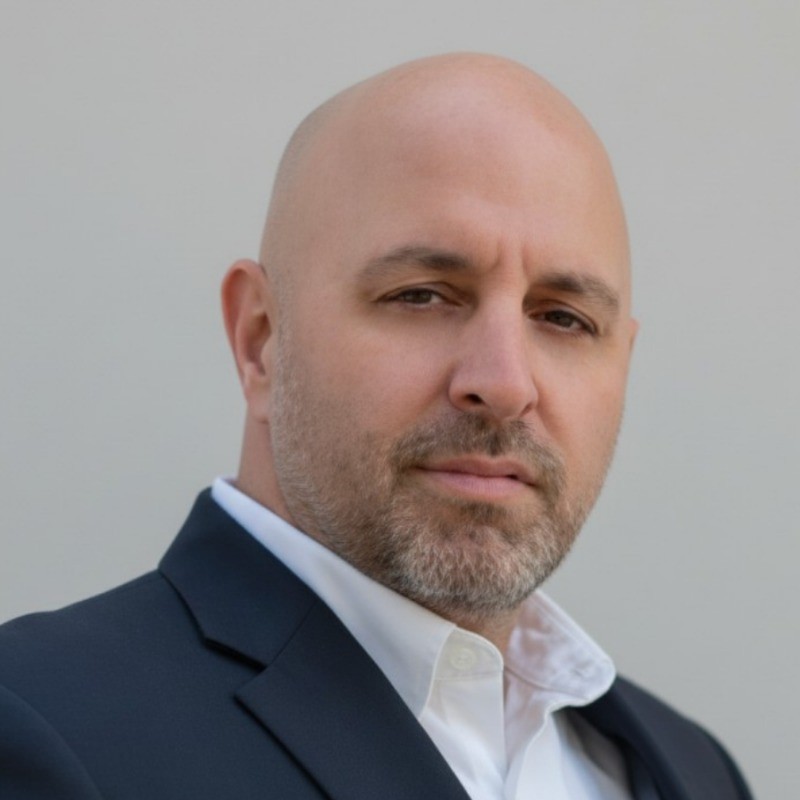
Jonathan Govette is the founder and CEO of Oatmeal Health, a healthcare technology company focused on expanding access to cancer screening and developing artificial intelligence tools for lung cancer diagnostics. As a three-time founder and healthcare technology entrepreneur, Govette brings approximately two decades of experience building products and partnerships across the health system landscape.
Before founding Oatmeal Health, Jonathan Govette built and led ReferralMD, a healthcare referral management platform that grew to serve hundreds of health systems. That experience gave him a deep understanding of how technology adoption works inside clinical environments, and why workflow integration is essential for any tool that physicians are expected to use.
At Oatmeal Health, Govette leads company strategy, partnerships, fundraising, and the development of programs intended to help healthcare organizations identify and screen eligible patients for lung cancer. His work is informed by a personal connection to the disease: he has lost more than ten family members to cancer, most of them diagnosed at a late stage. That experience drives the company's focus on making AI-powered cancer screening accessible to the communities that need it most.
About Oatmeal Health
Oatmeal Health is a healthcare technology company working to improve access to preventive cancer screening and develop AI-powered lung cancer diagnostic technology. The company's platform combines patient identification, clinical outreach, and imaging-based diagnostic tools designed to help healthcare organizations screen more patients and catch cancer earlier.
The company's lung cancer technology, LungAI, is being designed to analyze low-dose CT imaging, compare prior and current scans using temporal modeling, and provide physicians with additional diagnostic information inside existing radiology software. Rather than requiring new workflows or standalone applications, LungAI is built to integrate directly into the PACS and CADe platforms that radiologists already use daily.
Oatmeal Health works with healthcare organizations, community health centers, imaging platforms, and clinical partners to expand access to lung cancer screening. The company's clinical validation efforts include work with academic medical centers, and its commercialization strategy is focused on embedding inside established detection software rather than selling to hospitals individually.
LungAI is a medical device pending FDA 510(k) clearance. It is not yet FDA-cleared or commercially available.
Frequently Asked Questions
Follow Jonathan Govette and Oatmeal Health
Learn More About Oatmeal Health
Explore the company's mission, technology, and investor information.
Explore Oatmeal Health