Share this article and save a life!
Radiologist, do you know what happens when your AI is wrong? 🎯
Not wrong in a lab. Wrong on a real patient, in your department, on a Tuesday afternoon.
Most people in this space cannot answer that question with confidence. And as of August 25, 2026, ECRI decided that gap is no longer acceptable.
ECRI, the nonprofit patient-safety organization that has run its Problem Reporting Network since 1972, just expanded that network specifically to capture errors, malfunctions, and near misses involving AI tools in patient care, including diagnostic imaging. It is cross-vendor by design. Any provider can report on any AI tool, whether or not the vendor opted in.
Here is what the data behind that decision looks like.
ECRI surveyed 124 hospital quality, safety, risk, and compliance leaders. The results are uncomfortable:
🔹 31% encountered an AI output they believed was incorrect or misleading in the past year
🔹 9% said an AI error actually reached a patient or affected a care decision
🔹 35% said they simply were not sure whether an error had occurred
That last number is is scary. More than one in three safety leaders could not tell you if something had gone wrong.
This is not a fringe concern. In its March 2026 Top 10 Patient Safety Concerns report, ECRI ranked AI diagnostic risk as its number one concern for the year. According to ECRI, some machine learning models failed to recognize 66% of critical or deteriorating conditions in simulated cases.
🔹 FDA clearance answers one question: did the evidence before launch support the device’s claims well enough to reach the market.
🔹 ECRI’s new network answers a different question: how does the tool actually perform, week after week, on real patients across different sites, protocols, and case mixes.
Those are two completely separate questions. And until now, the second one was mostly answered by each vendor’s own internal QA program, reported on the vendor’s own terms.
At Oatmeal Health, we build AI for lung cancer screening. We think about this every single day. The standard for radiology AI cannot stop at clearance. It has to include what happens in production, what happens at 4 AM at a community hospital, and what happens when the model sees a patient population it has never encountered before.
⚠️ Postmarket surveillance for AI is not a nice-to-have. It is the accountability layer the entire field has been missing.
ECRI building an independent, cross-vendor channel for this is genuinely important. Not because it will catch every failure. But because it creates a shared, de-identified picture of where clinical AI is actually falling short, outside the vendor’s own reporting loop and outside the FDA’s premarket process.
The question I keep coming back to: are the vendors deploying AI in your imaging department today welcoming this kind of scrutiny, or hoping nobody asks?
👉 Follow Jonathan Govette, CEO of Oatmeal Health, for daily healthcare insights on LinkedIn. Deeper dives in The Oatmeal Bite on Substack: https://news.oatmealhealth.com
Share this article and save a life!
Author:
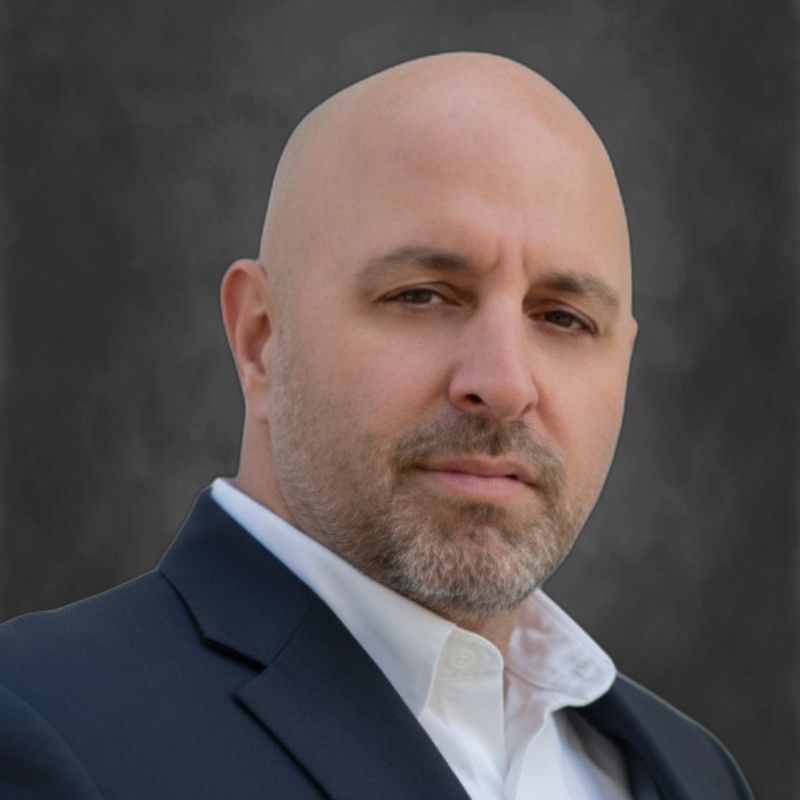
CEO/Co-Founder @ Oatmeal Health | AI Lung Cancer Screening | Almost Became a Doctor | Engineer | Follow to Share What I’ve Learned Along the Way
I help patients get the care they need earlier, preventing late-stage cancer.
That’s been the throughline across three companies and almost 20 years in healthcare. At ReferralMD, we fixed broken referral networks so patients didn’t fall through the cracks. At Oatmeal Health, it’s lung cancer: building the diagnostic and screening infrastructure so the 85% of cases caught too late get caught early instead.
Today as CEO of Oatmeal Health, I lead a team embedding AI into radiology workflows to turn routine lung CT scans into reimbursable cancer risk assessments. We partner with FQHCs to reach underserved communities, and with health systems and payers to make early detection economically sustainable. Think HeartFlow or Cleerly, but for lungs.
Between companies, I advised at Techstars and Plug and Play, mentoring founders building in digital health. That experience shaped how I think about what separates companies that ship from companies that stall: distribution, reimbursement, and clinical trust, not just technology.
I’m a CancerX alumnus, a 3x healthcare founder, and someone who believes the biggest problems in cancer aren’t scientific. They’re operational.
We’re hiring mission-driven builders at Oatmeal Health. If you want to work on something that matters, reach out.
When I’m not working, I’m traveling, mentoring, and keeping up with one very energetic husky. 🐾
Substack – The Oatmeal Bite:
Millions of patients get less care because of who they are, where they live, or how they look. I’m fighting to change that. CEO @OatmealHealth, a startup built for the underserved. The Oatmeal Bite: intel for clinicians, investors, and advocates.
Jonathan Govette
CEO of Oatmeal Health
Substack:
https://oatmealhealthjonathangovette.substack.com/