Share this article and save a life!
Congress just told insurers: AI cannot deny your care alone. 🔥
The Doctors Not AI Act lands at exactly the right moment.
On September 1, 2026, Rep. Greg Landsman of Ohio introduced H.R. 10210, the Doctors Not AI Act. Two Democrats. Two Republicans. Bipartisan from day one, with Reps. Buddy Carter, Kim Schrier, and Tom Barrett as original cosponsors. Referred to three House committees: Energy and Commerce, Ways and Means, and Education and Workforce.
That is a serious bill with serious reach.
Here is what it would actually do.
🔹 Bar AI systems from issuing or dictating any adverse benefit determination involving clinical judgment.
🔹 Require a licensed health professional to independently review each patient’s circumstances before a medical-necessity denial takes effect.
🔹 Allow insurers to keep using AI to help process claims, just not to decide them.
🔹 Force insurers to disclose to patients when AI played a role in a denial.
Landsman put it plainly: “when a computer system is making decisions about health care, people will get hurt.”
He is right. And that is not a partisan statement. That is physics.
⚡ Here is my hot take.
This bill is necessary. It is also just the beginning.
Insurers did not adopt AI denials because they love technology. They adopted them because volume-based denials at scale are cheaper than human reviewers who might say yes. The algorithm is not the disease. It is the symptom. The disease is a system that financially rewards denial.
So yes, mandate the human review. Require the disclosure. Hold the line on clinical judgment belonging to clinicians, not code. All of that is correct.
But let’s be honest about the counterpoint. Insurers will argue that human review at scale is impossible and that AI actually speeds up approvals for the majority of claims. That argument is not entirely wrong. AI can process routine claims faster and more accurately than overwhelmed humans. The problem is the edge cases, the ambiguous cases, the complex cases. Those are exactly where patients get buried by automated denials, and those are exactly the cases the Doctors Not AI Act is targeting.
The bill draws a clean line. Routine processing is fine. Clinical judgment is not a machine’s job.
💡 What I want to see next is enforcement teeth.
A disclosure requirement without a penalty structure is just paperwork. If this bill passes and insurers disclose AI involvement but face no real consequence for wrongful denials, the disclosure becomes a shield, not a signal. Congress needs to pair transparency with accountability.
We are at an inflection point in healthcare AI. The tools are real. The upside is real. But a system that weaponizes AI to deny care faster than any human could review it is not innovation. It is industrialized gatekeeping.
Patients deserve a doctor’s judgment at the door. Not a model trained on margin.
👉 Follow Jonathan Govette, CEO of Oatmeal Health, for daily healthcare insights on LinkedIn. Deeper dives in The Oatmeal Bite on Substack: https://news.oatmealhealth.com
Share this article and save a life!
Author:
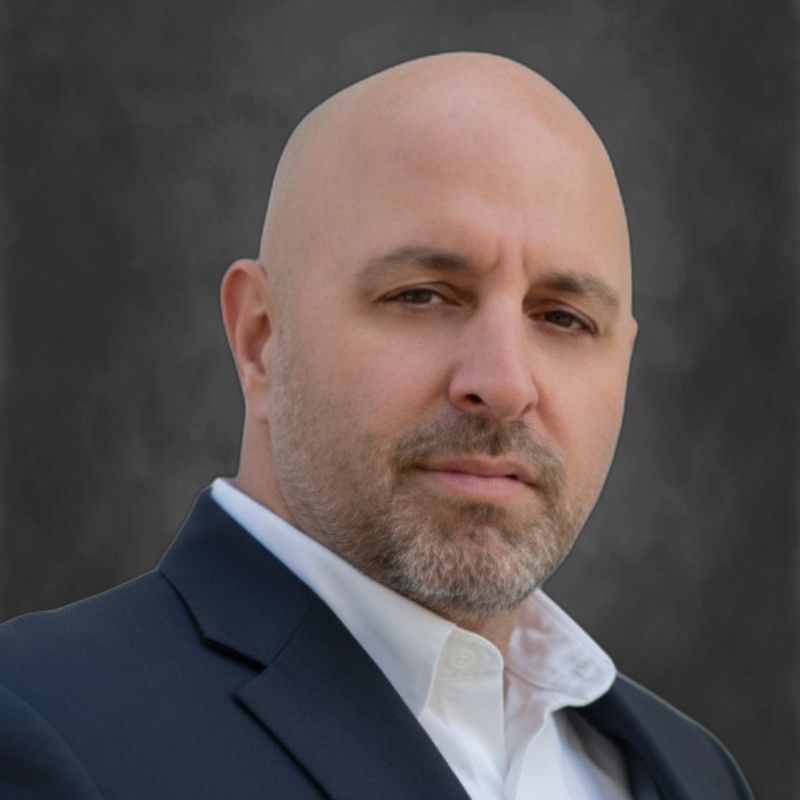
CEO/Co-Founder @ Oatmeal Health | AI Lung Cancer Screening | Almost Became a Doctor | Engineer | Follow to Share What I’ve Learned Along the Way
I help patients get the care they need earlier, preventing late-stage cancer.
That’s been the throughline across three companies and almost 20 years in healthcare. At ReferralMD, we fixed broken referral networks so patients didn’t fall through the cracks. At Oatmeal Health, it’s lung cancer: building the diagnostic and screening infrastructure so the 85% of cases caught too late get caught early instead.
Today as CEO of Oatmeal Health, I lead a team embedding AI into radiology workflows to turn routine lung CT scans into reimbursable cancer risk assessments. We partner with FQHCs to reach underserved communities, and with health systems and payers to make early detection economically sustainable. Think HeartFlow or Cleerly, but for lungs.
Between companies, I advised at Techstars and Plug and Play, mentoring founders building in digital health. That experience shaped how I think about what separates companies that ship from companies that stall: distribution, reimbursement, and clinical trust, not just technology.
I’m a CancerX alumnus, a 3x healthcare founder, and someone who believes the biggest problems in cancer aren’t scientific. They’re operational.
We’re hiring mission-driven builders at Oatmeal Health. If you want to work on something that matters, reach out.
When I’m not working, I’m traveling, mentoring, and keeping up with one very energetic husky. 🐾
Substack – The Oatmeal Bite:
Millions of patients get less care because of who they are, where they live, or how they look. I’m fighting to change that. CEO @OatmealHealth, a startup built for the underserved. The Oatmeal Bite: intel for clinicians, investors, and advocates.
Jonathan Govette
CEO of Oatmeal Health
Substack:
https://oatmealhealthjonathangovette.substack.com/