Share this article and save a life!
Your community clinic might finally afford that MRI upgrade.
GE HealthCare just got FDA clearance for something that could change the game for smaller imaging centers (February 19, 2026).
Three new SIGNA MRI systems, but here’s what matters:
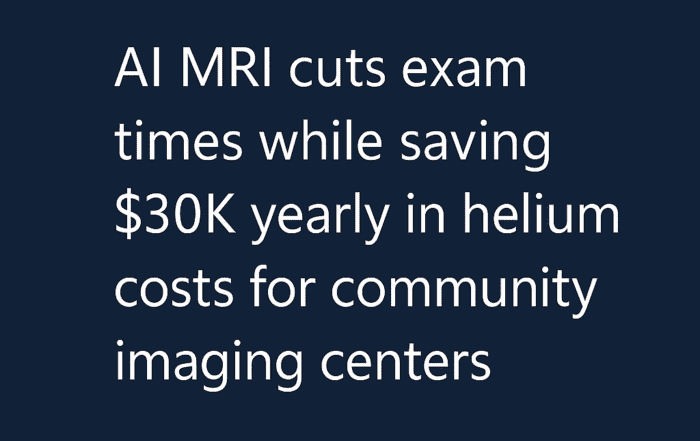
The SIGNA Sprint uses a sealed 1.5T magnet with something called “Freelium” tech, which means no more helium refills. For FQHCs and community imaging centers, that’s thousands in saved maintenance costs annually.
The real breakthrough? Their AI-driven workflow cuts exam times dramatically.
Think about what this means:
• Rural imaging centers struggling with technician shortages can see more patients
• FQHCs can finally justify MRI investments with faster patient throughput
• Community hospitals competing with mega-systems get enterprise-level imaging
But here’s my take:
We’re at an inflection point. With imaging volumes exploding and radiologist burnout hitting crisis levels, these AI-powered systems aren’t luxury upgrades anymore. They’re survival tools.
The sealed magnet design alone could save centers $30,000+ yearly in helium costs. Add the AI workflow efficiencies, and suddenly that ROI calculation makes sense for smaller facilities.
🔍 What excites me most:
This isn’t about replacing radiologists. It’s about democratizing advanced imaging. When a community health center can offer the same MRI quality as a major academic center, health equity takes a real step forward.
The question now: Will payers recognize these efficiency gains with better reimbursement rates? Or will we continue penalizing facilities that invest in better tech?
Your move, CMS.
♻️ Repost if community imaging centers deserve the same tech as big hospitals
👉 Follow me, Jonathan Govette, for daily, real-time updates on healthcare technology and business news. LinkedIn Profile: https://www.linkedin.com/in/jonathangovette/
Share this article and save a life!
Author:

Jonathan Govette is a seasoned healthcare and technology executive with more than two decades of experience building, scaling, and advising digital health companies. He is the Co-Founder and CEO of Oatmeal Health, an AI-driven Lung Cancer Screening and Diagnostics company focused on expanding access to early detection for underrepresented populations, particularly patients served by Federally Qualified Health Centers and value-based health plans.
With a background in engineering, product development, and strategic partnerships, Jonathan has founded and led multiple health technology ventures across clinical care delivery, regulated medical software, and AI-enabled diagnostics. His work sits at the intersection of medicine, technology, and health equity, with a consistent focus on translating complex clinical problems into scalable, real-world solutions.
Jonathan has spent much of his professional life dedicated to improving outcomes for marginalized and underserved communities. He has designed and implemented frameworks that align clinical quality, reimbursement, and technology to sustainably advance health equity at scale. This mission is deeply personal and informs his leadership philosophy and long-term vision for healthcare transformation.
In addition to his operating experience, Jonathan is an author and long-time writer in the healthcare domain, with over 20 years of published work covering digital health, medical innovation, and healthcare systems. He is a frequent mentor to early-stage founders and regularly advises startups on product strategy, partnerships, and go-to-market execution in regulated healthcare environments.
Before entering industry full-time, Jonathan nearly pursued a career in medicine with an early path toward cardiothoracic surgery, an experience that continues to shape his clinical perspective and respect for frontline care delivery.
CEO | Oatmeal Health | AI Lung Cancer Startup | Engineer | Writer | Almost Became a Doctor (Cardiac Thoracic Surgeon) | 3x Health Tech Founder | Startup Mentor | Follow to share what I’ve learned along the way.