Lung Screening: Only 1 in 6 Get the Talk
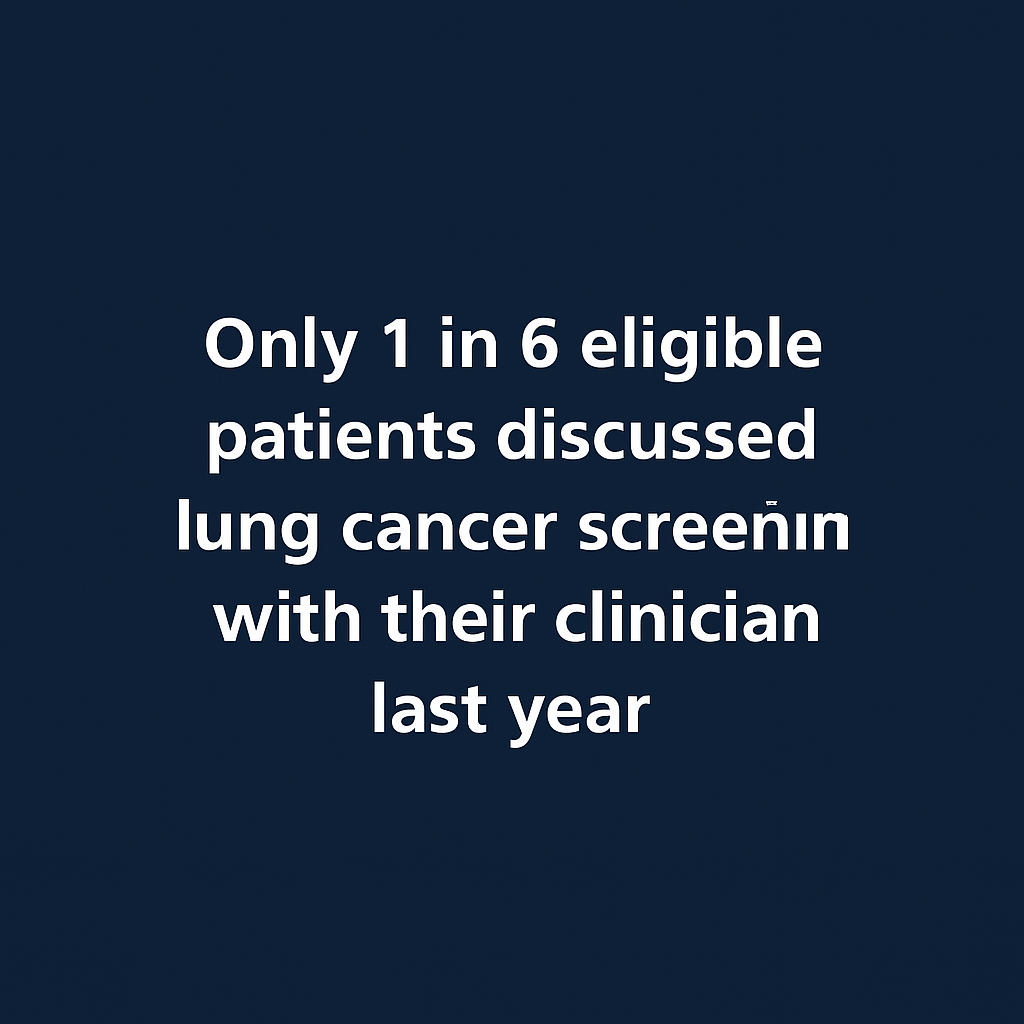
Lung cancer kills more people than any other cancer. We still can't get patients screened. 🫁 According to The Spokesman-Review, lung cancer is projected to kill more than 120,000 Americans this year. A low-dose CT scan can catch it early. The test exists. Insurance must cover it. And yet the conversation between clinician and patient almost never happens. New research published in the American Journal of Surgery tells us exactly how broken this is. University of Cincinnati researchers surveyed roughly 1,500 people eligible for lung cancer screening. Only around 220 had spoken to a healthcare professional about it in the past year. That is about 1 in 6. Not 1 in 6 who got screened. 1 in 6 who even ...
AI vs. Doctors: Six Societies Say No
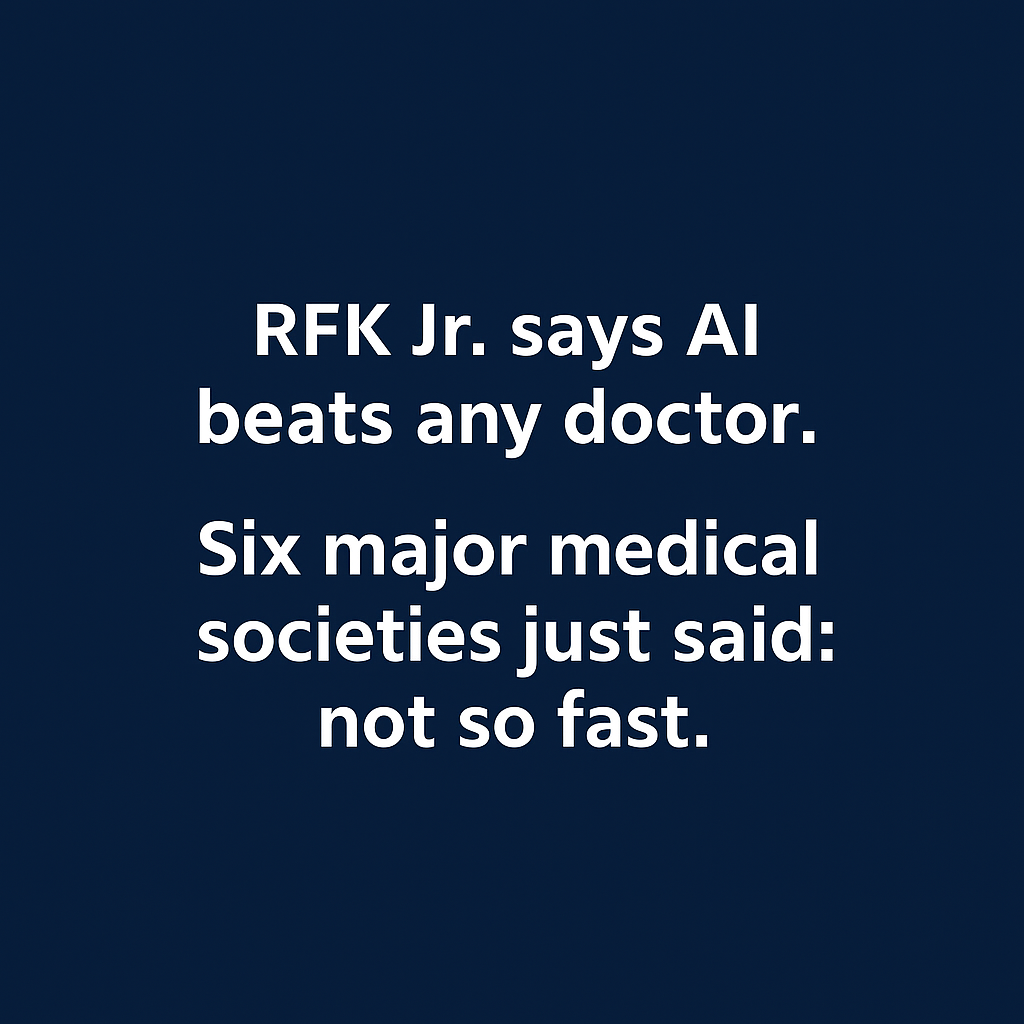
I read that quote three times before it landed. 🧠 Health Secretary Robert F. Kennedy Jr. told attendees at the Make America Healthy Again Summit this week that AI can provide "a second opinion that is much better informed than any doctor in the country." The summit was sponsored by OpenAI and Anthropic. Let that sink in for a second. This week, six of the most powerful physician organizations in the country issued a formal joint statement pushing back. According to Chief Healthcare Executive, those six groups are: 🔹 American Medical Association 🔹 American Academy of Family Physicians 🔹 American Academy of Pediatrics 🔹 American College of Obstetricians and Gynecologists 🔹 American College of Physicians 🔹 American College of Surgeons ...
Tiny Health $33M Series B Microbiome
Everyone calls microbiome testing a wellness trend. This round says otherwise. When most people hear "gut health startup," they picture wellness influencers and kombucha. Tiny Health is building something fundamentally different. 🔬 Tiny Health just closed a $33 million oversubscribed Series B led by B Capital, bringing its total funding to $46 million. Existing investors Spero Ventures, The Venture City, and Overwater Ventures all returned. New backers include Black Opal Ventures, Denver Ventures, Pave Health Ventures, Alumni Ventures, Gaingels, and Pari Passu Ventures. According to HIT Consultant, the round was announced October 1, 2026. This is not a supplement brand with a test kit bolted on. Here is what makes the technology actually credible: 🔹 Shotgun metagenomic sequencing across more ...
SAC Health FQHC Layoffs: 101 Gone
A community health center just laid off 101 people. ⚠️ This is not a headline about a health system. It is a headline about the safety net. According to the San Bernardino Sun, SAC Health, a nonprofit FQHC in San Bernardino affiliated with Loma Linda University Health, completed what it called the final round of a two-phase restructuring. The organization laid off 52 workers in this last round, after cutting 49 nonclinical workers earlier in the month. That is 101 people gone in a matter of weeks. The stated reason: a multimillion-dollar budget gap. 🔹 Phase one: 49 nonclinical workers cut 🔹 Phase two: 52 additional layoffs 🔹 Two clinics in San Bernardino closed 🔹 Organization described it as a ...

GLOBE Drug Pricing Model: $12B vs $440M
CMS said this drug pricing model would save $12 billion. The final rule puts that number at $440 million. 💊 On September 30, CMS finalized the Global Benchmark for Efficient Drug Pricing Model, known as the GLOBE Model. According to the American Hospital Association, it is a mandatory Medicare payment model that replaces the domestic benchmark for manufacturer rebates under the Medicare Part B Inflation Rebate Program with one derived from international pricing. In plain English: the U.S. is now benchmarking what drug companies owe Medicare against what those same drugs cost in other countries. That is a big structural shift. But here is the part most people are glossing over. CMS originally estimated $12 billion in savings over the ...
Lung Cancer Screening Gap in HIV Patients
Fewer than 3 in 10 people living with HIV who qualified for lung cancer screening ever got a scan. 🎯 Eligibility nearly tripled. Utilization stayed flat. That gap should stop you cold. According to The American Journal of Managed Care, a study published in the International Journal of STD & AIDS looked at people living with HIV at a Southeastern HIV clinic. Lung cancer screening eligibility jumped from 6% to 15% between 2018 and 2023. But fewer than one-third of eligible patients ever received a low-dose CT scan during that same period. Let that land. More people qualified. The scan was covered. The clinic was already seeing these patients regularly for antiretroviral therapy management. And still, the screening did not ...
ADAURA 8-Year NSCLC Decision Framework
Early-stage lung cancer surgery is not the finish line. 🎯 What happens in the adjuvant setting determines whether your patient is alive eight years from now. The ADAURA Phase III trial just released its 8-year exploratory survival update, and the numbers are impossible to ignore. According to MyChesCo, adjuvant osimertinib reduced the risk of death by 47% compared with placebo in Stage II to IIIA EGFR-mutated NSCLC patients. That is the trial's primary population. Here is what that looks like in plain terms. Stage II-IIIA population (primary): 🔹 74% of Tagrisso-treated patients were alive at 8 years 🔹 58% of placebo patients were alive at 8 years 🔹 Hazard ratio: 0.53 (95% CI 0.38 to 0.75) Broader Stage IB-IIIA population: ...
FQHC Closure: HRSA Admin Issues
A sign on the door. No warning. Five FQHC clinics just went dark. 🚨 The sign at the Berkeley Springs location read: "Our Office is facing an organizational emergency and our doors will be closed until further notice." That is not a press release. That is a handwritten notice taped to a door of a community health center that served 16,085 patients last year. This week, Tri-State Community Health Centers shut down five clinic locations across West Virginia, Maryland, and Pennsylvania with almost no notice. Patients showed up to appointments and found locked doors in Berkeley Springs, Hancock, Cumberland, and McConnellsburg. According to the Morgan Messenger, the closures were triggered by federal administrative requirements from HRSA, the U.S. Health Resources ...
a2z Radiology AI: 17-Finding CT Triage
More AI clearances won't save radiology. Smarter triage just might. 🩻 Everyone is debating whether AI will replace radiologists. But the real bottleneck in emergency radiology isn't intelligence. It's time. This week, a2z Radiology AI received FDA clearance for its Abdo-Triage software to flag 10 additional findings on abdomen-pelvis CT scans, according to Radiology Business. That brings the company's total triage portfolio to 17 findings across two FDA-cleared devices. A Boston-based startup founded in 2024. Already with two cleared products. That is not a slow regulatory story. That is a sprint. 🔹 The newly cleared product targets abdomen-pelvis CT, one of the most time-sensitive scan categories in emergency medicine. 🔹 The software is designed to help clinical teams triage a ...