Share this article and save a life!
The drug program keeping free clinics alive is on the chopping block.
And most people outside of healthcare have never heard of it.
The 340B Drug Pricing Program requires pharmaceutical manufacturers to sell outpatient drugs to eligible safety-net providers at dramatically reduced prices, sometimes 25 to 50 percent below market. For Federally Qualified Health Centers, rural health clinics, and disproportionate share hospitals, 340B is not a perk. It is often the financial engine that keeps the doors open.
The Senate reconciliation bill now moving through committee includes provisions that would restrict which drugs qualify, tighten covered entity eligibility, and potentially limit the ability of FQHCs to use contract pharmacies, a practice that dramatically extends 340B reach into underserved communities.
Here is what that actually means on the ground.
A typical FQHC serving 20,000 patients a year may generate $1 million to $3 million in 340B savings annually. That money does not go into anyone’s pocket. It funds sliding-scale care for the uninsured, behavioral health staff, dental services, and transportation programs. These are services that have no billing code. There is no reimbursement pathway. The 340B margin is what pays for them.
If those savings are cut by 30 to 50 percent, which some analyst projections suggest is possible under the proposed restrictions, health centers face an impossible math problem.
🔎 The stakes are real:
More than 1,600 FQHCs participate in the 340B program nationwide.
Community health centers serve over 32 million patients, roughly 1 in 10 Americans.
Nearly 70 percent of health center patients are at or below 200 percent of the federal poverty level.
For many rural FQHCs, 340B is one of only two or three revenue streams keeping the organization solvent.
Pharmaceutical manufacturers have lobbied hard for years to narrow the program, arguing that 340B savings are not always passed directly to low-income patients. Some of that criticism has merit, and the program has faced legitimate scrutiny over contract pharmacy expansion and duplicate discounts.
But the solution being proposed in reconciliation is not targeted reform. It is a blunt restriction that would hit the smallest, most under-resourced providers hardest, while larger hospital systems with diversified revenue would adapt more easily.
💡 Here is the uncomfortable truth: we are simultaneously considering cuts to Medicaid, cuts to ACA subsidies, cuts to HRSA discretionary funding, and now cuts to 340B. Each of these policies affects a different piece of the safety net. But they affect the same patients. The same clinics. The same communities.
When you stack these cuts together, the effect is not additive. It is exponential.
FQHC leaders need to be at the table right now. Not just responding to policy, but actively briefing congressional staff, sharing patient impact data, and making the case that 340B reform and 340B destruction are not the same thing.
What is your health center doing to protect your 340B program this year? Are you tracking the Senate markup closely enough?
♻️ Repost if every dollar a health center saves on drugs is a dollar that goes directly to a patient who cannot afford care.
👉 Follow me for daily healthcare updates and get the deeper analysis in my free newsletter → https://lnkd.in/eJKFuB_p
Share this article and save a life!
Author:
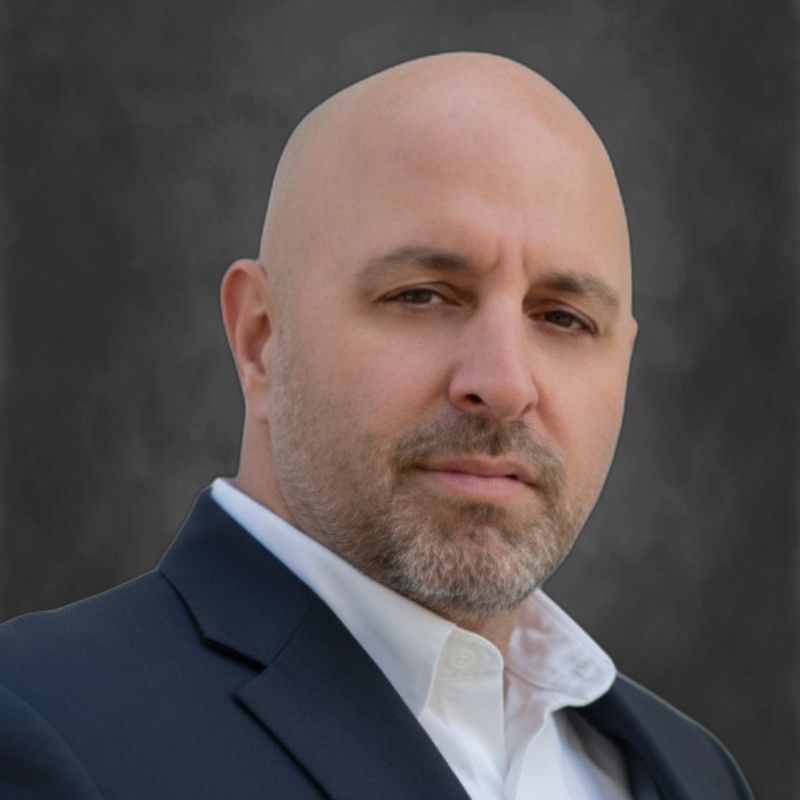
CEO/Co-Founder @ Oatmeal Health | AI Lung Cancer Screening | Almost Became a Doctor | Engineer | Follow to Share What I’ve Learned Along the Way
I help patients get the care they need earlier, preventing late-stage cancer.
That’s been the throughline across three companies and almost 20 years in healthcare. At ReferralMD, we fixed broken referral networks so patients didn’t fall through the cracks. At Oatmeal Health, it’s lung cancer: building the diagnostic and screening infrastructure so the 85% of cases caught too late get caught early instead.
Today as CEO of Oatmeal Health, I lead a team embedding AI into radiology workflows to turn routine lung CT scans into reimbursable cancer risk assessments. We partner with FQHCs to reach underserved communities, and with health systems and payers to make early detection economically sustainable. Think HeartFlow or Cleerly, but for lungs.
Between companies, I advised at Techstars and Plug and Play, mentoring founders building in digital health. That experience shaped how I think about what separates companies that ship from companies that stall: distribution, reimbursement, and clinical trust, not just technology.
I’m a CancerX alumnus, a 3x healthcare founder, and someone who believes the biggest problems in cancer aren’t scientific. They’re operational.
We’re hiring mission-driven builders at Oatmeal Health. If you want to work on something that matters, reach out.
When I’m not working, I’m traveling, mentoring, and keeping up with one very energetic husky. 🐾
Substack – The Oatmeal Bite:
Millions of patients get less care because of who they are, where they live, or how they look. I’m fighting to change that. CEO @OatmealHealth, a startup built for the underserved. The Oatmeal Bite: intel for clinicians, investors, and advocates.
Jonathan Govette
CEO of Oatmeal Health
Substack:
https://oatmealhealthjonathangovette.substack.com/