Share this article and save a life!
AI just wrote a complete radiology report in seconds.
Not a summary. Not a flag. A full, structured report.
At ECR 2026, United Imaging Intelligence demonstrated multimodal AI agents that can detect 73 findings on a single chest CT and 47 findings on a brain MRI, then auto-generate a structured report, all without a radiologist touching the keyboard first.
The company’s CEO made headlines by saying he is ready to deploy AI that could reduce dependence on radiologists in high-volume, time-pressured environments.
That is a bold statement. But it reflects a real operational pressure.
🔎 Here is the context most people are missing.
Radiology departments across the U.S. are facing a serious throughput crisis. Turnaround times at some academic medical centers have reportedly doubled over the past two years. Overnight and weekend coverage gaps are widening. Rural hospitals cannot recruit. The radiologist shortage is not a future problem. It is a present one.
AI report generation is not being developed in a vacuum. It is being built directly in response to a system that is already strained.
So what does this actually change for imaging centers and hospital radiology departments?
First, the liability question does not go away. AI-generated reports still require physician sign-off under current CMS billing and accreditation standards. The radiologist is still legally responsible for the final interpretation. What changes is the cognitive load and the time burden.
Second, this creates a real opportunity for FQHCs and rural hospitals that contract for teleradiology. If AI can triage and pre-populate reports, a single remote radiologist can cover significantly more volume. That is not a threat. That is access expansion.
Third, imaging centers need to ask a harder question. If a tool can detect 73 chest CT findings with documented accuracy, what is the standard of care when you choose not to use it? This is the same question that came up with AI-assisted mammography, and it will come up again here.
💡 The real shift is not AI replacing radiologists. It is AI redefining what radiologists are for.
The reading room of 2028 will not look like 2018. The radiologists who thrive will be the ones who position themselves as clinical decision-makers, communicators, and AI supervisors, not just image readers.
For health system leaders and imaging center executives, the question is not whether to adopt AI reporting tools. It is whether you are building the workflows, governance structures, and radiologist training programs to use them responsibly.
The technology is already here. The operational readiness is lagging behind.
Is your radiology department prepared for AI-generated reports, or are you still treating this as a future problem?
♻️ Repost if you believe AI in radiology should be supervised, not feared, but never ignored.
👉 Follow me for daily healthcare updates and get the deeper analysis in my free newsletter → https://lnkd.in/eJKFuB_p
Share this article and save a life!
Author:
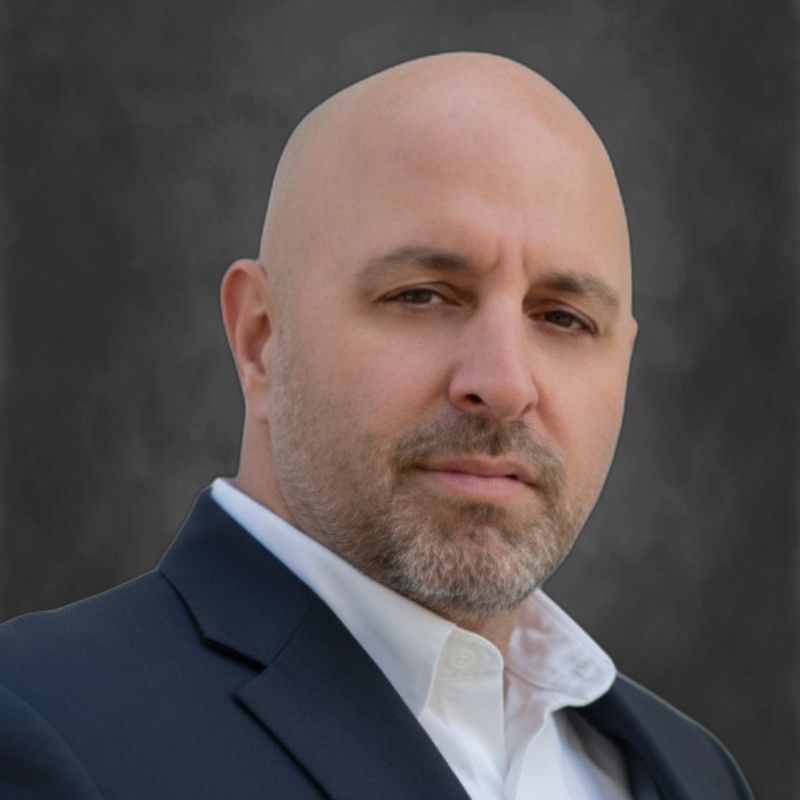
CEO/Co-Founder @ Oatmeal Health | AI Lung Cancer Screening | Almost Became a Doctor | Engineer | Follow to Share What I’ve Learned Along the Way
I help patients get the care they need earlier, preventing late-stage cancer.
That’s been the throughline across three companies and almost 20 years in healthcare. At ReferralMD, we fixed broken referral networks so patients didn’t fall through the cracks. At Oatmeal Health, it’s lung cancer: building the diagnostic and screening infrastructure so the 85% of cases caught too late get caught early instead.
Today as CEO of Oatmeal Health, I lead a team embedding AI into radiology workflows to turn routine lung CT scans into reimbursable cancer risk assessments. We partner with FQHCs to reach underserved communities, and with health systems and payers to make early detection economically sustainable. Think HeartFlow or Cleerly, but for lungs.
Between companies, I advised at Techstars and Plug and Play, mentoring founders building in digital health. That experience shaped how I think about what separates companies that ship from companies that stall: distribution, reimbursement, and clinical trust, not just technology.
I’m a CancerX alumnus, a 3x healthcare founder, and someone who believes the biggest problems in cancer aren’t scientific. They’re operational.
We’re hiring mission-driven builders at Oatmeal Health. If you want to work on something that matters, reach out.
When I’m not working, I’m traveling, mentoring, and keeping up with one very energetic husky. 🐾
Substack – The Oatmeal Bite:
Millions of patients get less care because of who they are, where they live, or how they look. I’m fighting to change that. CEO @OatmealHealth, a startup built for the underserved. The Oatmeal Bite: intel for clinicians, investors, and advocates.
Jonathan Govette
CEO of Oatmeal Health
Substack:
https://oatmealhealthjonathangovette.substack.com/