Share this article and save a life!
🔎 Everyone is calling the VA radiology collapse a policy failure. It is really a staffing architecture failure.
The policy is just what triggered it. The structure was already broken.
The VA OIG released its report on August 5th. According to The American Prospect, it documented that the return-to-office mandate caused a “mass exodus” of radiologists from the DC VA Medical Center, contributing to delays in completion of radiologic studies. No documented patient harm. But the OIG also found that facility leaders failed to track incomplete radiologic studies and didn’t notify quality management of known problems.
That second part is the part everyone is skipping.
Here is the framework I use to evaluate any imaging department’s structural resilience. I call it the 4 Fault Lines of Radiologist Retention.
1. Work Location Flexibility
The OIG confirmed that remote work has become “standard practice in radiology.” Radiologists face inflexible mandates and leave, because according to The American Prospect, they can get jobs almost anywhere. If your organization cannot offer flexibility, you are competing at a structural disadvantage from day one.
2. Quality Feedback Loops
At the DC VA, leaders failed to track incomplete radiologic studies. A department without visibility into its own backlog is flying blind. Every imaging center needs a closed-loop system that flags delayed reads, incomplete studies, and escalation failures before they become federal findings.
3. Contractor Dependency Risk
The VA must now rely on private contractors, who The American Prospect describes as “much more expensive.” Contractor coverage is a bridge, not a strategy. If your coverage model collapses when a handful of staff radiologists exit, you do not have a workforce plan. You have a single point of failure.
4. Escalation Protocol Integrity
Facility leaders at the DC VA did not follow appropriate protocols in notifying quality management of known problems. This is the fault line that turns a staffing gap into a care delivery crisis. Your escalation path must function even when leadership is under maximum pressure.
⚠️ The hard truth: the VA story is not unique to the VA. Health systems and imaging centers everywhere are operating with thinner radiologist coverage than they will admit publicly. One mandate, one mass resignation, one contract dispute, and the same failure mode appears.
One concrete test. Pull your last 90 days of radiology turnaround data. If you cannot explain every delay and identify who was responsible for flagging it, Fault Line 2 is already cracked.
Worth saving if you are auditing your imaging department’s workforce resilience this quarter.
👉 Follow Jonathan Govette, CEO of Oatmeal Health, for daily healthcare insights on LinkedIn. Deeper dives in The Oatmeal Bite on Substack: https://news.oatmealhealth.com
Share this article and save a life!
Author:
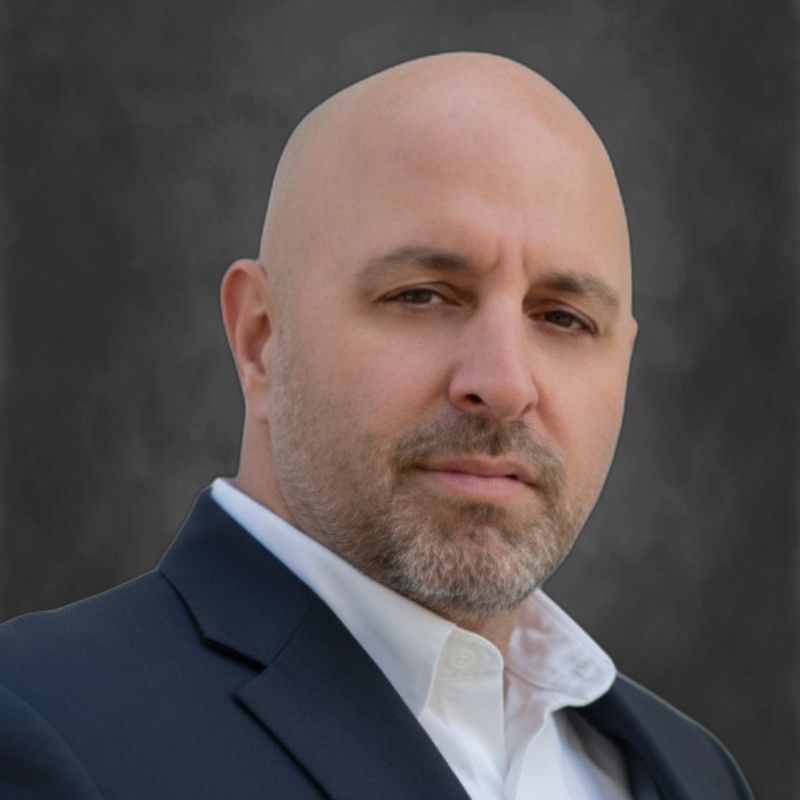
CEO/Co-Founder @ Oatmeal Health | AI Lung Cancer Screening | Almost Became a Doctor | Engineer | Follow to Share What I’ve Learned Along the Way
I help patients get the care they need earlier, preventing late-stage cancer.
That’s been the throughline across three companies and almost 20 years in healthcare. At ReferralMD, we fixed broken referral networks so patients didn’t fall through the cracks. At Oatmeal Health, it’s lung cancer: building the diagnostic and screening infrastructure so the 85% of cases caught too late get caught early instead.
Today as CEO of Oatmeal Health, I lead a team embedding AI into radiology workflows to turn routine lung CT scans into reimbursable cancer risk assessments. We partner with FQHCs to reach underserved communities, and with health systems and payers to make early detection economically sustainable. Think HeartFlow or Cleerly, but for lungs.
Between companies, I advised at Techstars and Plug and Play, mentoring founders building in digital health. That experience shaped how I think about what separates companies that ship from companies that stall: distribution, reimbursement, and clinical trust, not just technology.
I’m a CancerX alumnus, a 3x healthcare founder, and someone who believes the biggest problems in cancer aren’t scientific. They’re operational.
We’re hiring mission-driven builders at Oatmeal Health. If you want to work on something that matters, reach out.
When I’m not working, I’m traveling, mentoring, and keeping up with one very energetic husky. 🐾
Substack – The Oatmeal Bite:
Millions of patients get less care because of who they are, where they live, or how they look. I’m fighting to change that. CEO @OatmealHealth, a startup built for the underserved. The Oatmeal Bite: intel for clinicians, investors, and advocates.
Jonathan Govette
CEO of Oatmeal Health
Substack:
https://oatmealhealthjonathangovette.substack.com/