Share this article and save a life!
That stat stopped me cold when I read it this week. 🛑
According to xtelligent Healthtech Analytics, a new study published in PLOS Digital Health evaluated all 1,357 AI and machine learning-enabled medical devices cleared by the FDA through December 5, 2025.
Here is what the researchers found:
🔹 Only 34 devices (2.5%) were linked to registered prospective trials
🔹 Only 12 (0.9%) posted results from those trials
🔹 Only 12 (0.9%) progressed to peer-reviewed publication
🔹 Only 3 devices (0.2%) were evaluated for patient-centered outcomes like mortality, morbidity, or readmissions
And the radiology-specific number is the one I cannot stop thinking about.
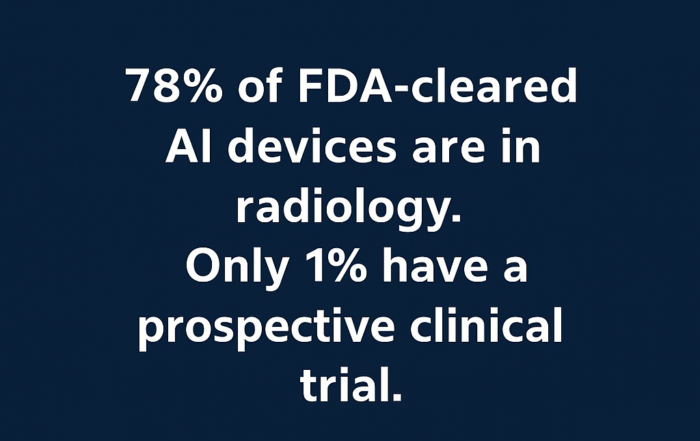
Radiology accounts for 78% of cleared devices. But only 1% of those devices were linked to prospective trials.
That is not a gap. That is a canyon.
Now layer in the funding reality. Of the 34 trials that did exist, 32 of them (94%) were industry-sponsored. The study authors called it directly: the evidence base is “incomplete, systematically biased, and tilted toward optimism.”
I build AI for lung cancer screening. I live in this space every single day. And I want to be honest about what this means.
The 510(k) pathway, which cleared the vast majority of these devices, only requires “substantial equivalence” to an existing tool. It does not require any vendor to prove the tool actually helps patients. That is a structural problem, not a vendor problem.
And here is what most people are missing: accuracy metrics and patient outcomes are not the same thing. A model can be 95% accurate on a benchmark and still fail to move the needle on mortality. We have been measuring the wrong thing and calling it proof.
The study authors made three specific recommendations:
🔹 The FDA should mandate pre-registration of prospective trials for all Class II and III AI devices before clearance
🔹 Devices should be validated in the populations where they will actually be used
🔹 CMS and other insurers should link reimbursement to demonstrated clinical benefit
That last one is the unlock. Reimbursement tied to outcomes changes the incentive structure completely.
We are at an inflection point. The field has spent years celebrating clearance counts and funding rounds. The next era has to be about whether any of this actually helps a real patient survive.
For those of us in lung cancer AI, that question is deeply personal.
👉 Follow Jonathan Govette, CEO of Oatmeal Health, for daily healthcare insights on LinkedIn. Deeper dives in The Oatmeal Bite on Substack: https://news.oatmealhealth.com
Share this article and save a life!
Author:
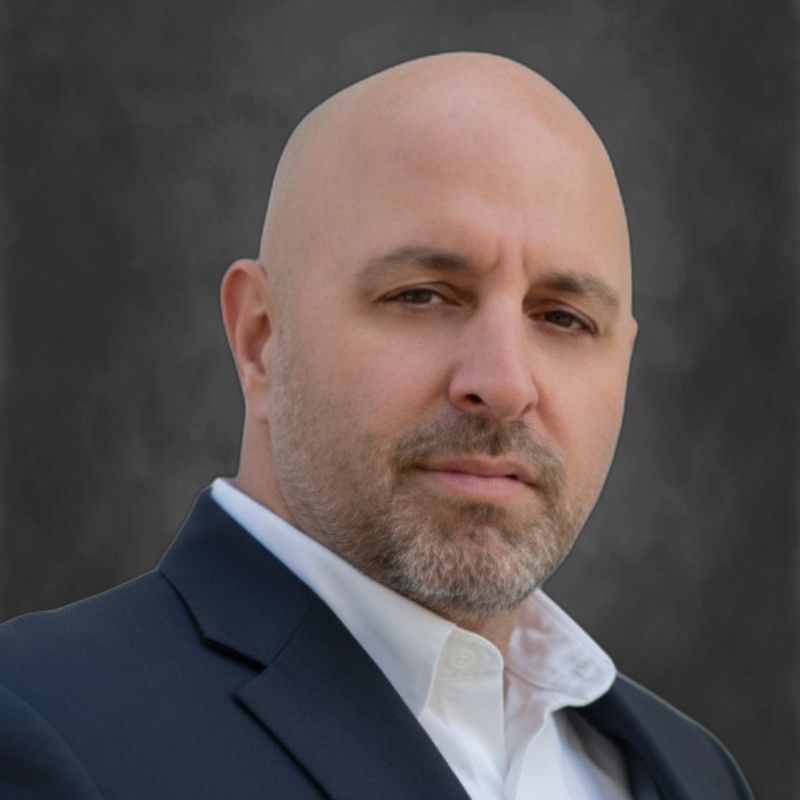
CEO/Co-Founder @ Oatmeal Health | AI Lung Cancer Screening | Almost Became a Doctor | Engineer | Follow to Share What I’ve Learned Along the Way
I help patients get the care they need earlier, preventing late-stage cancer.
That’s been the throughline across three companies and almost 20 years in healthcare. At ReferralMD, we fixed broken referral networks so patients didn’t fall through the cracks. At Oatmeal Health, it’s lung cancer: building the diagnostic and screening infrastructure so the 85% of cases caught too late get caught early instead.
Today as CEO of Oatmeal Health, I lead a team embedding AI into radiology workflows to turn routine lung CT scans into reimbursable cancer risk assessments. We partner with FQHCs to reach underserved communities, and with health systems and payers to make early detection economically sustainable. Think HeartFlow or Cleerly, but for lungs.
Between companies, I advised at Techstars and Plug and Play, mentoring founders building in digital health. That experience shaped how I think about what separates companies that ship from companies that stall: distribution, reimbursement, and clinical trust, not just technology.
I’m a CancerX alumnus, a 3x healthcare founder, and someone who believes the biggest problems in cancer aren’t scientific. They’re operational.
We’re hiring mission-driven builders at Oatmeal Health. If you want to work on something that matters, reach out.
When I’m not working, I’m traveling, mentoring, and keeping up with one very energetic husky. 🐾
Substack – The Oatmeal Bite:
Millions of patients get less care because of who they are, where they live, or how they look. I’m fighting to change that. CEO @OatmealHealth, a startup built for the underserved. The Oatmeal Bite: intel for clinicians, investors, and advocates.
Jonathan Govette
CEO of Oatmeal Health
Substack:
https://oatmealhealthjonathangovette.substack.com/