Share this article and save a life!
3.8 million people could lose health coverage next year.
And it has nothing to do with Medicaid.
The enhanced premium tax credits introduced under the Inflation Reduction Act have been one of the most impactful, least-talked-about coverage expansions in recent memory. They reduced marketplace premiums by an average of $800 per enrollee per year. They helped push ACA marketplace enrollment to record highs, surpassing 21 million people in 2026.
Those credits expire at the end of 2025.
The House reconciliation bill, passed on May 22, 2026, does not extend them.
The Congressional Budget Office has estimated that without renewal, roughly 3.8 million Americans will drop their marketplace plans, simply because the premiums become unaffordable. For many of these individuals, Medicaid is not an option, and employer coverage does not exist. The gap between what they can pay and what coverage costs becomes a wall.
Here is what that means in practice.
FQHCs will absorb the surge. Community health centers serve patients regardless of insurance status, but uncompensated care volume has real limits. When coverage disappears, patients delay care. When they finally show up, conditions are more advanced, more expensive, and harder to treat.
Hospitals feel it in their uncompensated care numbers. Safety-net providers especially, who are already navigating DSH payment pressure, will face an additional financial squeeze from uninsured volume returning to emergency departments.
Cancer screening rates will fall. Preventive care, which depends heavily on coverage, gets skipped when people lose insurance. The downstream effect on early detection, particularly for colorectal, cervical, and lung cancers, is not theoretical. It is documented from the pre-ACA era.
The Senate still has to act. There is a window. But healthcare leaders should not wait for a political resolution before planning operationally.
If you run an FQHC, an imaging center, or a hospital serving lower-income populations, the question is not whether this will affect your patients. It is how much, and how fast.
Are you modeling what a 3.8 million coverage loss scenario looks like for your patient panel?
Because that planning conversation needs to start now, not after open enrollment closes.
♻️ Repost if millions losing affordable coverage is not a policy footnote, it is a public health emergency.
👉 Follow me for daily healthcare updates and get the deeper analysis in my free newsletter → jonathangovette.substack.com
Share this article and save a life!
Author:
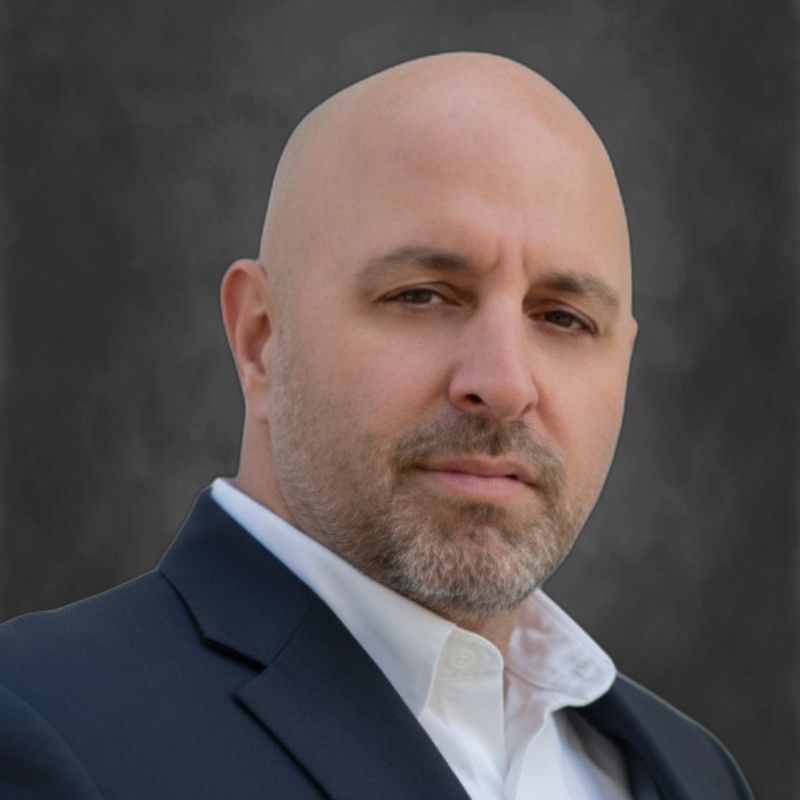
CEO/Co-Founder @ Oatmeal Health | AI Lung Cancer Screening | Almost Became a Doctor | Engineer | Follow to Share What I’ve Learned Along the Way
I help patients get the care they need earlier, preventing late-stage cancer.
That’s been the throughline across three companies and almost 20 years in healthcare. At ReferralMD, we fixed broken referral networks so patients didn’t fall through the cracks. At Oatmeal Health, it’s lung cancer: building the diagnostic and screening infrastructure so the 85% of cases caught too late get caught early instead.
Today as CEO of Oatmeal Health, I lead a team embedding AI into radiology workflows to turn routine lung CT scans into reimbursable cancer risk assessments. We partner with FQHCs to reach underserved communities, and with health systems and payers to make early detection economically sustainable. Think HeartFlow or Cleerly, but for lungs.
Between companies, I advised at Techstars and Plug and Play, mentoring founders building in digital health. That experience shaped how I think about what separates companies that ship from companies that stall: distribution, reimbursement, and clinical trust, not just technology.
I’m a CancerX alumnus, a 3x healthcare founder, and someone who believes the biggest problems in cancer aren’t scientific. They’re operational.
We’re hiring mission-driven builders at Oatmeal Health. If you want to work on something that matters, reach out.
When I’m not working, I’m traveling, mentoring, and keeping up with one very energetic husky. 🐾
Substack – The Oatmeal Bite:
Millions of patients get less care because of who they are, where they live, or how they look. I’m fighting to change that. CEO @OatmealHealth, a startup built for the underserved. The Oatmeal Bite: intel for clinicians, investors, and advocates.
Jonathan Govette
CEO of Oatmeal Health
Substack:
https://oatmealhealthjonathangovette.substack.com/