Share this article and save a life!
AI is reading scans faster. But is it reading them better?
The radiology world is celebrating speed. AI triage tools now flag critical findings in seconds. Worklists are getting prioritized. Turnaround times are dropping.
And on the surface, that sounds like a win.
But a growing body of evidence is raising an uncomfortable question: when radiologists trust AI-flagged cases too heavily, do they spend less cognitive energy on the cases the AI calls clean?
This is called automation bias, and it is not a new concept in aviation or nuclear safety. It is, however, a newer conversation in diagnostic imaging.
Here is what the research is starting to show:
– AI models are trained on curated datasets. Real-world scans are messier, more diverse, and far less tidy.
– When an AI clears a scan as low priority, radiologists tend to review it faster and with less scrutiny.
– The result is that subtle findings, the ones AI was not trained to detect, slip through at higher rates in AI-assisted workflows than in traditional reads.
This is not an argument against AI in radiology. It is an argument for measuring the right things.
Most radiology AI vendors report performance metrics like sensitivity and specificity on benchmark datasets. What they rarely report is how radiologist behavior changes downstream of the AI recommendation.
That behavioral shift is where the real diagnostic risk lives.
For imaging center leaders and hospital radiology departments, this means the ROI conversation needs to evolve. Faster reads are not the finish line. Fewer missed diagnoses should be.
The most forward-thinking radiology programs right now are auditing AI-assisted reads against gold-standard re-reads. They are tracking not just time saved, but error rates by case priority bucket.
That is the accountability layer most AI implementations are still missing.
If your radiology AI vendor cannot show you miss rate data stratified by AI confidence score, that is a gap worth closing before you expand the deployment.
Speed is a feature. Accuracy is the product.
Are your AI radiology metrics measuring the right outcomes, or just the ones that look good in a board report?
👉 Follow Jonathan Govette, CEO of Oatmeal Health, for daily healthcare insights on LinkedIn. Deeper dives in The Oatmeal Bite on Substack: https://oatmealhealthjonathangovette.substack.com
Share this article and save a life!
Author:
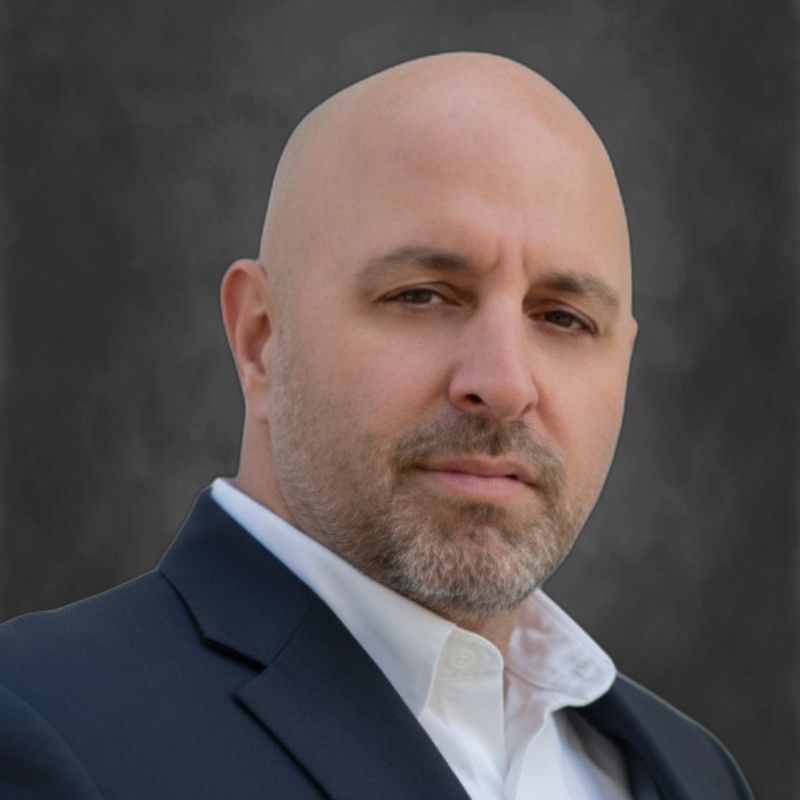
CEO/Co-Founder @ Oatmeal Health | AI Lung Cancer Screening | Almost Became a Doctor | Engineer | Follow to Share What I’ve Learned Along the Way
I help patients get the care they need earlier, preventing late-stage cancer.
That’s been the throughline across three companies and almost 20 years in healthcare. At ReferralMD, we fixed broken referral networks so patients didn’t fall through the cracks. At Oatmeal Health, it’s lung cancer: building the diagnostic and screening infrastructure so the 85% of cases caught too late get caught early instead.
Today as CEO of Oatmeal Health, I lead a team embedding AI into radiology workflows to turn routine lung CT scans into reimbursable cancer risk assessments. We partner with FQHCs to reach underserved communities, and with health systems and payers to make early detection economically sustainable. Think HeartFlow or Cleerly, but for lungs.
Between companies, I advised at Techstars and Plug and Play, mentoring founders building in digital health. That experience shaped how I think about what separates companies that ship from companies that stall: distribution, reimbursement, and clinical trust, not just technology.
I’m a CancerX alumnus, a 3x healthcare founder, and someone who believes the biggest problems in cancer aren’t scientific. They’re operational.
We’re hiring mission-driven builders at Oatmeal Health. If you want to work on something that matters, reach out.
When I’m not working, I’m traveling, mentoring, and keeping up with one very energetic husky. 🐾
Substack – The Oatmeal Bite:
Millions of patients get less care because of who they are, where they live, or how they look. I’m fighting to change that. CEO @OatmealHealth, a startup built for the underserved. The Oatmeal Bite: intel for clinicians, investors, and advocates.
Jonathan Govette
CEO of Oatmeal Health
Substack:
https://oatmealhealthjonathangovette.substack.com/