Share this article and save a life!
Most lung cancer AI detects nodules. That is not the hard part. 🫁
The hard part is telling the radiologist which one is probably cancer, right now, not after three to six months of watchful waiting.
This week, Eyonis and Canon Medical Systems’ Olea Medical announced a strategic commercial agreement to expand U.S. access to eyonis LCS, according to Globe Newswire.
Here is why this matters more than a typical distribution deal.
📌 The consensus is that detection AI is the finish line.
Find the nodule. Flag the abnormality. Hand it to the radiologist. Done.
My read: detection alone is actually where the dangerous ambiguity begins.
🔍 The evidence tells a different story.
eyonis LCS is described as the first FDA-cleared AI-powered Software as a Medical Device to both detect pulmonary nodules AND assess their likelihood of malignancy on low-dose CT in a single workflow.
In the multireader, multicase clinical study submitted as part of the FDA clearance process, radiologists using eyonis LCS achieved:
– Sensitivity of 93.3%, compared with 80.3% without the technology
– Specificity of 92.4%, compared with 76.4% without it
– 66% fewer false-negative interpretations
– 68% fewer false-positive interpretations
– 75% of radiologists improved diagnostic performance when assisted by eyonis LCS compared with manual reading alone
Those are not incremental gains. That is a different category of tool.
⚠️ What most people are missing.
The headline is about distribution. The real story is about the clinical gap being closed.
Only 16 percent of lung cancers are diagnosed at an early stage. The average five-year survival rate for all lung cancer patients is 18.6 percent. But patients diagnosed at an early stage have a 20-year survival rate of 80 percent.
That delta is the entire reason lung cancer AI exists. And the reason today’s standard watchful waiting period of three to six months is so dangerous is that a radiologist left staring at an indeterminate nodule has no confident answer. Patients get re-screened. Cancer progresses. The window closes.
Detection AI that stops at flagging a nodule leaves that exact problem unsolved.
🏥 The implication for anyone deploying imaging AI in a real department.
Before you believe the next AI vendor promising to improve your lung screening program, ask these four questions:
1. Does this tool assess malignancy likelihood, or only detect and flag?
2. What was the study design, multireader and multicase, or single site?
3. What happened to false negatives specifically, not just overall accuracy?
4. What is the distribution and implementation pathway into my existing CT workflow?
Save this list. The gap between a cleared AI and a deployed AI that changes outcomes is where most programs stall.
The Olea Medical and Canon relationship gives eyonis LCS access to radiology organizations building and expanding lung cancer screening programs nationwide. That is the kind of channel that can actually move the needle on the 16 percent early detection rate.
I build AI for lung cancer screening every single day. I know how hard this problem is. What was announced this week deserves attention from anyone serious about closing the gap.
👉 Follow Jonathan Govette, CEO of Oatmeal Health, for daily healthcare insights on LinkedIn. Deeper dives in The Oatmeal Bite on Substack: https://news.oatmealhealth.com
Share this article and save a life!
Author:
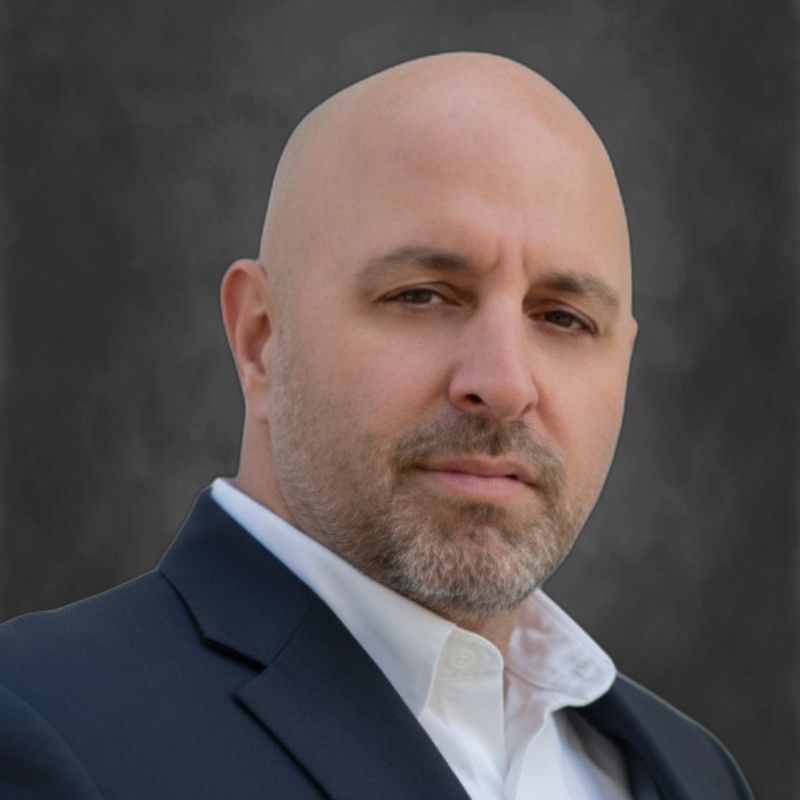
CEO/Co-Founder @ Oatmeal Health | AI Lung Cancer Screening | Almost Became a Doctor | Engineer | Follow to Share What I’ve Learned Along the Way
I help patients get the care they need earlier, preventing late-stage cancer.
That’s been the throughline across three companies and almost 20 years in healthcare. At ReferralMD, we fixed broken referral networks so patients didn’t fall through the cracks. At Oatmeal Health, it’s lung cancer: building the diagnostic and screening infrastructure so the 85% of cases caught too late get caught early instead.
Today as CEO of Oatmeal Health, I lead a team embedding AI into radiology workflows to turn routine lung CT scans into reimbursable cancer risk assessments. We partner with FQHCs to reach underserved communities, and with health systems and payers to make early detection economically sustainable. Think HeartFlow or Cleerly, but for lungs.
Between companies, I advised at Techstars and Plug and Play, mentoring founders building in digital health. That experience shaped how I think about what separates companies that ship from companies that stall: distribution, reimbursement, and clinical trust, not just technology.
I’m a CancerX alumnus, a 3x healthcare founder, and someone who believes the biggest problems in cancer aren’t scientific. They’re operational.
We’re hiring mission-driven builders at Oatmeal Health. If you want to work on something that matters, reach out.
When I’m not working, I’m traveling, mentoring, and keeping up with one very energetic husky. 🐾
Substack – The Oatmeal Bite:
Millions of patients get less care because of who they are, where they live, or how they look. I’m fighting to change that. CEO @OatmealHealth, a startup built for the underserved. The Oatmeal Bite: intel for clinicians, investors, and advocates.
Jonathan Govette
CEO of Oatmeal Health
Substack:
https://oatmealhealthjonathangovette.substack.com/