Share this article and save a life!
More patients. Less revenue. Same legal obligation to serve everyone. 🏥
Most people think Medicaid cuts mean fewer patients walk through the doors of community health centers. The opposite is true.
According to Charta Health, FQHCs serve approximately 32 million patients annually, and Medicaid and CHIP accounts for roughly half of total patient volume. When coverage contracts, the patients do not disappear. They lose their insurance cards, then come back as uninsured or sliding-fee visits. The cost-to-serve stays exactly the same. The revenue does not.
Section 330 of the Public Health Service Act is unambiguous: federally qualified health centers must serve every patient regardless of ability to pay. That mission mandate does not flex with policy shifts. That is the core trap H.R. 1 sets for safety-net providers.
Here are the three deadlines that FQHC leaders need to have on the board right now:
🔹 October 1, 2026: Medicaid coverage narrows for noncitizens, including refugees, asylees, and parolees who previously qualified under humanitarian classifications.
🔹 December 31, 2026: ACA expansion enrollees must re-verify eligibility every six months instead of once per year, doubling the paperwork opportunities to lose coverage with no change in actual eligibility.
🔹 January 2027: Work requirements kick in for non-disabled adults aged 19 to 64, who must document 80 hours per month of qualifying employment, training, or community service to maintain coverage.
Three deadlines. Three separate waves of patients moving from PPS-reimbursed visits to sliding-fee or uncompensated encounters. The revenue erodes. The volume holds.
Charta Health puts it plainly: encounters that previously generated prospective payment system payments shift to sliding-fee or uncompensated status while the cost-to-serve stays fixed. The result is what they call a potentially devastating margin compression.
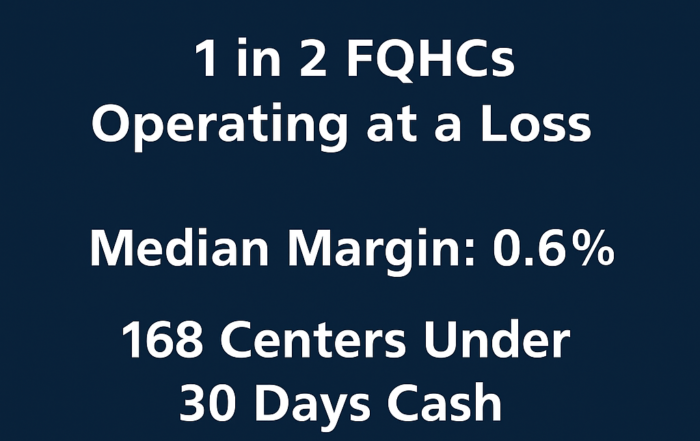
For health centers where Medicaid already makes up more than half of patient volume, this is a board-level enterprise risk. Not a revenue cycle problem. Not an operations problem. A survival question.
The one small piece of H.R. 1 that does not cut against FQHCs: the law specifically exempts them from the new cost-sharing requirement that applies to expansion-population patients earning 100 to 138 percent FPL starting October 2028. That is real, and worth noting.
But that exemption does not offset three cascading waves of uninsured conversion starting in ten days.
What I keep thinking about: the centers that will absorb the most financial pain are the same ones doing the hardest work in the highest-need communities. The mission never wavers. The margin does. That tension is not abstract. It shows up in staffing decisions, services cut, and communities left without access.
This moment demands clear eyes from every FQHC CEO and CFO. The scenario modeling needs to happen now, not in January.
👉 Follow Jonathan Govette, CEO of Oatmeal Health, for daily healthcare insights on LinkedIn. Deeper dives in The Oatmeal Bite on Substack: https://news.oatmealhealth.com
Share this article and save a life!
Author:
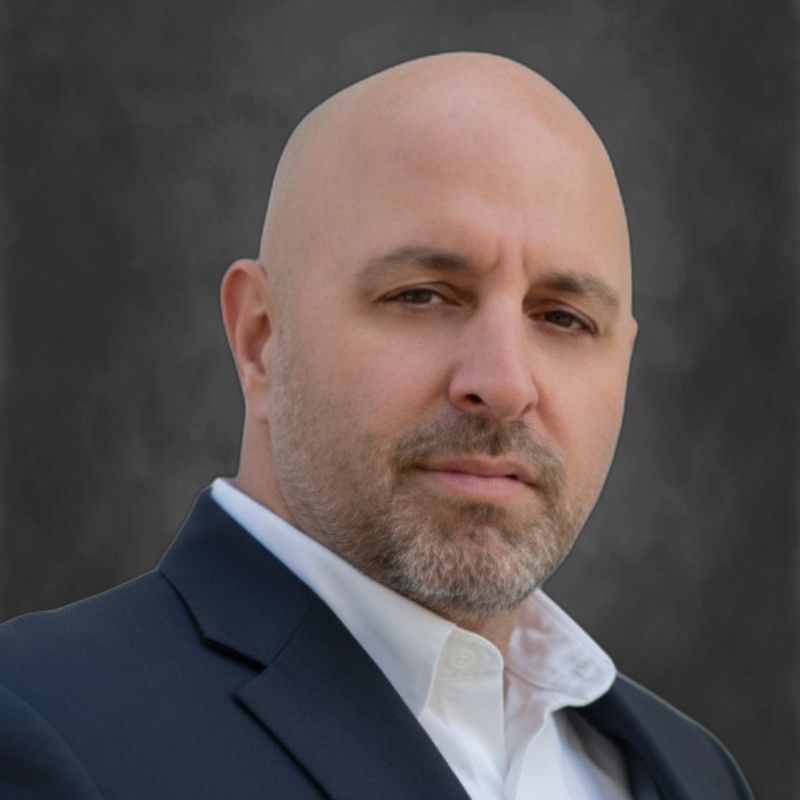
CEO/Co-Founder @ Oatmeal Health | AI Lung Cancer Screening | Almost Became a Doctor | Engineer | Follow to Share What I’ve Learned Along the Way
I help patients get the care they need earlier, preventing late-stage cancer.
That’s been the throughline across three companies and almost 20 years in healthcare. At ReferralMD, we fixed broken referral networks so patients didn’t fall through the cracks. At Oatmeal Health, it’s lung cancer: building the diagnostic and screening infrastructure so the 85% of cases caught too late get caught early instead.
Today as CEO of Oatmeal Health, I lead a team embedding AI into radiology workflows to turn routine lung CT scans into reimbursable cancer risk assessments. We partner with FQHCs to reach underserved communities, and with health systems and payers to make early detection economically sustainable. Think HeartFlow or Cleerly, but for lungs.
Between companies, I advised at Techstars and Plug and Play, mentoring founders building in digital health. That experience shaped how I think about what separates companies that ship from companies that stall: distribution, reimbursement, and clinical trust, not just technology.
I’m a CancerX alumnus, a 3x healthcare founder, and someone who believes the biggest problems in cancer aren’t scientific. They’re operational.
We’re hiring mission-driven builders at Oatmeal Health. If you want to work on something that matters, reach out.
When I’m not working, I’m traveling, mentoring, and keeping up with one very energetic husky. 🐾
Substack – The Oatmeal Bite:
Millions of patients get less care because of who they are, where they live, or how they look. I’m fighting to change that. CEO @OatmealHealth, a startup built for the underserved. The Oatmeal Bite: intel for clinicians, investors, and advocates.
Jonathan Govette
CEO of Oatmeal Health
Substack:
https://oatmealhealthjonathangovette.substack.com/