Share this article and save a life!
Healthcare AI just had its biggest funding quarter ever.
And most clinicians have no idea it happened.
In Q2 2026, healthcare AI startups raised more than $4.1 billion across 120-plus deals, according to analysis from Rock Health and CB Insights. That is not a typo. One quarter. One sector.
So where is all that money going?
The three biggest categories drawing capital right now are clinical decision support, ambient documentation, and revenue cycle automation. These are not moonshot ideas. They are tools built to solve the problems that every hospital, clinic, and FQHC faces today: physician burnout, billing complexity, and diagnostic delays.
Here is what stands out about this wave of funding.
First, the deal sizes are getting bigger. Rounds above $100 million used to be rare in health tech. In Q2 2026 alone, there were at least six of them. Investors are no longer placing small bets on proof-of-concept tools. They are writing large checks for companies with real clinical deployment, measurable outcomes, and defensible data moats.
Second, the buyers are changing. Health systems are not just piloting these tools anymore. Several major hospital networks signed multi-year enterprise contracts in Q2, giving investors the revenue visibility they need to justify higher valuations. When a single IDN signs a five-year contract worth $20 million, the startup math changes entirely.
Third, the focus has shifted from novelty to workflow integration. The startups raising the most money are not building flashy demos. They are embedding AI directly into the EHR, inside the radiology worklist, or at the point of care during the patient encounter.
🔍 What does this mean for healthcare leaders?
If you are a hospital administrator or FQHC executive, you are about to be flooded with vendor pitches from well-funded companies. The challenge will not be finding AI tools. It will be separating the tools with real clinical evidence from those riding the funding wave.
Here is a simple filter. Ask every vendor three questions before signing anything.
One: What peer-reviewed evidence supports your accuracy claims in a population that looks like mine?
Two: How does your tool integrate into my existing EHR without adding clicks?
Three: Who is responsible when the AI gets it wrong, and how is that handled?
If a vendor cannot answer all three clearly, the funding round they just closed should not impress you.
For FQHC leaders, the ambient documentation space is the most immediately relevant. Several well-funded startups are now pricing tools specifically for community health, with monthly per-provider fees dropping to $150 to $250 for safety-net settings. If your organization has not evaluated ambient AI in 2026, you are likely behind.
The smartest health systems right now are not chasing every funded startup. They are building internal AI governance frameworks, defining clinical standards for adoption, and requiring vendors to prove outcomes before signing contracts.
That discipline will separate the organizations that benefit from this wave from those that just spend money on it.
What is the single biggest barrier stopping your organization from adopting AI tools right now? Drop it in the comments.
👉 Follow me for daily healthcare insights and updates on LinkedIn.
🔍 For deeper analysis, subscribe to my Substack, where I share long-form articles, industry trends, and in-depth perspectives on healthcare, AI, diagnostics, and the future of care. → https://lnkd.in/eJKFuB_p
Share this article and save a life!
Author:
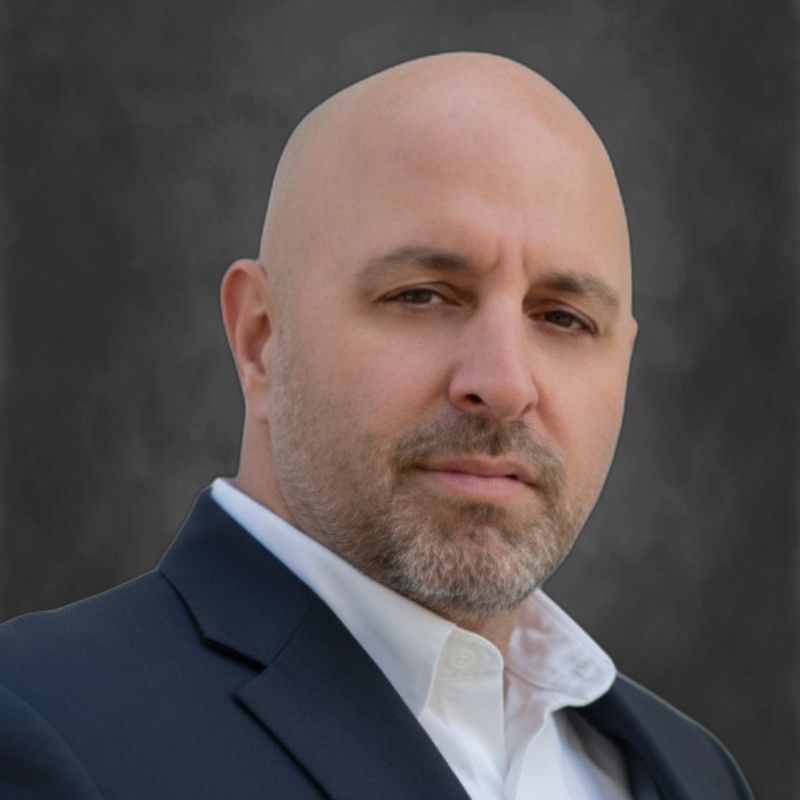
CEO/Co-Founder @ Oatmeal Health | AI Lung Cancer Screening | Almost Became a Doctor | Engineer | Follow to Share What I’ve Learned Along the Way
I help patients get the care they need earlier, preventing late-stage cancer.
That’s been the throughline across three companies and almost 20 years in healthcare. At ReferralMD, we fixed broken referral networks so patients didn’t fall through the cracks. At Oatmeal Health, it’s lung cancer: building the diagnostic and screening infrastructure so the 85% of cases caught too late get caught early instead.
Today as CEO of Oatmeal Health, I lead a team embedding AI into radiology workflows to turn routine lung CT scans into reimbursable cancer risk assessments. We partner with FQHCs to reach underserved communities, and with health systems and payers to make early detection economically sustainable. Think HeartFlow or Cleerly, but for lungs.
Between companies, I advised at Techstars and Plug and Play, mentoring founders building in digital health. That experience shaped how I think about what separates companies that ship from companies that stall: distribution, reimbursement, and clinical trust, not just technology.
I’m a CancerX alumnus, a 3x healthcare founder, and someone who believes the biggest problems in cancer aren’t scientific. They’re operational.
We’re hiring mission-driven builders at Oatmeal Health. If you want to work on something that matters, reach out.
When I’m not working, I’m traveling, mentoring, and keeping up with one very energetic husky. 🐾
Substack – The Oatmeal Bite:
Millions of patients get less care because of who they are, where they live, or how they look. I’m fighting to change that. CEO @OatmealHealth, a startup built for the underserved. The Oatmeal Bite: intel for clinicians, investors, and advocates.
Jonathan Govette
CEO of Oatmeal Health
Substack:
https://oatmealhealthjonathangovette.substack.com/