Share this article and save a life!
1,300 health centers could close. And most Americans have no idea.
The reconciliation bill working its way through Congress in June 2026 contains a provision that has received almost zero mainstream coverage, but it may be the single most consequential healthcare delivery threat of the decade.
A proposed $35 billion reduction to the HRSA Community Health Center Fund over 10 years.
This is the Section 330 grant program. It is not a fringe funding stream. It is the financial backbone of the entire Federally Qualified Health Center model.
Here is what that actually means on the ground.
FQHCs currently serve over 34 million patients across the U.S., nearly 1 in 10 Americans. About 63% of those patients live below the federal poverty line. More than 1.4 million are experiencing homelessness. And the majority of FQHC patients are uninsured or on Medicaid.
Section 330 grants do not just supplement FQHC revenue. For many centers, they are the difference between staying open and closing their doors.
Without this funding, a health center in rural Mississippi or East Los Angeles cannot absorb the loss. They cannot raise prices. Their patients cannot pay more. And there is no private sector equivalent waiting to fill the gap.
The math is brutal and simple. Remove the grant support, and the operational model collapses.
NACHC has estimated that cuts of this scale would force more than 1,300 health centers to close or dramatically scale back services. That is not a projection built on fear. It is based on the actual financial structure of how these organizations survive.
🏥 Think about what disappears when an FQHC closes.
Prenatal care in underserved zip codes. Pediatric visits for kids with no other provider. Behavioral health services in communities where the nearest psychiatrist is 90 miles away. Dental care for adults who have never seen a dentist. Medication management for diabetics who have nowhere else to go.
These are not optional services. For millions of patients, this is all there is.
And the downstream cost of those closures does not disappear from the system. It shifts. It moves into emergency departments that are already overwhelmed. It shows up as preventable hospitalizations, untreated chronic disease, and maternal mortality in communities that already carry the highest burden.
The Congressional Budget Office may score the grant cut as savings. But it does not score the cost of 32 million people losing their primary care home.
For FQHC executives and health center boards watching this closely, the window to act is narrow. Advocacy through NACHC, direct engagement with congressional offices, and coalitions with state Primary Care Associations are the levers available right now.
For hospital administrators and health system leaders: if your regional FQHCs close, your ED volume will tell you immediately.
For policymakers reading this: you cannot cut the foundation of a safety net and expect the net to hold.
Here is the question I keep coming back to.
If we allow the Community Health Center Fund to be gutted in a budget reconciliation process that most of the public cannot even name, what does that say about how we value the 32 million people who depend on it?
♻️ Repost if you believe dismantling the safety net is a cost we cannot afford to hide in a budget line.
👉 Follow me for daily healthcare updates and get the deeper analysis in my Substack newsletter → https://lnkd.in/eJKFuB_p
Share this article and save a life!
Author:
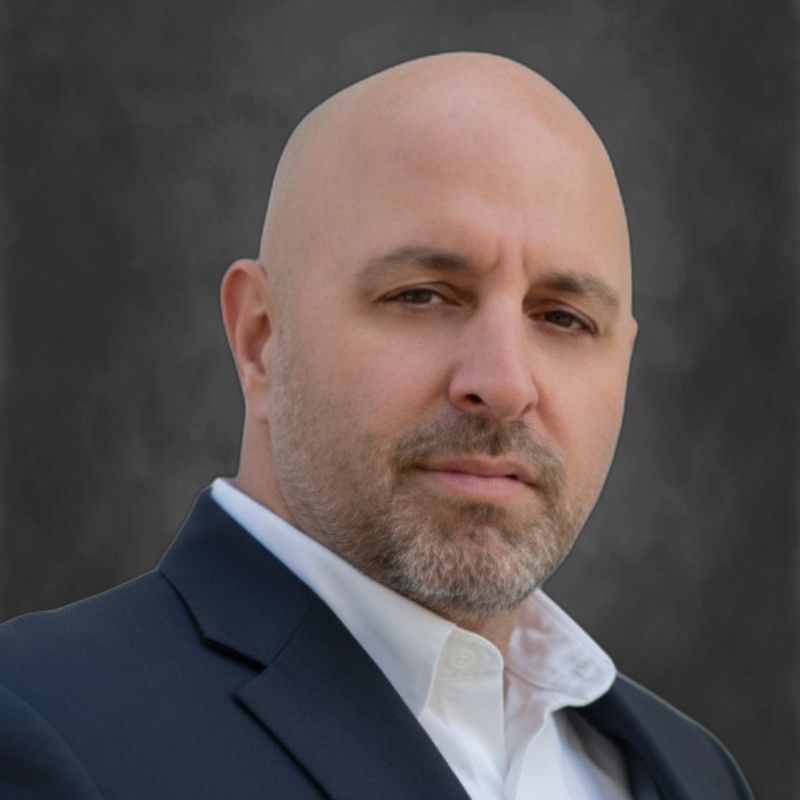
CEO/Co-Founder @ Oatmeal Health | AI Lung Cancer Screening | Almost Became a Doctor | Engineer | Follow to Share What I’ve Learned Along the Way
I help patients get the care they need earlier, preventing late-stage cancer.
That’s been the throughline across three companies and almost 20 years in healthcare. At ReferralMD, we fixed broken referral networks so patients didn’t fall through the cracks. At Oatmeal Health, it’s lung cancer: building the diagnostic and screening infrastructure so the 85% of cases caught too late get caught early instead.
Today as CEO of Oatmeal Health, I lead a team embedding AI into radiology workflows to turn routine lung CT scans into reimbursable cancer risk assessments. We partner with FQHCs to reach underserved communities, and with health systems and payers to make early detection economically sustainable. Think HeartFlow or Cleerly, but for lungs.
Between companies, I advised at Techstars and Plug and Play, mentoring founders building in digital health. That experience shaped how I think about what separates companies that ship from companies that stall: distribution, reimbursement, and clinical trust, not just technology.
I’m a CancerX alumnus, a 3x healthcare founder, and someone who believes the biggest problems in cancer aren’t scientific. They’re operational.
We’re hiring mission-driven builders at Oatmeal Health. If you want to work on something that matters, reach out.
When I’m not working, I’m traveling, mentoring, and keeping up with one very energetic husky. 🐾
Substack – The Oatmeal Bite:
Millions of patients get less care because of who they are, where they live, or how they look. I’m fighting to change that. CEO @OatmealHealth, a startup built for the underserved. The Oatmeal Bite: intel for clinicians, investors, and advocates.
Jonathan Govette
CEO of Oatmeal Health
Substack:
https://oatmealhealthjonathangovette.substack.com/