Share this article and save a life!
Medicare just did something it has never done before. 🚨
I keep thinking about what this actually means.
Starting July 1, 2026, CMS is launching the Medicare GLP-1 Bridge Program. For the first time in the history of Medicare Part D, seniors can access GLP-1 medications for weight management, not just for Type 2 diabetes or sleep apnea.
Since Part D was created, federal law explicitly excluded drugs used solely for weight loss. That was not an oversight. It was a deliberate policy choice. That choice held for over two decades.
This week, it changed.
Here is what the AMA’s National Advocacy Update published on June 26 says you need to know.
Eligibility is clinical and specific. A beneficiary qualifies if they have a BMI of 35 or greater, or a BMI of 30 or greater with heart failure with preserved ejection fraction, uncontrolled hypertension, or chronic kidney disease stage 3a or higher, or a BMI of 27 or greater with prediabetes, a prior heart attack, prior stroke, or symptomatic peripheral artery disease.
The prior authorization process is entirely retrospective. Physicians prescribe first. The documentation, diagnosis, clinical indication, BMI, and comorbidities, gets submitted after the fact. That is not a clean workflow. It is one that will create confusion and denials if clinicians are not prepared today.
Here is what most people are missing. This bridge program is temporary. It is a demonstration program. It is not permanent coverage. CMS is essentially running a large-scale pilot to justify what the data has been telling us for years, that obesity is a disease and treating it saves the system money downstream.
But the implications are enormous right now. 🔍
Millions of Medicare beneficiaries with obesity-related comorbidities have been paying out of pocket or going without. Ozempic, Wegovy, and similar drugs cost over $1,000 per month without coverage. For seniors on fixed incomes, that is not a real option.
This bridge changes that calculus, at least temporarily.
For health systems, for primary care practices, for community health programs serving underserved older adults, this is the moment to get your clinical workflows ready. Retrospective prior auth is not forgiving. If your documentation protocols are not tight, your patients will get denied even when they are eligible.
At Oatmeal Health, we work on the front lines of preventive care access for underserved communities. I have watched too many patients fall through the gap between clinical need and coverage reality. This week felt different.
The coverage wall just cracked. The question is whether health systems move fast enough to actually get eligible patients through it.
**Medicare covering GLP-1s for weight management is not just a policy update. It is a generational shift in how America treats obesity.**
To every primary care physician, health system administrator, and Medicaid and Medicare policy lead reading this: Is your documentation workflow ready for July 1? Because the program starts whether your team is ready or not.
👉 Follow for daily healthcare insights. Deeper dives in The Oatmeal Bite on Substack.
Share this article and save a life!
Author:
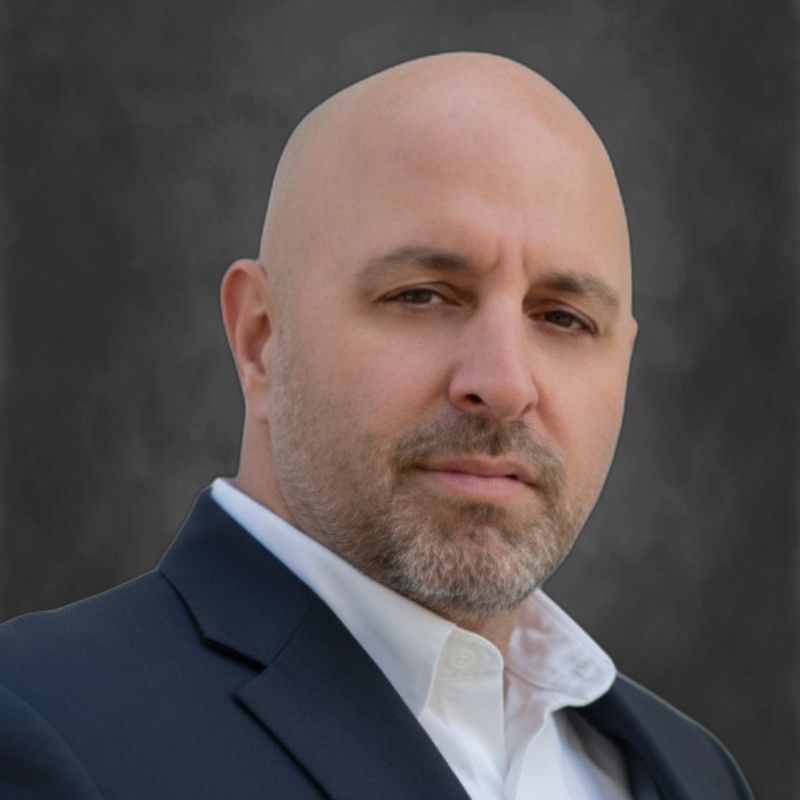
CEO/Co-Founder @ Oatmeal Health | AI Lung Cancer Screening | Almost Became a Doctor | Engineer | Follow to Share What I’ve Learned Along the Way
I help patients get the care they need earlier, preventing late-stage cancer.
That’s been the throughline across three companies and almost 20 years in healthcare. At ReferralMD, we fixed broken referral networks so patients didn’t fall through the cracks. At Oatmeal Health, it’s lung cancer: building the diagnostic and screening infrastructure so the 85% of cases caught too late get caught early instead.
Today as CEO of Oatmeal Health, I lead a team embedding AI into radiology workflows to turn routine lung CT scans into reimbursable cancer risk assessments. We partner with FQHCs to reach underserved communities, and with health systems and payers to make early detection economically sustainable. Think HeartFlow or Cleerly, but for lungs.
Between companies, I advised at Techstars and Plug and Play, mentoring founders building in digital health. That experience shaped how I think about what separates companies that ship from companies that stall: distribution, reimbursement, and clinical trust, not just technology.
I’m a CancerX alumnus, a 3x healthcare founder, and someone who believes the biggest problems in cancer aren’t scientific. They’re operational.
We’re hiring mission-driven builders at Oatmeal Health. If you want to work on something that matters, reach out.
When I’m not working, I’m traveling, mentoring, and keeping up with one very energetic husky. 🐾
Substack – The Oatmeal Bite:
Millions of patients get less care because of who they are, where they live, or how they look. I’m fighting to change that. CEO @OatmealHealth, a startup built for the underserved. The Oatmeal Bite: intel for clinicians, investors, and advocates.
Jonathan Govette
CEO of Oatmeal Health
Substack:
https://oatmealhealthjonathangovette.substack.com/