Share this article and save a life!
A hospital CFO in Dallas sits down at his desk on Tuesday morning. 🏥
His balance sheet looks the same as Monday. His Medicaid funding does not.
As of September 1, 2026, Texas hospitals are losing $27 million a day in Medicaid reimbursement. According to the Texas Tribune, reporting published by ABC13, the Trump administration has withheld approval for about $9.8 billion in funding tied to three Medicaid programs. The biggest piece is the Comprehensive Hospital Increase Reimbursement Program, known as CHIRP, which helps hospitals cover the gap between what Medicaid pays and what care actually costs.
This is not an abstract budget fight. This hits people.
🔹 Four million low-income Texans are enrolled in Medicaid, most of them children.
🔹 Harris Health in Houston alone could see at least $258 million less next year.
🔹 The region overall could absorb as much as $1.4 billion in losses.
🔹 The Texas Hospital Association says even a quick resolution means a 90-day claims backlog before any dollar flows.
Governor Greg Abbott wrote a letter to Health Secretary RFK Jr. on August 7 calling the funding holdup a gun to the head. I rarely quote politicians approvingly. But that description is accurate.
Here is the part that deserves more attention.
Texas did not expand Medicaid. It is one of ten states that refused. For years, hospital systems in non-expansion states used programs like CHIRP to patch the hole that decision created. Local governments taxed hospitals, the federal government matched those funds, and hospitals used that money to keep the lights on in their safety-net wards. The OBBBA, which passed a year ago, was supposed to freeze that structure and protect non-expansion states from sudden cuts.
Instead, CMS is now questioning how local Texas jurisdictions calculate the hospital taxes that fund the whole system. That question has produced 11 rounds of back-and-forth between CMS and the Texas Health and Human Services Commission. Eleven rounds, and still no approval.
💬 The counterpoint is that CMS has a legitimate interest in ensuring federal dollars are not misspent. Fair. But Florida faced the same scrutiny and resolved its dispute, though only after 11 months. Texas is watching that precedent and wondering how long it has to bleed before it gets a similar deal. The state estimates the total anticipated loss could reach $12 billion in 2027. That is not a rounding error.
The people who will feel this are not lobbyists or CFOs. They are the children who represent the majority of those four million Texas Medicaid enrollees. They are the patients of Harris Health, where Dr. Esmaeil Porsa said the impacts would be catastrophic for the safety-net healthcare system. They are the families that children’s hospitals like Children’s Medical Center in Dallas serve, where delays already threaten access to pediatric specialty care and behavioral health services.
I build technology to find lung cancer early in underserved communities. I know what happens when the funding floor disappears under a safety-net hospital. Services get cut. Staff leave. Screening programs are the first thing to go.
The political argument about how hospitals should be taxed is real. It deserves resolution. But resolution takes time, and every day it drags on, $27 million walks out the door of institutions that have no margin left to absorb it. The patients waiting in those hospitals did not cause this impasse. They should not be the ones paying for it.
👉 Follow Jonathan Govette, CEO of Oatmeal Health, for daily healthcare insights on LinkedIn. Deeper dives in The Oatmeal Bite on Substack: https://news.oatmealhealth.com
Share this article and save a life!
Author:
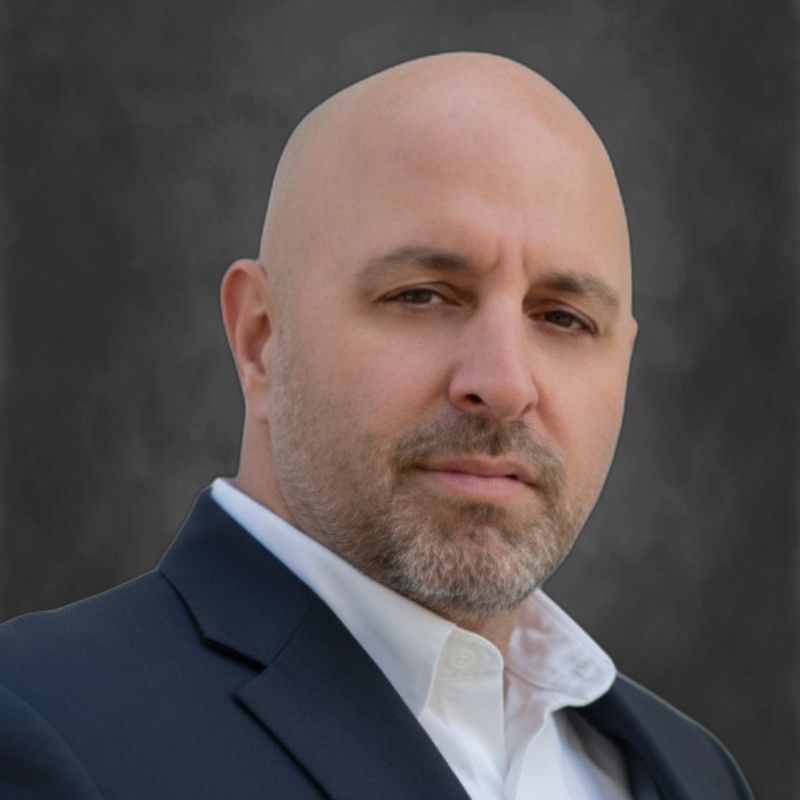
CEO/Co-Founder @ Oatmeal Health | AI Lung Cancer Screening | Almost Became a Doctor | Engineer | Follow to Share What I’ve Learned Along the Way
I help patients get the care they need earlier, preventing late-stage cancer.
That’s been the throughline across three companies and almost 20 years in healthcare. At ReferralMD, we fixed broken referral networks so patients didn’t fall through the cracks. At Oatmeal Health, it’s lung cancer: building the diagnostic and screening infrastructure so the 85% of cases caught too late get caught early instead.
Today as CEO of Oatmeal Health, I lead a team embedding AI into radiology workflows to turn routine lung CT scans into reimbursable cancer risk assessments. We partner with FQHCs to reach underserved communities, and with health systems and payers to make early detection economically sustainable. Think HeartFlow or Cleerly, but for lungs.
Between companies, I advised at Techstars and Plug and Play, mentoring founders building in digital health. That experience shaped how I think about what separates companies that ship from companies that stall: distribution, reimbursement, and clinical trust, not just technology.
I’m a CancerX alumnus, a 3x healthcare founder, and someone who believes the biggest problems in cancer aren’t scientific. They’re operational.
We’re hiring mission-driven builders at Oatmeal Health. If you want to work on something that matters, reach out.
When I’m not working, I’m traveling, mentoring, and keeping up with one very energetic husky. 🐾
Substack – The Oatmeal Bite:
Millions of patients get less care because of who they are, where they live, or how they look. I’m fighting to change that. CEO @OatmealHealth, a startup built for the underserved. The Oatmeal Bite: intel for clinicians, investors, and advocates.
Jonathan Govette
CEO of Oatmeal Health
Substack:
https://oatmealhealthjonathangovette.substack.com/