AI Spectral CT Revolution
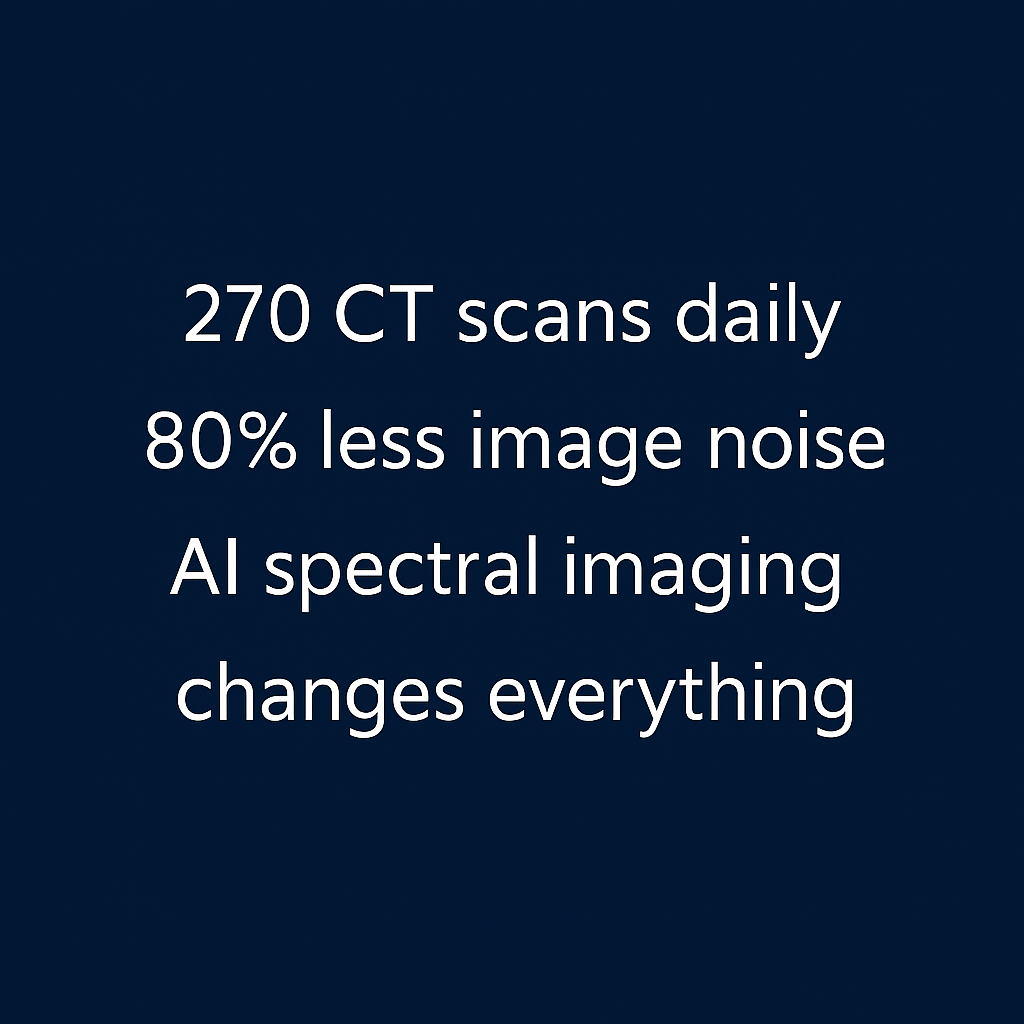
270 CT scans per day? That's what AI just made possible. Philips just got FDA clearance for something remarkable: the world's first AI-powered detector-based spectral CT system (April 16, 2026). Here's why this matters: 🔬 The Verida Spectral CT reconstructs 145 images per second. Full exams in under 30 seconds. That's twice as fast as previous systems. Think about that impact. A busy imaging center running 16-hour shifts can now handle 270 exams daily. Previously impossible throughput. But speed isn't the breakthrough. The AI-powered detector reduces image noise by 80%. It measures X-ray energy absorption at different levels, revealing tissue differences invisible to standard CT. Cancer that might have been missed? Now visible. Cardiac abnormalities hiding in noise? Crystal clear. ...
AI Detects Pancreatic Cancer 3 Years Early
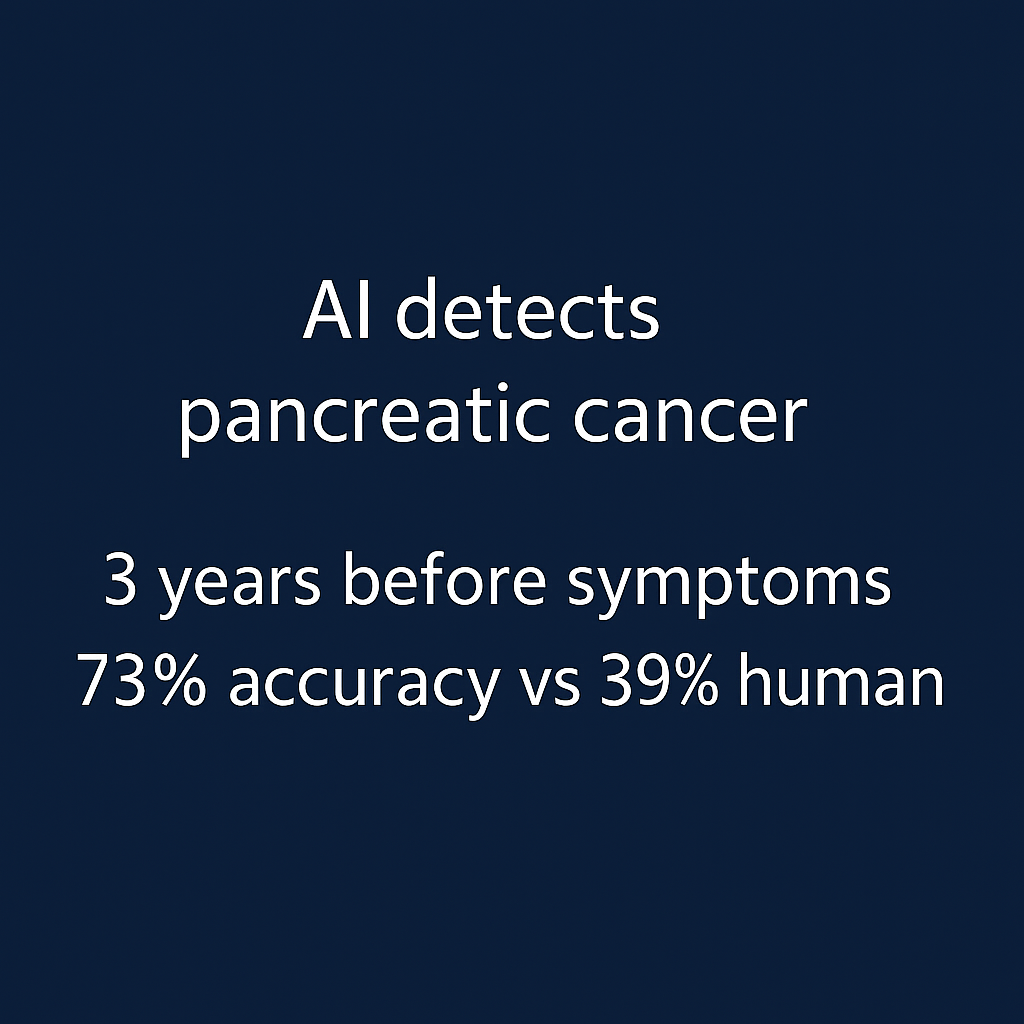
Imagine detecting pancreatic cancer 3 years before symptoms appear. That's exactly what Mayo Clinic just made possible. Their new AI tool, REDMOD, just shattered expectations by spotting pancreatic cancer on routine CT scans with 73% accuracy, while human radiologists only caught 39% of the same cases. Here's what makes this revolutionary: The AI doesn't need special scans. It reads the same routine CTs already sitting in your PACS system. It's nearly 3x more sensitive than radiologists when looking 2+ years before diagnosis. It maintains 90-92% consistency on repeat scans, eliminating the variability we see with human readers. 💡 The game-changer? This turns every abdominal CT into a potential early detection opportunity. Think about the implications for your imaging center or ...
AI Radiology Acquisition Transforms Cancer Care
The 40% of cancers we catch but never treat just got a solution. Yesterday, Azra AI acquired Thynk Health, creating something we desperately need: a bridge between finding cancer and actually treating it. Here's the brutal reality: Radiologists detect incidental findings in millions of scans annually. But up to 40% of these findings, including potential cancers, never receive follow up care. Patients fall through the cracks between detection and treatment. Why? Because our systems don't talk to each other. The radiologist sees it. The report gets filed. The primary care doctor might miss it. The patient never knows. Months pass. Opportunities vanish. 🎯 What makes this acquisition different: Azra AI specializes in enterprise platforms for managing incidental findings across radiology ...
CVS AI Patient Twins Revolution
CVS just created 100,000 digital patients to test on. And it's changing how we design healthcare experiences forever. Here's what's happening: CVS Health partnered with Simile to build "agentic twins", AI simulations of real patients based on 2.9 million consented responses from over 400,000 people. These aren't generic personas. They're detailed behavioral models that predict how specific patient groups will react to services, messages, and care pathways. The numbers are staggering: • 85-95% accuracy compared to real patient studies • Testing completed in hours instead of weeks • Over 200 behavioral scenarios already modeled • Hard-to-reach populations like immunocompromised patients finally represented But here's what makes this revolutionary: These digital twins don't just tell you what patients will do. They ...
FQHCs Get Historic Funding But Face Crisis
34 million patients just got a lifeline with an expiration date. Community health centers just secured their biggest funding win in a decade: $4.6 billion for 2026, a $300 million increase from current levels. But here's what nobody's talking about: This "victory" expires in December 2026. No long-term commitment. No strategic planning possible. Just another cliff that threatens the healthcare safety net for America's most vulnerable communities. The math tells a darker story: • 43% of FQHC revenue comes from Medicaid • Proposed Medicaid work requirements could cost FQHCs $32 billion • That's 7 times more than the funding increase they just received • 42% of health centers have less than 90 days cash reserves Think about what this means ...
OpenAI launches ChatGPT for Clinicians
OpenAI just handed doctors 2 hours of their life back. On April 22, they launched ChatGPT for Clinicians, free for verified U.S. physicians, NPs, PAs, and pharmacists. Here's why this matters: For every hour doctors spend with patients, they spend nearly 2 more hours on documentation. That's not healthcare, that's data entry. 26% of primary care physicians say documentation is their #1 cause of burnout. 23% of mental health providers feel the same. Pajama time is real. Doctors charting at home after putting their kids to bed. Now imagine this: • Prior authorizations written in seconds, not hours • Referral letters generated from voice notes • Medical research compiled with citations in minutes • Patient instructions customized instantly • CME ...
Avatar Medical FDA Clearance for 3D Vision
Surgery just entered the Matrix, and it's about to save lives. Yesterday, Avatar Medical got FDA clearance for something remarkable: a platform that lets surgeons walk through your brain, spine, or heart in 3D before they ever pick up a scalpel. No special glasses needed. No clunky headsets. Just pure, spatial anatomy floating in front of the surgical team. 🧠 Here's why this matters: Every year, 234 million surgeries happen globally. Studies show that up to 14% have complications, many from inadequate preoperative planning. Avatar's Vision platform transforms flat CT and MRI scans into interactive 3D models. Neurosurgeons can rotate tumors. Orthopedic surgeons can measure bone angles. Oncologists can map blood vessels around cancers. All in real time. All shareable ...
AI Saves Stroke Patients in Bay Area
2 million neurons die every minute during a stroke. AI just changed that. Good Samaritan Hospital in San Jose just flipped the script on stroke care. They're the first Bay Area hospital to deploy Lumina 3D, an AI system by RapidAI that transforms standard CT scans into detailed 3D brain and neck vessel maps. The game changer? It cuts image processing time by 24 minutes. 24 minutes = 48 million neurons saved. 🧠 Think about what this means: • Stroke teams can see blood clots instantly • Neurosurgeons get crystal clear vessel roadmaps • Decisions that took half an hour now happen in minutes • Rural hospitals can match urban stroke centers with this tech Here's what struck me most: ...
Medicaid Provider Revalidation Mandate
10 days to save Medicaid integrity? That's what states just got. CMS Administrator Mehmet Oz just dropped a bombshell on state Medicaid programs. On April 23, he directed all 50 states to revalidate high-risk Medicaid providers within 30 days. Governors have just 10 business days (by May 7) to commit to this massive undertaking. The scope? Staggering. This includes providers without National Provider Identifiers, those flagged for fraud risk, and any provider category deemed high-risk by state programs. States must submit detailed strategies immediately. Here's what makes this unprecedented: • The timeline is the shortest ever mandated for provider revalidation • It affects potentially millions of provider enrollments nationwide • States already struggling with workforce shortages must redirect resources immediately ...