Share this article and save a life!
37% less interpretation time. That is not a feature. That is a workflow reset. 🔬
DeepHealth just got FDA 510(k) clearance for an AI-powered breast ultrasound solution that does something most imaging AI still does not do: it handles detection, characterization, AND report generation in a single workflow.
The consensus right now is that AI in radiology is an assist tool. It flags things. It surfaces findings. The radiologist still does the heavy lifting.
My read is different. This clearance is a signal that the assist model is giving way to something more structural.
Here is what the fetched press release actually says, verbatim:
– Greater than 98% accuracy in localizing breast lesions
– 8% improved sensitivity for breast cancer detection
– 37% reduction in radiologist interpretation time
– Validated in a multi-reader multi-case study with 16 U.S. board-certified radiologists
– Approximately 40% of women undergo breast ultrasound at some point in their lives
– RadNet projects more than 700,000 breast ultrasound studies annually may be eligible for reimbursement under an existing Category III CPT code
Those are not pilot numbers. That last point especially matters. Reimbursement infrastructure is already in place.
🧵 What most people are skipping over:
Breast ultrasound is notoriously operator-dependent. As Dr. Jason McKellop, Medical Director of Women’s Imaging for RadNet California, said according to HIT Consultant: significant variability in image acquisition, interpretation, and reporting is the core problem this tool is solving. AI is not just speeding up a clean workflow here. It is standardizing a messy one.
That is harder to do. And it is more valuable.
This also is not a standalone product chasing a single use case. According to the GlobeNewswire release, the DeepHealth breast platform already covers mammography and ultrasound, with density assessment, breast arterial calcification assessment, image-based risk prediction, and mammography quality analytics all under one operating system.
When a single platform owns that much of the breast imaging workflow, integration costs drop and adoption accelerates.
⚡ Questions any radiology leader should ask before betting on a result like this:
1. Was the multi-reader study conducted in settings that look like my department, or only at optimized imaging centers?
2. What is the false negative rate for lesion detection, not just the localization accuracy?
3. How does the AI handle edge cases: dense tissue, small lesions, atypical presentations?
4. Does the CPT reimbursement pathway cover my patient mix and payer contracts?
5. What happens to liability when the AI generates the report and the radiologist signs off?
Save this list. These are the five questions that separate smart adoption from expensive regret.
🎯 The implication for anyone deploying imaging AI today:
End-to-end workflow AI is no longer theoretical. It cleared the FDA. It has CPT codes. It is being rolled out across a real network this year. The question for health systems is not whether this technology works. The question is whether your integration and governance infrastructure is ready to absorb it at scale.
We think about this constantly at Oatmeal Health. Lung cancer screening AI faces the same structural question. Detection is the easy part. The hard part is building the workflow around it that actually changes outcomes.
The bar just moved.
👉 Follow Jonathan Govette, CEO of Oatmeal Health, for daily healthcare insights on LinkedIn. Deeper dives in The Oatmeal Bite on Substack: https://news.oatmealhealth.com
Share this article and save a life!
Author:
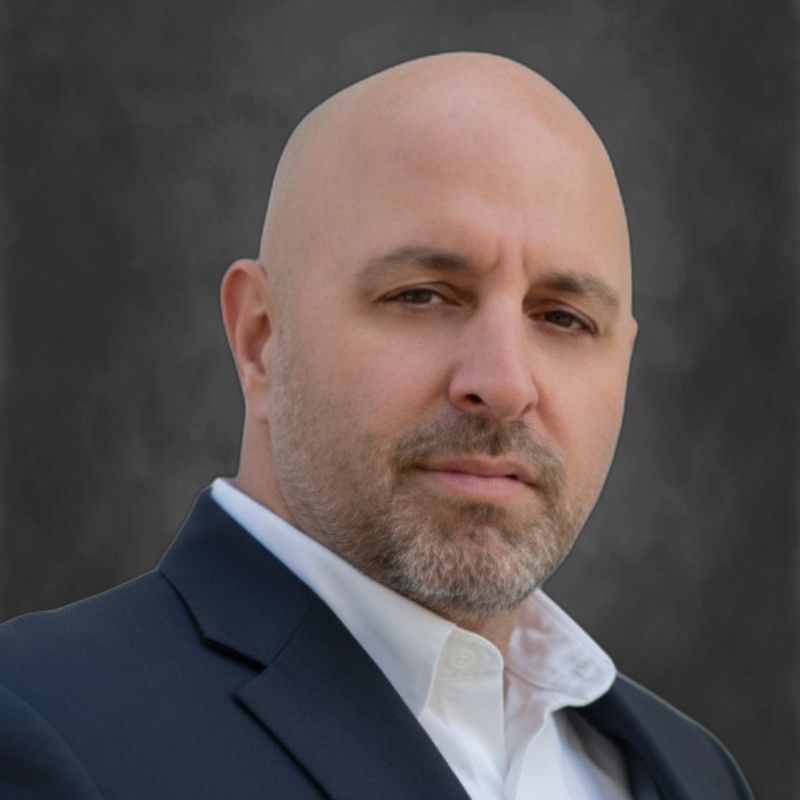
CEO/Co-Founder @ Oatmeal Health | AI Lung Cancer Screening | Almost Became a Doctor | Engineer | Follow to Share What I’ve Learned Along the Way
I help patients get the care they need earlier, preventing late-stage cancer.
That’s been the throughline across three companies and almost 20 years in healthcare. At ReferralMD, we fixed broken referral networks so patients didn’t fall through the cracks. At Oatmeal Health, it’s lung cancer: building the diagnostic and screening infrastructure so the 85% of cases caught too late get caught early instead.
Today as CEO of Oatmeal Health, I lead a team embedding AI into radiology workflows to turn routine lung CT scans into reimbursable cancer risk assessments. We partner with FQHCs to reach underserved communities, and with health systems and payers to make early detection economically sustainable. Think HeartFlow or Cleerly, but for lungs.
Between companies, I advised at Techstars and Plug and Play, mentoring founders building in digital health. That experience shaped how I think about what separates companies that ship from companies that stall: distribution, reimbursement, and clinical trust, not just technology.
I’m a CancerX alumnus, a 3x healthcare founder, and someone who believes the biggest problems in cancer aren’t scientific. They’re operational.
We’re hiring mission-driven builders at Oatmeal Health. If you want to work on something that matters, reach out.
When I’m not working, I’m traveling, mentoring, and keeping up with one very energetic husky. 🐾
Substack – The Oatmeal Bite:
Millions of patients get less care because of who they are, where they live, or how they look. I’m fighting to change that. CEO @OatmealHealth, a startup built for the underserved. The Oatmeal Bite: intel for clinicians, investors, and advocates.
Jonathan Govette
CEO of Oatmeal Health
Substack:
https://oatmealhealthjonathangovette.substack.com/