Share this article and save a life!
AI just stopped flagging findings. It started writing the report. 🖊️
That is a different product category entirely.
The consensus right now is that radiology AI is a detection layer. A flag. A second pair of eyes sitting beside the radiologist, handing them a score. The industry has spent a decade building that story.
Here is my read: that framing is already obsolete.
In July 2026, the FDA granted 510(k) clearance to DeepHealth Breast Ultrasound, the commercial name for the See-Mode Augmented Reporting Tool, Breast, or SMART-B. According to Discoveries in Health Policy, the system performs automated lesion detection and characterization and generates radiology report findings and impressions, while leaving final assessment under radiologist control.
This is not a detection overlay. This is AI producing the physician’s work product.
📊 The data released with the clearance is worth sitting with:
🔹 A 16-radiologist multi-reader multi-case study was conducted
🔹 8% improvement in sensitivity for breast-cancer detection
🔹 37% reduction in interpretation time
Those numbers matter. Not because they are perfect, but because they come from a multi-reader study design that the FDA accepted as sufficient for clearance.
What most people are missing is the architectural shift underneath this.
The systems now earning clearance are not general-purpose language models improvising a report from an image. The SMART-B approach uses modular architecture: specialized image-analysis components establish the clinical observations, then the system organizes those observations into structured report text. Detection first. Characterization second. Report assembly third. Each step disciplined and auditable.
That modularity is exactly what the FDA wants to see, and it is exactly what separates a cleared product from a demo.
The implication for anyone deploying imaging AI in a real department is direct. The question you need to ask is no longer just “does this tool catch more findings?” The question is now “what does this tool hand the radiologist, and at what point in the workflow?” A sensitivity gain of 8% with a 37% time reduction only matters if the radiologist can trust the assembled output enough to act on it efficiently.
The 3 questions any radiology leader should ask before believing this result:
🔹 Was the sensitivity gain measured on the same patient population I serve, or on a curated study cohort?
🔹 What happens to the 37% time reduction when case complexity goes up?
🔹 Where exactly does radiologist override occur in the workflow, and is it genuinely easy to exercise?
Here is what I think is true. The moment AI starts drafting the report, the accountability conversation changes. The radiologist is no longer reviewing a flag. They are editing a document. That is a subtly different cognitive task, and we do not yet have great data on how that changes error rates over time.
This is a milestone worth paying attention to. And a question worth sitting with honestly.
👉 Follow Jonathan Govette, CEO of Oatmeal Health, for daily healthcare insights on LinkedIn. Deeper dives in The Oatmeal Bite on Substack: https://news.oatmealhealth.com
Share this article and save a life!
Author:
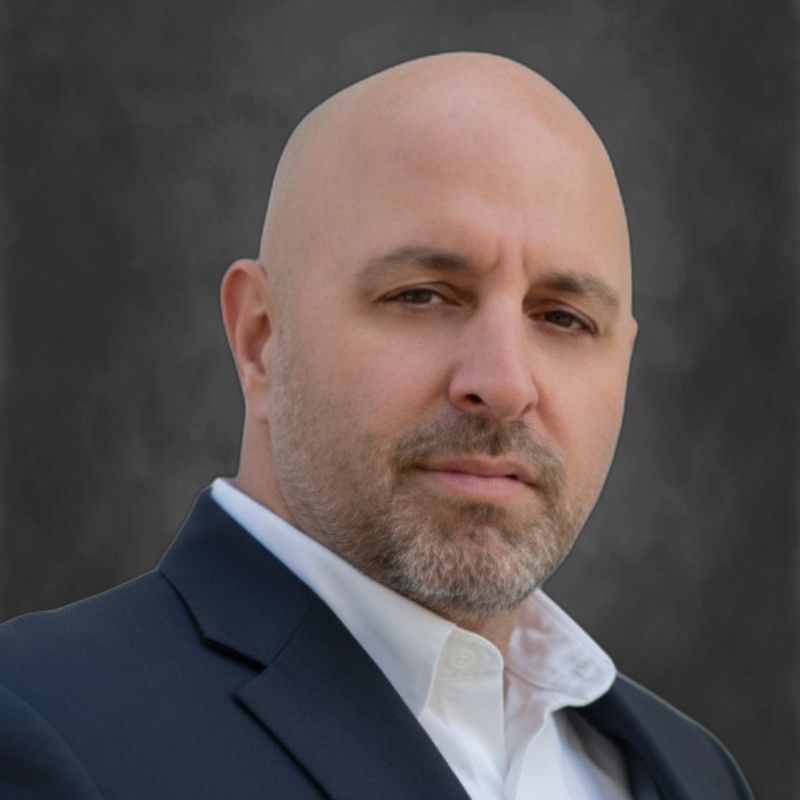
CEO/Co-Founder @ Oatmeal Health | AI Lung Cancer Screening | Almost Became a Doctor | Engineer | Follow to Share What I’ve Learned Along the Way
I help patients get the care they need earlier, preventing late-stage cancer.
That’s been the throughline across three companies and almost 20 years in healthcare. At ReferralMD, we fixed broken referral networks so patients didn’t fall through the cracks. At Oatmeal Health, it’s lung cancer: building the diagnostic and screening infrastructure so the 85% of cases caught too late get caught early instead.
Today as CEO of Oatmeal Health, I lead a team embedding AI into radiology workflows to turn routine lung CT scans into reimbursable cancer risk assessments. We partner with FQHCs to reach underserved communities, and with health systems and payers to make early detection economically sustainable. Think HeartFlow or Cleerly, but for lungs.
Between companies, I advised at Techstars and Plug and Play, mentoring founders building in digital health. That experience shaped how I think about what separates companies that ship from companies that stall: distribution, reimbursement, and clinical trust, not just technology.
I’m a CancerX alumnus, a 3x healthcare founder, and someone who believes the biggest problems in cancer aren’t scientific. They’re operational.
We’re hiring mission-driven builders at Oatmeal Health. If you want to work on something that matters, reach out.
When I’m not working, I’m traveling, mentoring, and keeping up with one very energetic husky. 🐾
Substack – The Oatmeal Bite:
Millions of patients get less care because of who they are, where they live, or how they look. I’m fighting to change that. CEO @OatmealHealth, a startup built for the underserved. The Oatmeal Bite: intel for clinicians, investors, and advocates.
Jonathan Govette
CEO of Oatmeal Health
Substack:
https://oatmealhealthjonathangovette.substack.com/