Share this article and save a life!
I keep thinking about why AI still can’t change a doctor’s mind.
Not because the models are bad. Some of them are genuinely impressive.
But impressive models and useful tools are not the same thing.
Health systems invest millions in clinical decision support, deploy it inside the EHR, and then watch utilization rates flatline. Clinicians click through alerts without reading them. Recommendations get ignored. And the vendor gets blamed.
But the vendor is not always the problem.
A 2025 study published in the Journal of the American Medical Informatics Association found that physicians override clinical decision support alerts at rates exceeding 90% in some health systems. That is not a technology failure. It is a trust failure.
Why?
Three reasons nobody wants to say out loud.
🔍 First, most clinical AI is still a black box. Physicians are trained to understand causality. Show a doctor an alert that says “high sepsis risk” without explaining why, and many will dismiss it. Not because they are resistant to AI, but because good clinical training teaches skepticism without evidence.
Second, alert fatigue is structural, not behavioral. Primary care physicians receive dozens of alerts every day. Research has shown that when health systems reduce unnecessary alerts, meaningful responses increase. More alerts do not create more safety. They create more noise.
Third, many AI tools were built for compliance and billing workflows, not clinical thinking. When AI is buried inside the same interface physicians already struggle with, even accurate recommendations are easy to ignore.
What actually works?
The evidence points to specificity. Narrow, high-confidence alerts paired with a clear next action consistently outperform broad notification systems.
AI that briefly explains its reasoning also performs better. Explainability is not just a regulatory checkbox. It is a clinical adoption strategy.
And integration matters as much as accuracy. A tool that is 95% accurate but buried three clicks deep will often underperform one that is slightly less accurate but appears naturally in the clinician’s workflow.
I have watched this pattern play out firsthand. At Oatmeal Health, we think constantly about what makes a clinician actually act on a finding. The answer is almost never more data. It is better context, delivered at the right time and in the right workflow.
Health systems will not solve AI adoption by buying newer models. They will solve it by redesigning the interaction between the tool and the human.
The physician is not the obstacle. The physician is the user.
We keep building AI for the system. We need to start building it for the person standing in front of the patient.
If you lead a health system or work in clinical informatics, what has actually improved AI adoption in your organization?
👉 Follow me for daily healthcare insights and updates on LinkedIn.
🔍 For deeper analysis, subscribe to my Substack, where I share long-form articles and perspectives on healthcare, AI, diagnostics, and the future of care.
Share this article and save a life!
Author:
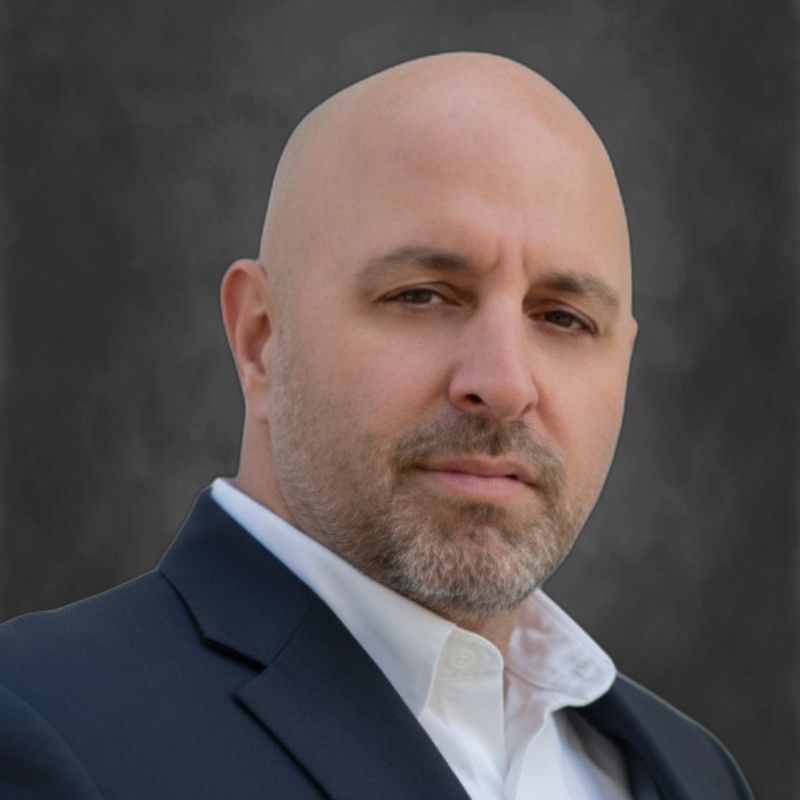
CEO/Co-Founder @ Oatmeal Health | AI Lung Cancer Screening | Almost Became a Doctor | Engineer | Follow to Share What I’ve Learned Along the Way
I help patients get the care they need earlier, preventing late-stage cancer.
That’s been the throughline across three companies and almost 20 years in healthcare. At ReferralMD, we fixed broken referral networks so patients didn’t fall through the cracks. At Oatmeal Health, it’s lung cancer: building the diagnostic and screening infrastructure so the 85% of cases caught too late get caught early instead.
Today as CEO of Oatmeal Health, I lead a team embedding AI into radiology workflows to turn routine lung CT scans into reimbursable cancer risk assessments. We partner with FQHCs to reach underserved communities, and with health systems and payers to make early detection economically sustainable. Think HeartFlow or Cleerly, but for lungs.
Between companies, I advised at Techstars and Plug and Play, mentoring founders building in digital health. That experience shaped how I think about what separates companies that ship from companies that stall: distribution, reimbursement, and clinical trust, not just technology.
I’m a CancerX alumnus, a 3x healthcare founder, and someone who believes the biggest problems in cancer aren’t scientific. They’re operational.
We’re hiring mission-driven builders at Oatmeal Health. If you want to work on something that matters, reach out.
When I’m not working, I’m traveling, mentoring, and keeping up with one very energetic husky. 🐾
Substack – The Oatmeal Bite:
Millions of patients get less care because of who they are, where they live, or how they look. I’m fighting to change that. CEO @OatmealHealth, a startup built for the underserved. The Oatmeal Bite: intel for clinicians, investors, and advocates.
Jonathan Govette
CEO of Oatmeal Health
Substack:
https://oatmealhealthjonathangovette.substack.com/