Share this article and save a life!
Everyone says the FDA is moving too slow on AI. They’re wrong. 🧠
Moving fast on a broken framework would be worse than moving carefully on the right one.
This week, the FDA’s Digital Health Center of Excellence released a discussion paper on regulating generative AI-enabled medical devices, opened under docket FDA-2026-N-7874, with public comments due October 19, 2026. According to Edge RCM, which broke down the development for physicians, this is the agency’s first real attempt at a framework built specifically for GenAI devices, rather than stretching existing software and AI/ML rules to cover them.
That distinction matters more than most people realize.
The old FDA frameworks assumed three things:
– Inputs are bounded
– Outputs are fixed
– The underlying algorithm is stable
GenAI devices break all three. Inputs are open-ended. Outputs are open-ended. Models change constantly, often with bias drift and performance degradation nobody tracks.
So the FDA designed something new.
The paper proposes a two-axis risk framework that weighs how independently a device functions alongside how severe the harm would be if it gets it wrong. It also introduces a competency-based premarket evaluation model, borrowed from how we assess human clinicians, not legacy software pathways.
The paper goes further than most critics have acknowledged. It directly addresses hallucinations, how to monitor a model that keeps learning after deployment, and who is accountable when a manufacturer builds on top of someone else’s foundation model.
That last one is the real bomb in the room.
Almost every clinical AI product being sold right now is built on top of OpenAI, Anthropic, or Google infrastructure. The device maker has limited visibility into the training data, the architecture, or how the model was evaluated. When something goes wrong with a patient, does liability land on the device company or the foundation model vendor? Nobody has answered that. The FDA is now at least asking the question out loud.
🔎 The counterpoint is fair: this is not a proposed rule, not draft guidance, not a binding requirement. It is a 30-page discussion paper requesting feedback. Nothing changes in any practice tomorrow.
But here is the problem with the critics who want faster action: speed without the right framework produces rubber stamps, not safety. We have already cleared over 950 AI devices. Most lack any postmarket monitoring requirement. We do not need more approvals on a broken chassis.
What we actually need is a framework that can handle a model that rewrites itself after deployment. That is genuinely new regulatory science. The FDA calling that out explicitly, naming agentic AI and foundation model accountability as open questions, is not weakness. It is intellectual honesty the sector has been avoiding for years.
The real accountability question is not whether the FDA is moving fast enough.
It is whether the companies rushing products to market have answers to the questions this paper is asking. Most of them do not.
👉 Follow Jonathan Govette, CEO of Oatmeal Health, for daily healthcare insights on LinkedIn. Deeper dives in The Oatmeal Bite on Substack: https://news.oatmealhealth.com
Share this article and save a life!
Author:
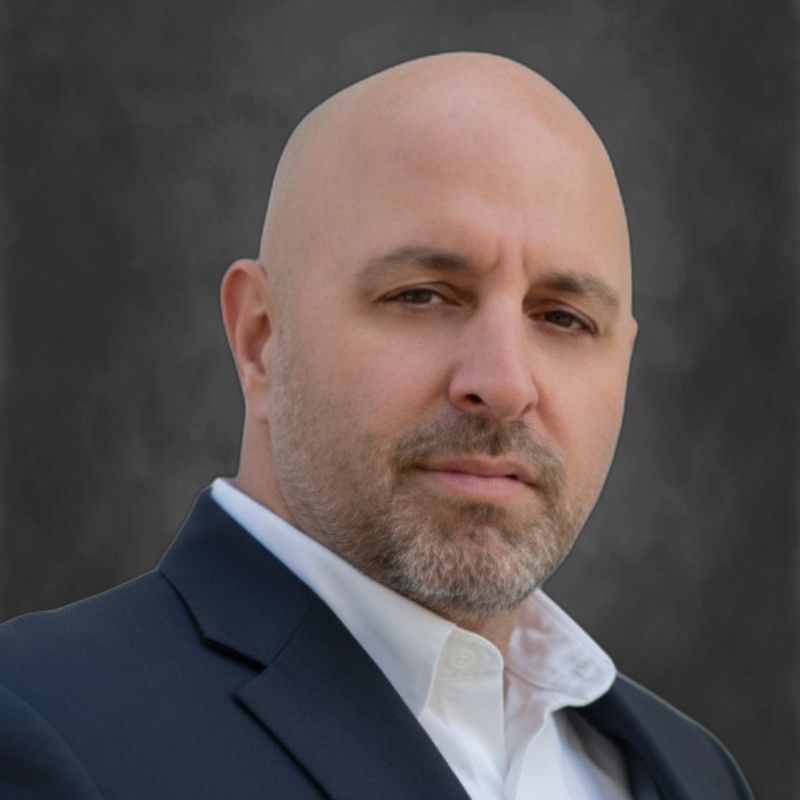
CEO/Co-Founder @ Oatmeal Health | AI Lung Cancer Screening | Almost Became a Doctor | Engineer | Follow to Share What I’ve Learned Along the Way
I help patients get the care they need earlier, preventing late-stage cancer.
That’s been the throughline across three companies and almost 20 years in healthcare. At ReferralMD, we fixed broken referral networks so patients didn’t fall through the cracks. At Oatmeal Health, it’s lung cancer: building the diagnostic and screening infrastructure so the 85% of cases caught too late get caught early instead.
Today as CEO of Oatmeal Health, I lead a team embedding AI into radiology workflows to turn routine lung CT scans into reimbursable cancer risk assessments. We partner with FQHCs to reach underserved communities, and with health systems and payers to make early detection economically sustainable. Think HeartFlow or Cleerly, but for lungs.
Between companies, I advised at Techstars and Plug and Play, mentoring founders building in digital health. That experience shaped how I think about what separates companies that ship from companies that stall: distribution, reimbursement, and clinical trust, not just technology.
I’m a CancerX alumnus, a 3x healthcare founder, and someone who believes the biggest problems in cancer aren’t scientific. They’re operational.
We’re hiring mission-driven builders at Oatmeal Health. If you want to work on something that matters, reach out.
When I’m not working, I’m traveling, mentoring, and keeping up with one very energetic husky. 🐾
Substack – The Oatmeal Bite:
Millions of patients get less care because of who they are, where they live, or how they look. I’m fighting to change that. CEO @OatmealHealth, a startup built for the underserved. The Oatmeal Bite: intel for clinicians, investors, and advocates.
Jonathan Govette
CEO of Oatmeal Health
Substack:
https://oatmealhealthjonathangovette.substack.com/