Share this article and save a life!
The hospitals serving the poorest patients may not survive this bill.
As the Senate takes up the reconciliation package in June 2026, one of the quieter provisions is getting very little attention outside of hospital finance circles. Medicaid Disproportionate Share Hospital payments, known as DSH, are facing deep reductions under the current proposal.
Here is why this matters.
DSH payments exist for one reason: to compensate hospitals that treat a disproportionately high share of Medicaid and uninsured patients. These are not suburban health systems with strong commercial payer mixes. These are urban public hospitals, rural critical access facilities, and teaching hospitals in low-income communities. For many of them, DSH is not supplemental revenue. It is survival revenue.
🏥 The numbers are stark. Safety-net hospitals already operate on margins averaging below 2 percent. Some run at negative margins year after year and stay open because of government supplemental payments like DSH. The American Hospital Association estimates that hospitals collectively provide over $40 billion in uncompensated care annually. DSH is a core mechanism for offsetting that cost.
Now stack the pressures:
Proposed Medicaid enrollment reductions that would shift more patients to uninsured status.
Simultaneous DSH payment cuts that reduce the hospital’s ability to absorb the uncompensated care load.
A conversion factor reduction in the 2027 Medicare Physician Fee Schedule that squeezes revenue on the commercial and Medicare side simultaneously.
These are not independent policy decisions. They interact. And the hospitals at the intersection of all three are the ones already closest to the edge.
What makes this particularly challenging is the timing. Healthcare labor costs have not normalized since the post-pandemic staffing crisis. Supply chain inflation persists. And capital markets remain tight for facilities without investment-grade ratings, which describes most safety-net hospitals.
🔍 For healthcare executives and policy leaders, the DSH conversation is one that needs to move out of the budget spreadsheet and into the public dialogue.
Some questions worth asking:
If a safety-net hospital closes, what happens to the 200,000 patients it serves annually? Do they simply not get care?
Are there alternative financing models, such as value-based DSH payments tied to outcomes, that could replace the current structure without eliminating the safety net?
How are state Medicaid agencies preparing for the downstream effects if federal DSH dollars shrink while uninsured rates rise?
This is the kind of policy change that takes years to fully manifest and then becomes impossible to reverse once closures happen. A closed hospital does not reopen. A community that loses its only trauma center does not recover quickly.
The policy debate tends to focus on the federal budget score. The operational reality for the hospitals and patients on the receiving end of these decisions is a different conversation entirely, and one that healthcare leaders need to be having loudly right now.
What is your organization doing to prepare for potential DSH reductions? I would genuinely like to hear from CFOs and hospital executives navigating this in real time.
👉 Follow me for daily healthcare insights and updates on LinkedIn.
🔍 For deeper analysis, subscribe to my Substack, where I share long-form articles, industry trends, and in-depth perspectives on healthcare, AI, diagnostics, and the future of care. → https://lnkd.in/eJKFuB_p
Share this article and save a life!
Author:
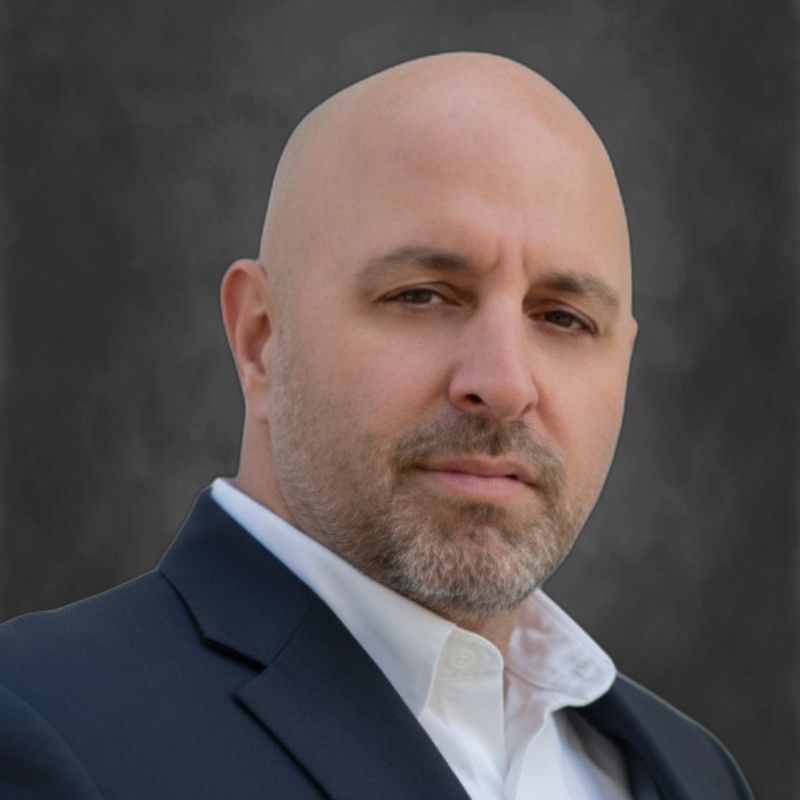
Jonathan Govette is a seasoned healthcare and technology executive with more than two decades of experience building, scaling, and advising digital health companies. He is the Co-Founder and CEO of Oatmeal Health, an AI-driven Lung Cancer Screening and Diagnostics company focused on expanding access to early detection for underrepresented populations, particularly patients served by Federally Qualified Health Centers and value-based health plans.
With a background in engineering, product development, and strategic partnerships, Jonathan has founded and led multiple health technology ventures across clinical care delivery, regulated medical software, and AI-enabled diagnostics. His work sits at the intersection of medicine, technology, and health equity, with a consistent focus on translating complex clinical problems into scalable, real-world solutions.
Jonathan has spent much of his professional life dedicated to improving outcomes for marginalized and underserved communities. He has designed and implemented frameworks that align clinical quality, reimbursement, and technology to sustainably advance health equity at scale. This mission is deeply personal and informs his leadership philosophy and long-term vision for healthcare transformation.
In addition to his operating experience, Jonathan is an author and long-time writer in the healthcare domain, with over 20 years of published work covering digital health, medical innovation, and healthcare systems. He is a frequent mentor to early-stage founders and regularly advises startups on product strategy, partnerships, and go-to-market execution in regulated healthcare environments.
Before entering industry full-time, Jonathan nearly pursued a career in medicine with an early path toward cardiothoracic surgery, an experience that continues to shape his clinical perspective and respect for frontline care delivery.
CEO | Oatmeal Health | AI Lung Cancer Startup | Engineer | Writer | Almost Became a Doctor (Cardiac Thoracic Surgeon) | 3x Health Tech Founder | Startup Mentor | Follow to share what I’ve learned along the way.