Share this article and save a life!
86 FDA AI clearances in one quarter. Most people read this wrong.
I read the Innolitics Q2 2026 AI/ML FDA clearance breakdown and stopped at one line: 84 of those came through 510(k), but only 12 were Special 510(k)s. That small number is the entire story.
Here is why that distinction matters more than the headline count.
According to Innolitics, FDA authorized 86 AI/ML devices in Q2 2026. Radiology led with 59 records. That sounds like momentum. But if you are building or buying AI for your imaging workflow, the total authorization count is almost irrelevant.
What matters is how these products evolve after first clearance.
I call this The 4-Stage AI Device Maturity Stack. Use it to evaluate any radiology AI product you are considering.
1. Initial Clearance. This is the starting line, not the finish line. A first 510(k) tells you the product met a baseline bar. It says nothing about where the product is heading or how the vendor manages change.
2. Special 510(k) Activity. This is the real signal. Per Innolitics, 12 Specials in Q2 alone show companies changing deployment architecture, model outputs, patient populations, acquisition workflows, and clinical integrations. Aidoc shifted its head CTA triage to a Linux-based cloud environment. Lunid changed its mammography model and outputs. Imeka expanded diffusion-MRI analysis to adolescents. These are not minor patches. These are product pivots under FDA oversight.
3. PCCP Presence. Twelve authorizations in Q2 referenced a Predetermined Change Control Plan. A PCCP means the vendor planned for evolution from day one. If a product you are evaluating has no PCCP, ask why.
4. De Novo Creation. The highest signal of all. Two De Novos in Q2 created entirely new predicate categories. Automated Imaging Diagnostics received clearance for neuropacs, classifying diffusion-MRI patterns for Parkinson’s disease, multiple system atrophy, and progressive supranuclear palsy. SpectralMD received clearance for the DeepView AI System, which combines optical imaging with AI to identify deep burn tissue and predict regions unlikely to heal within 21 days.
These two decisions created frameworks that future devices can now inherit. That is how categories get built.
Why does this matter for your workflow decisions?
Review timelines alone tell the story of risk. According to Innolitics, the observed median was 170.5 days for Traditional 510(k)s and 29 days for Specials. The two De Novos took 328 and 485 days. The route a vendor chose reveals how they think about their product roadmap.
A vendor with one Traditional 510(k) and no PCCP is not necessarily a bad product. But they have less infrastructure for managing what happens next. In a live hospital environment, that matters.
Worth saving if you are evaluating radiology AI vendors this quarter and need a framework to ask sharper questions in procurement conversations.
The market has moved well beyond chest X-ray triage. The real question is not whether a product is cleared. It is what the vendor plans to do with it after clearance.
👉 Follow Jonathan Govette, CEO of Oatmeal Health, for daily healthcare insights on LinkedIn. Deeper dives in The Oatmeal Bite on Substack: https://news.oatmealhealth.com
Share this article and save a life!
Author:
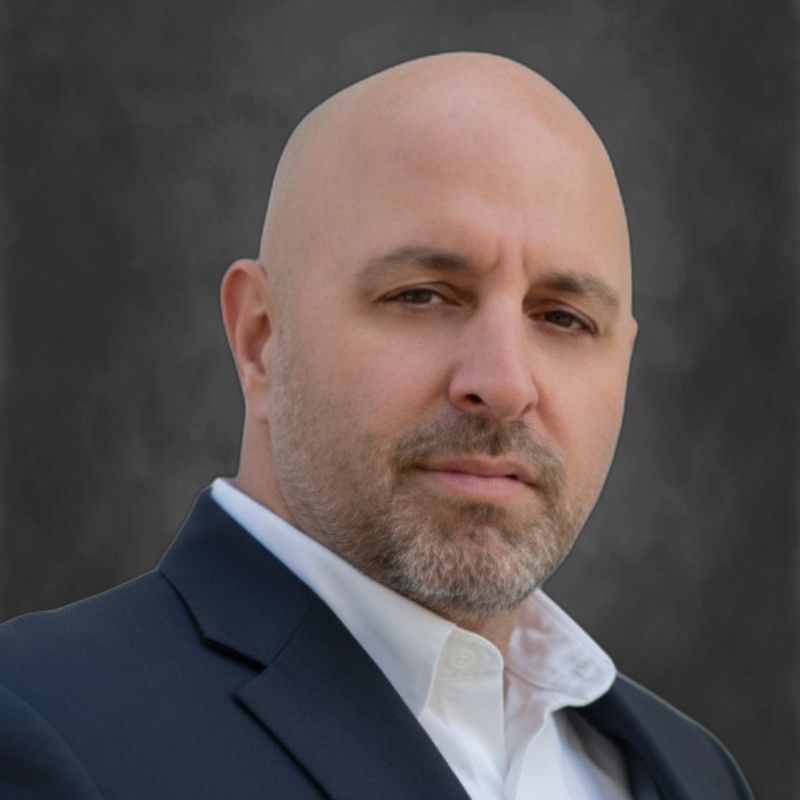
CEO/Co-Founder @ Oatmeal Health | AI Lung Cancer Screening | Almost Became a Doctor | Engineer | Follow to Share What I’ve Learned Along the Way
I help patients get the care they need earlier, preventing late-stage cancer.
That’s been the throughline across three companies and almost 20 years in healthcare. At ReferralMD, we fixed broken referral networks so patients didn’t fall through the cracks. At Oatmeal Health, it’s lung cancer: building the diagnostic and screening infrastructure so the 85% of cases caught too late get caught early instead.
Today as CEO of Oatmeal Health, I lead a team embedding AI into radiology workflows to turn routine lung CT scans into reimbursable cancer risk assessments. We partner with FQHCs to reach underserved communities, and with health systems and payers to make early detection economically sustainable. Think HeartFlow or Cleerly, but for lungs.
Between companies, I advised at Techstars and Plug and Play, mentoring founders building in digital health. That experience shaped how I think about what separates companies that ship from companies that stall: distribution, reimbursement, and clinical trust, not just technology.
I’m a CancerX alumnus, a 3x healthcare founder, and someone who believes the biggest problems in cancer aren’t scientific. They’re operational.
We’re hiring mission-driven builders at Oatmeal Health. If you want to work on something that matters, reach out.
When I’m not working, I’m traveling, mentoring, and keeping up with one very energetic husky. 🐾
Substack – The Oatmeal Bite:
Millions of patients get less care because of who they are, where they live, or how they look. I’m fighting to change that. CEO @OatmealHealth, a startup built for the underserved. The Oatmeal Bite: intel for clinicians, investors, and advocates.
Jonathan Govette
CEO of Oatmeal Health
Substack:
https://oatmealhealthjonathangovette.substack.com/