Share this article and save a life!
Everyone says this is a budget bill. It is not.
For every FQHC director, community health worker, and safety-net provider reading this, H.R.1 is a patient volume crisis arriving in slow motion.
A pregnant woman shows up at a community health center. She applied for Medicaid after her first prenatal visit. Under the old rules, her coverage could be backdated two months to cover care she already received. Under H.R.1, that window is now one month for Medicaid expansion enrollees. The bills for that first visit, and anything else before her application date, now fall on her.
That is not an edge case. That is the new normal.
According to the National Consumers League, here is what H.R.1 actually does to the healthcare system:
• Between 9.9 and 14.9 million people could become uninsured due to its cuts and work requirements
• 446 hospitals across the United States could shut down or cut services
• Medicaid beneficiaries must now demonstrate compliance with an 80-hour-per-month work requirement, or request an exemption, just to apply for or renew coverage
• Retroactive coverage for Medicaid expansion enrollees is shortened to one month, down from two
• Primary care access is restricted, health center consolidation is accelerated, and coverage requirements are made more stringent
NCL calls this one of the most substantial changes to the U.S. healthcare system since the Affordable Care Act in 2010. I agree. And I think most people in this space are still underestimating what is coming.
Here is the framework I keep coming back to. I call it the Uncompensated Care Cascade:
Step 1: Coverage loss hits. Patients lose Medicaid or cannot meet new requirements.
Step 2: They do not stop getting sick. They show up at the FQHC anyway.
Step 3: The FQHC absorbs the cost as uncompensated care.
Step 4: The FQHC faces financial strain, reduces services, or consolidates.
Step 5: Fewer sites. Longer wait times. Sicker patients.
This is not speculation. It is the documented cycle from every prior coverage contraction. What is different this time is the scale. Up to 14.9 million people is not a rounding error.
The communities most exposed are the ones FQHCs were built to serve. Low-income adults who rely on Medicaid. Pregnant patients navigating a retroactive coverage cliff. People in rural areas where the nearest alternative to a community health center is hours away.
The 446 hospitals at risk of closing or cutting services are not in wealthy zip codes.
I think the loudest voices in healthcare policy right now are focused on the macro numbers. The $911 billion in Medicaid cuts over a decade is the number that gets quoted. But the story that does not get told is what happens at the front desk of an FQHC when coverage evaporates and the patient still needs care.
Save this the next time someone in your organization asks why patient volume is rising but revenue is not.
The gap between those two lines is what H.R.1 is building.
👉 Follow Jonathan Govette, CEO of Oatmeal Health, for daily healthcare insights on LinkedIn. Deeper dives in The Oatmeal Bite on Substack: https://news.oatmealhealth.com
Share this article and save a life!
Author:
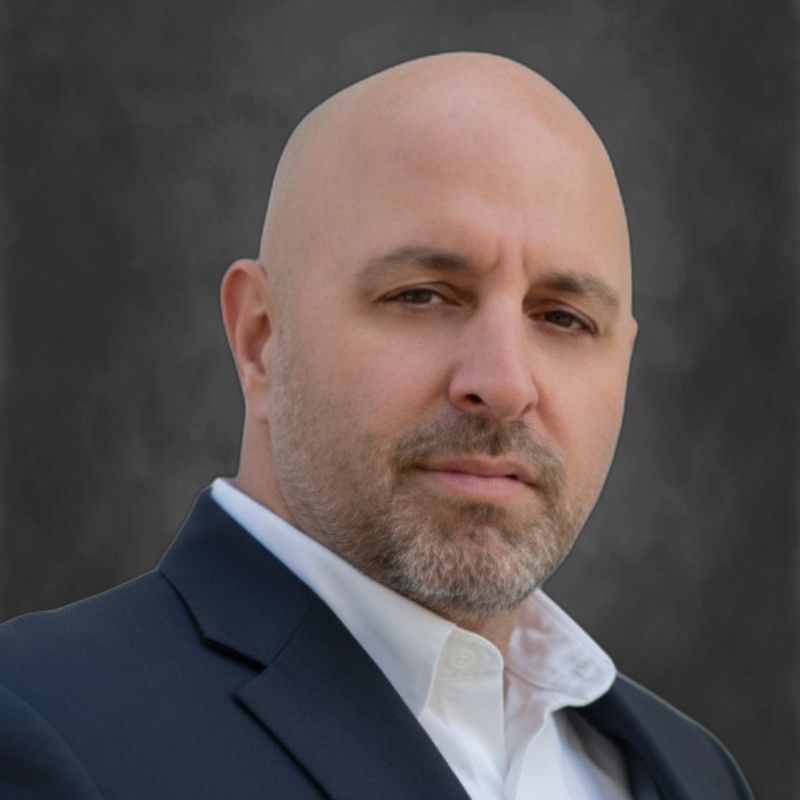
CEO/Co-Founder @ Oatmeal Health | AI Lung Cancer Screening | Almost Became a Doctor | Engineer | Follow to Share What I’ve Learned Along the Way
I help patients get the care they need earlier, preventing late-stage cancer.
That’s been the throughline across three companies and almost 20 years in healthcare. At ReferralMD, we fixed broken referral networks so patients didn’t fall through the cracks. At Oatmeal Health, it’s lung cancer: building the diagnostic and screening infrastructure so the 85% of cases caught too late get caught early instead.
Today as CEO of Oatmeal Health, I lead a team embedding AI into radiology workflows to turn routine lung CT scans into reimbursable cancer risk assessments. We partner with FQHCs to reach underserved communities, and with health systems and payers to make early detection economically sustainable. Think HeartFlow or Cleerly, but for lungs.
Between companies, I advised at Techstars and Plug and Play, mentoring founders building in digital health. That experience shaped how I think about what separates companies that ship from companies that stall: distribution, reimbursement, and clinical trust, not just technology.
I’m a CancerX alumnus, a 3x healthcare founder, and someone who believes the biggest problems in cancer aren’t scientific. They’re operational.
We’re hiring mission-driven builders at Oatmeal Health. If you want to work on something that matters, reach out.
When I’m not working, I’m traveling, mentoring, and keeping up with one very energetic husky. 🐾
Substack – The Oatmeal Bite:
Millions of patients get less care because of who they are, where they live, or how they look. I’m fighting to change that. CEO @OatmealHealth, a startup built for the underserved. The Oatmeal Bite: intel for clinicians, investors, and advocates.
Jonathan Govette
CEO of Oatmeal Health
Substack:
https://oatmealhealthjonathangovette.substack.com/