
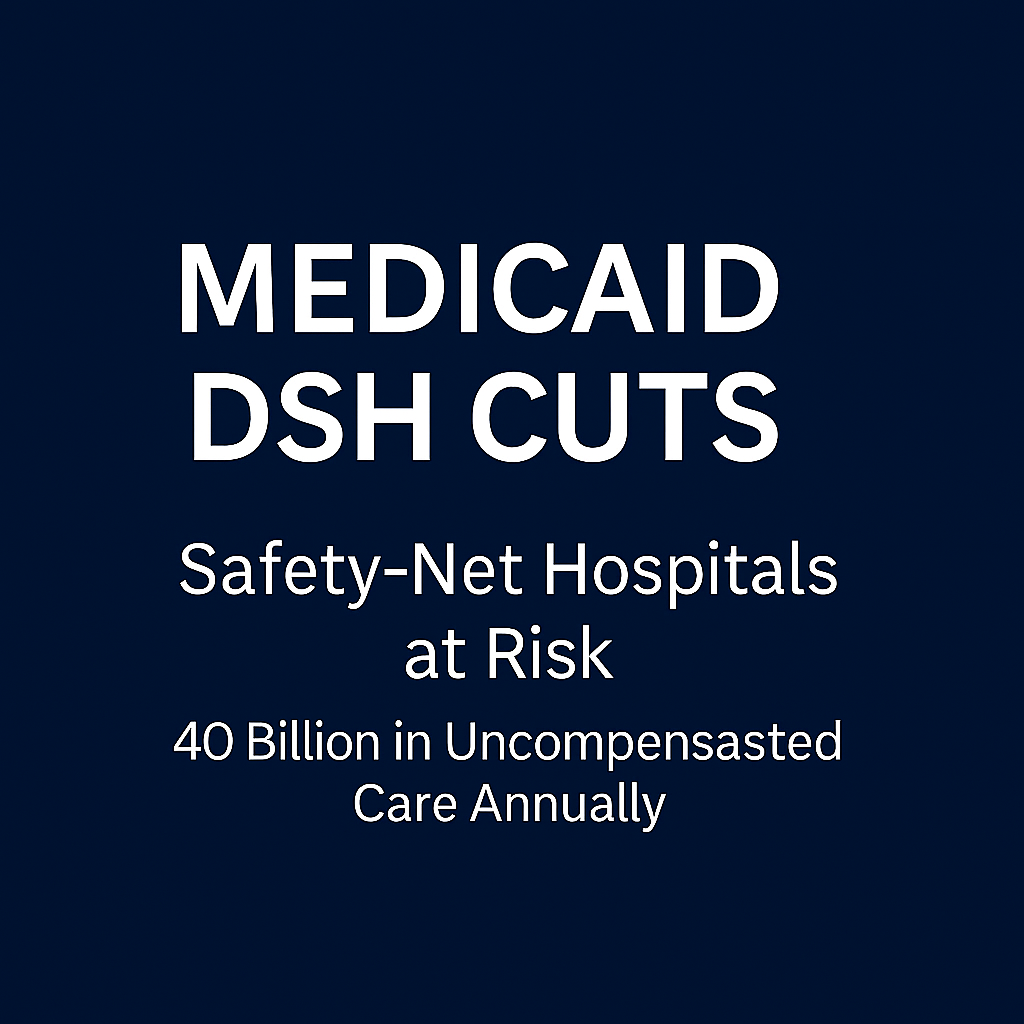
Medicaid DSH Cuts Threaten Safety-Net Hospitals
The hospitals serving the poorest patients may not survive this bill. As the Senate takes up the reconciliation package in June 2026, one of the quieter provisions is getting very little attention outside of hospital finance circles. Medicaid Disproportionate Share Hospital payments, known as DSH, are facing deep reductions under the current proposal. Here is why this matters. DSH payments exist for one reason: to compensate hospitals that treat a disproportionately high share of Medicaid and uninsured patients. These are not suburban health systems with strong commercial payer mixes. These are urban public hospitals, rural critical access facilities, and teaching hospitals in low-income communities. For many of them, DSH is not supplemental revenue. It is survival revenue. 🏥 The numbers ...
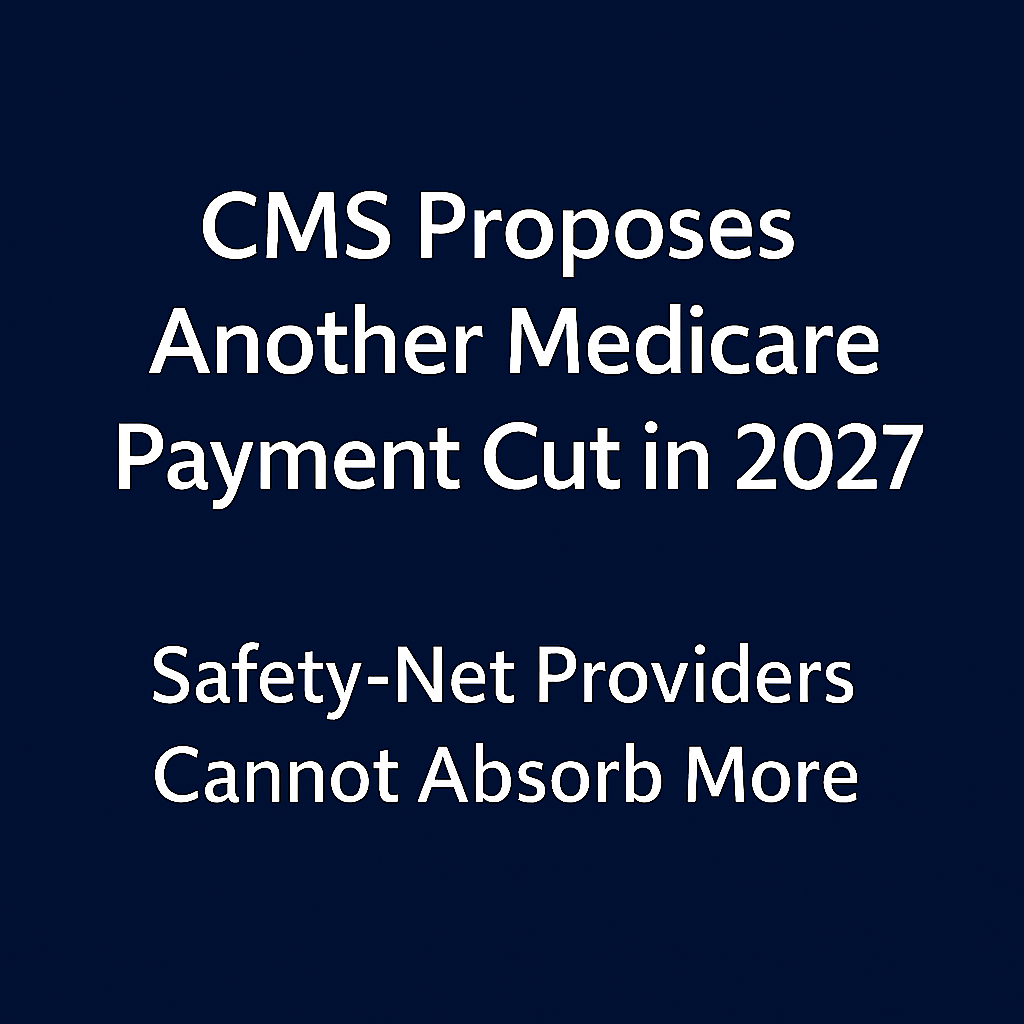
CMS 2027 Fee Schedule Cuts Threaten Providers
CMS just proposed cutting physician pay again in 2027. And if you run a clinic, imaging center, or community health center, this one deserves your full attention. Every year, CMS releases its proposed Medicare Physician Fee Schedule. Every year, the conversion factor drops. And every year, providers absorb another cut while their costs go up. The 2027 proposed rule, released this month, follows the same pattern. The proposed conversion factor decrease would reduce Medicare payments across the board, hitting primary care, radiology, behavioral health, and specialist services simultaneously. Here is why this matters beyond the headline number. 💡 The real math is brutal for safety-net providers. FQHCs and rural health clinics operate under a different payment model, the Prospective Payment ...
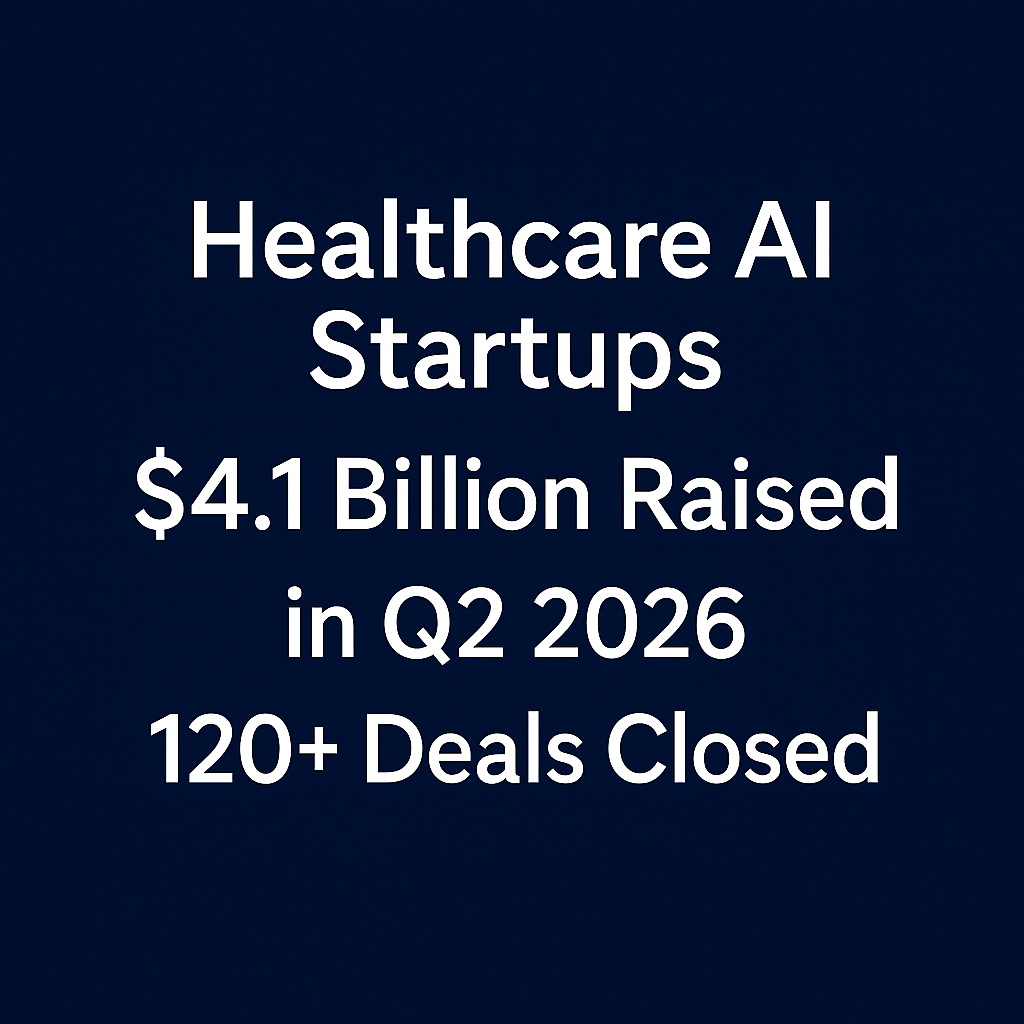
Healthcare AI Startups Raise $4.1B in Q2 2026
Healthcare AI just had its biggest funding quarter ever. And most clinicians have no idea it happened. In Q2 2026, healthcare AI startups raised more than $4.1 billion across 120-plus deals, according to analysis from Rock Health and CB Insights. That is not a typo. One quarter. One sector. So where is all that money going? The three biggest categories drawing capital right now are clinical decision support, ambient documentation, and revenue cycle automation. These are not moonshot ideas. They are tools built to solve the problems that every hospital, clinic, and FQHC faces today: physician burnout, billing complexity, and diagnostic delays. Here is what stands out about this wave of funding. First, the deal sizes are getting bigger. Rounds ...
Section 330 Cuts Could Shutter 1,300 FQHCs
1,300 health centers could close. And most Americans have no idea. The reconciliation bill working its way through Congress in June 2026 contains a provision that has received almost zero mainstream coverage, but it may be the single most consequential healthcare delivery threat of the decade. A proposed $35 billion reduction to the HRSA Community Health Center Fund over 10 years. This is the Section 330 grant program. It is not a fringe funding stream. It is the financial backbone of the entire Federally Qualified Health Center model. Here is what that actually means on the ground. FQHCs currently serve over 34 million patients across the U.S., nearly 1 in 10 Americans. About 63% of those patients live below the ...
AI Opportunistic Calcium Scoring Now Billable
CMS just made your routine chest CT a cardiac screening tool. And most imaging centers do not realize what that means for their revenue, or their patients. Starting April 1, 2026, health systems and imaging centers can bill Medicare for AI-powered detection of coronary artery calcium and aortic valve calcium found incidentally on chest CTs. Bunkerhill Health was first to secure this reimbursement pathway, and the implications are enormous. Here is the part that matters most. More than 20 million chest CTs are performed in the U.S. every year. The vast majority are ordered for pulmonary or oncological reasons, not cardiac ones. But heart disease is hiding in those scans. AI can now find it automatically, flag the risk, and ...
Ambient AI Reaches FQHCs in 2026
Your FQHC clinicians are drowning in notes. AI can fix that. Here is a number worth sitting with: primary care physicians spend nearly 2 hours on documentation for every 1 hour of direct patient care. At an FQHC, where a single provider may see 25 to 30 patients a day across multiple chronic conditions, language barriers, and complex social needs, that math is unsustainable. Burnout is not a mindset problem. It is a workflow problem. And in 2026, ambient AI documentation is starting to change that equation, even inside community health centers. Here is how it works: Ambient AI tools listen to the clinical conversation (with patient consent), then auto-generate a structured clinical note in real time. The provider reviews, ...
EHR Cybersecurity Crisis Hits Providers Hard
45,000 providers just found out their EHR was breached. And the full damage still isn't clear. On March 16, 2026, CareCloud, a cloud-based EHR and practice management platform used widely by independent practices and specialty groups, suffered a significant cybersecurity breach. Patient records, billing data, and clinical documentation for providers across the country were potentially exposed. This is not an isolated incident. Healthcare was the most targeted industry for cyberattacks in 2025, and 2026 is on pace to be worse. According to the HHS Office for Civil Rights, healthcare data breaches affected more than 133 million individuals in 2023 alone. That number has grown every year since. So why are we still so unprepared? 🔒 Here is what makes healthcare ...
AI Writes the Radiology Report Now
AI just wrote a complete radiology report in seconds. Not a summary. Not a flag. A full, structured report. At ECR 2026, United Imaging Intelligence demonstrated multimodal AI agents that can detect 73 findings on a single chest CT and 47 findings on a brain MRI, then auto-generate a structured report, all without a radiologist touching the keyboard first. The company's CEO made headlines by saying he is ready to deploy AI that could reduce dependence on radiologists in high-volume, time-pressured environments. That is a bold statement. But it reflects a real operational pressure. 🔎 Here is the context most people are missing. Radiology departments across the U.S. are facing a serious throughput crisis. Turnaround times at some academic medical ...
Medicaid Enrollment Freeze Hits FQHCs
FQHCs don't just need funding. They need patients with coverage. And the Senate reconciliation bill threatens both at the same time. Most of the conversation around the "Big Beautiful Bill" has focused on specific line items: 340B savings, DSH payments, Section 330 grants. But there is a quieter provision getting far less attention, and it may be the most structurally damaging of all. Medicaid enrollment caps and per capita spending limits. Here is why that matters for community health centers specifically. FQHCs generate roughly 40 to 50 percent of their revenue from Medicaid patients. That is not a footnote. That is the foundation of the business model. When Medicaid enrollment shrinks, FQHC patient volume shrinks with it. And when volume ...