

Medicaid Managed Care Overhaul Hits CHCs Hard
Medicaid managed care is being quietly rewritten. Here is what that means. When people talk about the House reconciliation bill, the conversation jumps to work requirements, DSH cuts, and ACA subsidies. But buried inside the same legislation are managed care provisions that could reshape how 90 million Americans actually receive their coverage. And most healthcare leaders are not talking about it yet. 🔍 Here is what is in the bill: The legislation gives states new flexibility to narrow mandatory managed care enrollment for certain Medicaid populations. It weakens federal benchmark benefit requirements, meaning states could reduce what managed care plans are required to cover. It also adjusts federal actuarial soundness standards, which directly affect how much states must pay managed ...
ACA Subsidy Cliff Threatens Marketplace Coverage
3.8 million people could lose health coverage next year. And it has nothing to do with Medicaid. The enhanced premium tax credits introduced under the Inflation Reduction Act have been one of the most impactful, least-talked-about coverage expansions in recent memory. They reduced marketplace premiums by an average of $800 per enrollee per year. They helped push ACA marketplace enrollment to record highs, surpassing 21 million people in 2026. Those credits expire at the end of 2025. The House reconciliation bill, passed on May 22, 2026, does not extend them. The Congressional Budget Office has estimated that without renewal, roughly 3.8 million Americans will drop their marketplace plans, simply because the premiums become unaffordable. For many of these individuals, Medicaid ...
Medicaid DSH Cuts Threaten Safety-Net Hospitals
The Medicaid cuts nobody is talking about just passed the House. Everyone is focused on work requirements. And yes, those matter enormously. But buried inside HR 1, the reconciliation bill that passed the House on May 22, 2026, are Medicaid financing changes that could hit safety-net hospitals even harder. Here is what is actually in the bill: Disproportionate Share Hospital (DSH) payments face significant reductions. These are the payments that help hospitals stay financially viable when they serve large numbers of Medicaid and uninsured patients. Cut them, and you are not punishing hospital executives. You are pulling the floor out from under emergency departments, labor and delivery units, and behavioral health programs in underserved communities. The bill also proposes per ...
FQHC Section 330 Funding Under Fire 2026
32+ million patients. One budget line. One vote away from a crisis. Federally Qualified Health Centers are the backbone of primary care for America's most vulnerable populations. Rural families. Uninsured workers. Medicaid enrollees. Immigrants. People who have nowhere else to go. And right now, that backbone is under serious financial pressure. The Community Health Center Fund, authorized under Section 330 of the Public Health Service Act, provides roughly $4 billion annually to over 1,400 FQHCs across the country. It covers nearly one-third of the total operating budgets at many sites. Without it, a clinic doesn't just struggle. It closes. As Congress pushes through budget reconciliation in May 2026, the Community Health Center Fund is caught in the crossfire. Proposed spending ...
CMS Pays for AI Heart Detection on Chest CT
AI just found heart disease hiding in your chest CT scan. And now, for the first time, hospitals can actually bill Medicare for it. As of April 1, 2026, CMS created a reimbursement pathway for AI algorithms that automatically detect coronary artery calcium and aortic valve calcium on routine chest CT scans. Bunkerhill Health secured both FDA clearance and this new CMS billing code, making it the first company to unlock what could be one of the most significant preventive cardiology opportunities in a decade. Here is why this matters more than most people realize. Every year, millions of chest CTs are ordered for completely unrelated reasons, pulmonary nodule follow-up, lung cancer screening, trauma evaluation. The images are captured. The ...
AI Diagnostic Tools Reach Rural Hospitals
Rural hospitals are finally getting radiologists. Just not human ones. Across the United States, roughly 60 million people live in rural communities where access to a radiologist on staff is nearly impossible. Recruiting is brutal. Retention is worse. And when a patient rolls in with a possible stroke or a suspicious lung nodule at 2am, the wait for a read can stretch into hours or even days. That is changing fast in 2026. AI-powered teleradiology and diagnostic imaging platforms are being deployed at critical access hospitals at an accelerating pace this year. These tools are not replacing radiologists outright. They are doing something arguably more important: filling the gap in places where no radiologist was ever coming. Here is what ...
Hospital Price Transparency Enforcement 2026
Hospital price transparency just got real. And hospitals are not ready. When CMS first rolled out price transparency rules in January 2021, most health systems complied on paper, buried machine-readable files no patient could ever find, and called it a day. That playbook is no longer working. In 2026, CMS enforcement has escalated sharply. Civil monetary penalties have increased to up to $2 million per year for large hospitals that fail to meet the standard. Federal auditors are now actively reviewing posted files for completeness, accuracy, and accessibility, not just existence. Here is why this matters beyond the fines. Studies published in Health Affairs have shown that even when price files are technically available, fewer than 20 percent of hospitals ...
Medicaid Work Requirements Risk Coverage Loss
5.2 million people may lose Medicaid. Not from cuts. From paperwork. The Senate is advancing a reconciliation bill that includes mandatory work requirements for Medicaid recipients. On the surface, it sounds reasonable. Work to receive benefits. But here is what the data actually shows. The Congressional Budget Office projects that roughly 5.2 million people would lose Medicaid coverage under these requirements, not because they stopped working, but because of documentation failures, bureaucratic gaps, and reporting deadlines they could not navigate. Studies from Arkansas, the only state that previously implemented and then had its Medicaid work requirements struck down by courts, found that employment did not increase after the policy took effect. What did increase was the number of people who ...
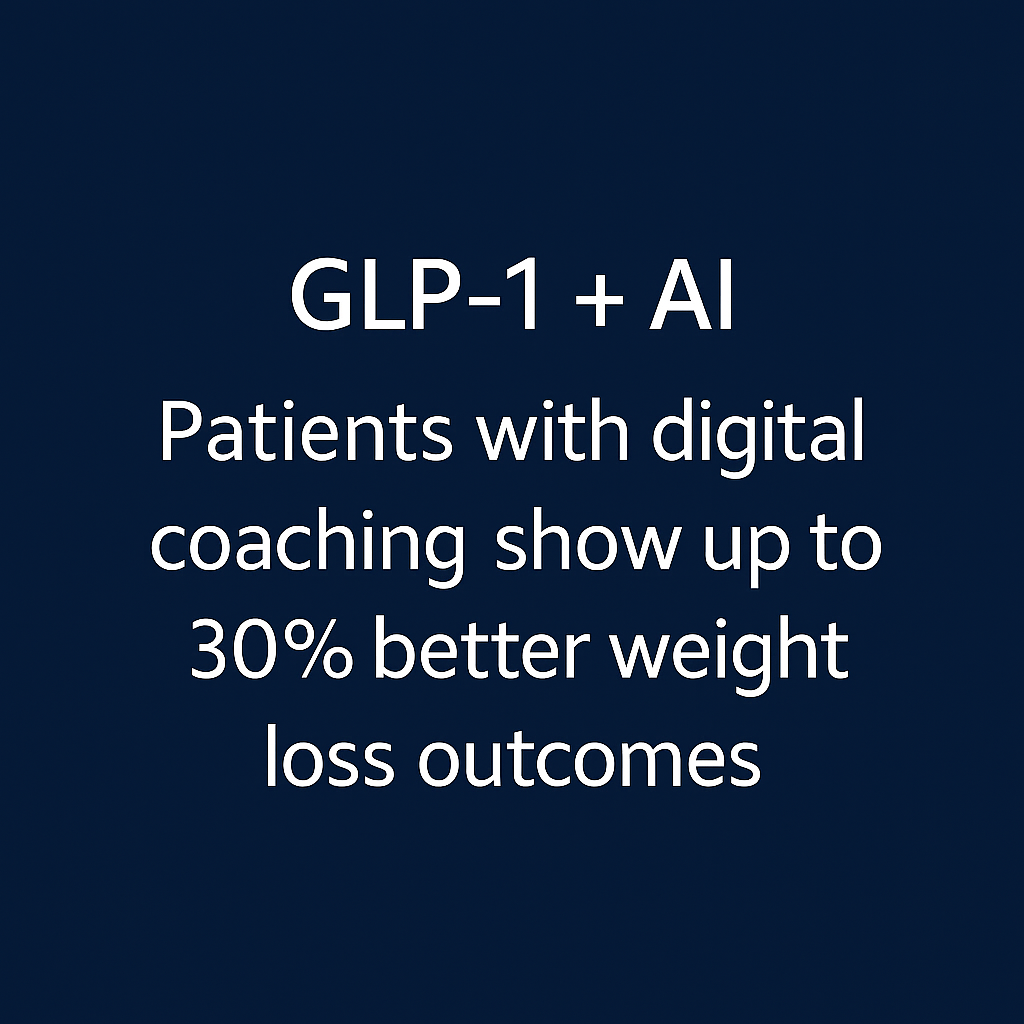
GLP-1 Digital Health Tools Change Obesity Care
GLP-1 drugs work better with AI. Here is the proof. Semaglutide and tirzepatide are already rewriting the rulebook on obesity treatment. But the real story in 2026 is not just the drug. It is what happens digitally around the drug. New deployment data from digital health platforms like Noom Med, Ro, and Hims and Hers shows that patients pairing GLP-1 therapy with AI-powered behavioral coaching, continuous glucose monitoring integration, and remote check-ins are achieving up to 30 percent better weight loss outcomes at 12 months compared to medication alone. Adherence rates are also climbing, a critical issue given that nearly 40 percent of GLP-1 patients discontinue within 12 months when there is no support structure around them. Here is what ...