

From Research to Early Detection: Lung Cancer Research Foundation and Oatmeal Health Partner Together To Provide Better Education for Underserved Patients
FOR IMMEDIATE RELEASE [San Diego CA] - The Lung Cancer Research Foundation (LCRF) and Oatmeal Health are proud to announce their partnership in delivering patient education for underserved communities. The initiative aims to improve the early detection of lung cancer through awareness and education. According to the Centers for Disease Control and Prevention (CDC), lung cancer is the leading cause of cancer death in the United States. People with lower income and education levels are more likely to be diagnosed with late-stage lung cancer, resulting in poor health outcomes. Federally Qualified Health Centers (FQHCs) are designed to provide healthcare to underserved populations, including those without health insurance. However, FQHCs face significant challenges in providing adequate care due to limited ...
Closing the Care Gap: Oatmeal Health Teams up with Illinois Primary Healthcare Association to Support FQHCs and Improve Health Equity
Oatmeal Health and Illinois Primary Healthcare Association Combine Efforts to Improve Health Equity and Cancer Screenings for the Underserved in Illinois Oatmeal Health, a startup utilizing AI technology recently announced a collaboration with Illinois Primary Health Care Association to help improve patient outcomes in the state's 53 FQHCs by providing high-quality cancer screenings to underserved patients who are at high risk, starting with lung cancer. Illinois Lung Cancer Rates: New Cases: 7.0% of Illinois residents who are eligible have been screened for lung cancer. The rate of new lung cancer cases is 63 and significantly higher than the national rate of 57. Illinois ranks 32nd among all states, placing it in the average tier. 2023 Estimates Justin Porter M.D. ...
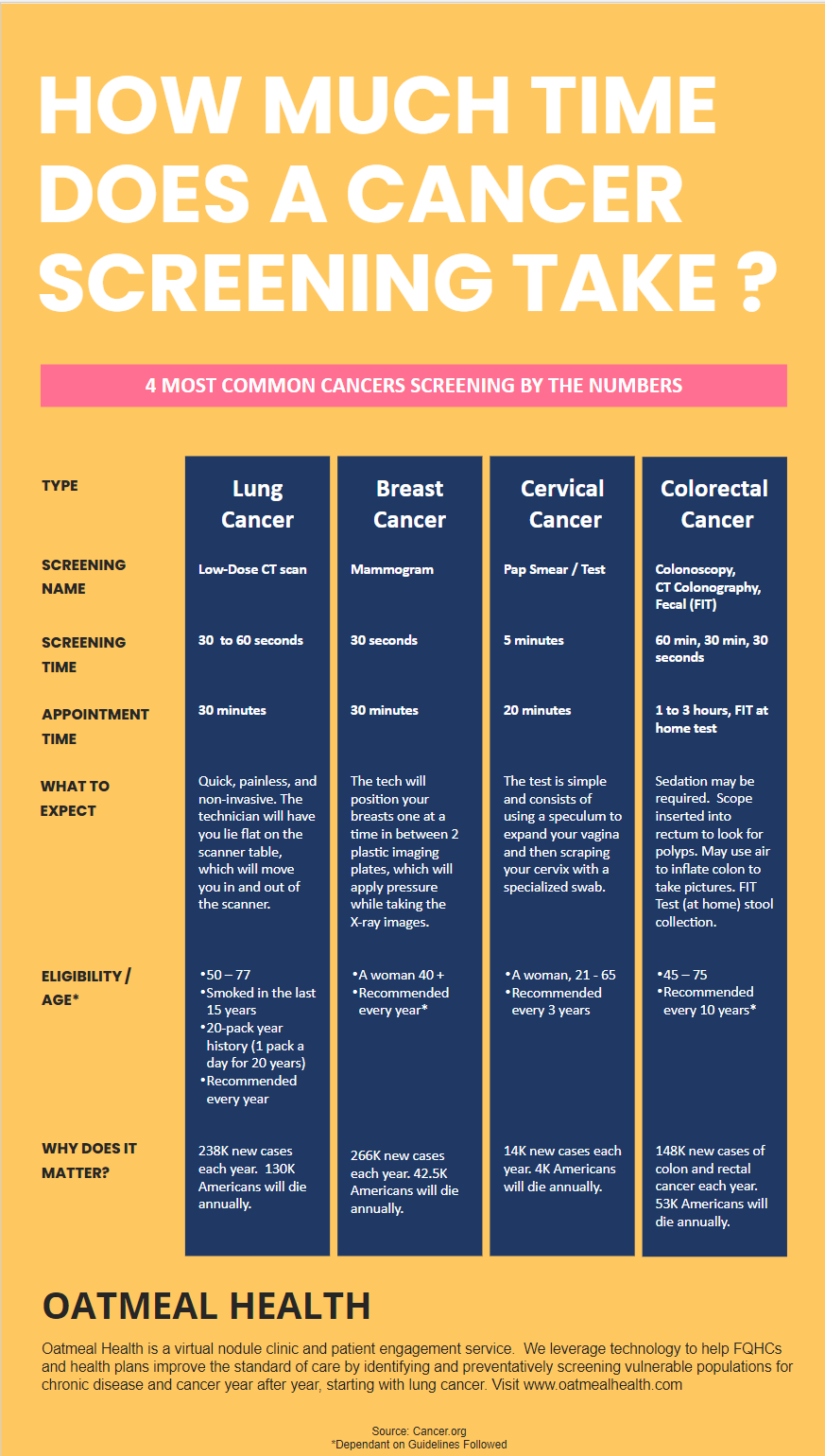
How Much Time Does a Cancer Screening Take: 4 Most common cancers screening by the numbers
Early detection and regular screening are crucial for reducing the risk of cancer and improving the chances of successful treatment. Patients should discuss their individual risk factors and screening options with their healthcare providers to determine the appropriate screening schedule for their needs. Share this Image On Your SitePlease include attribution to https://oatmealhealth.com with this graphic. 1. Lung Cancer Screening: Lung cancer is the leading cause of cancer deaths worldwide, with a high mortality rate. Screening can help detect lung cancer early when it's more treatable. The type of screening performed for lung cancer is a low-dose CT (computed tomography) scan, which uses X-rays to create detailed images of the lungs. Screening time: A low-dose CT scan ...
Lung Cancer Screening Call Center Checklist and Talking Points
Asking patients about their smoking history is an important part of cancer screening because smoking is a major risk factor for many types of cancer. Studies have shown that smoking is responsible for approximately 30% of all cancer deaths in the United States, and it is the leading cause of preventable cancer deaths worldwide. When a patient is screened for cancer, healthcare professionals want to identify any potential risk factors that may increase the patient's chances of developing the disease. Smoking is a well-established risk factor for a variety of cancers, including lung, throat, mouth, esophagus, bladder, kidney, pancreas, and cervix cancers. By asking patients about their smoking history, healthcare professionals can determine if the patient is at an increased ...
From Invisible to Invaluable: How to Effectively Outreach to Underinsured and Uninsured FQHC Patient Populations
The healthcare industry is constantly evolving, and with that evolution come new challenges. One of the most significant challenges healthcare providers face today is how to effectively market to underinsured and uninsured patient populations in the community. These populations are often invisible to traditional outreach efforts, and as a result, healthcare providers struggle to reach and engage them. However, with the right approach and strategies, healthcare providers can turn these invisible populations into invaluable patients. In this article, we will explore the specific tactics and strategies that healthcare providers can use to effectively market to underinsured and uninsured patient populations in the community. Identifying Your Target Audience The first step in effectively marketing to underinsured and uninsured patient populations ...
The Injustice of Health: America’s Worsening Disparities and How FQHCs can Help
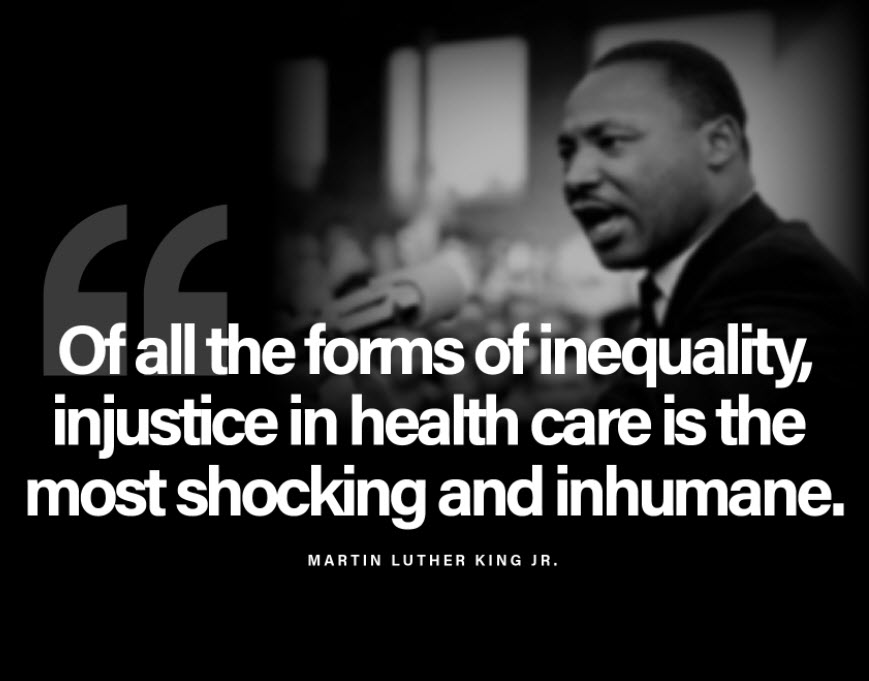
African American/Black individuals have a disproportionate cancer burden, including the highest mortality and the lowest survival of any racial/ethnic group for most cancers. Every 3 years, the American Cancer Society estimates the number of new cancer cases and deaths for Black people in the United States and compiles the most recent data on cancer incidence (herein through 2018), mortality (through 2019), survival, screening, and risk factors using population-based data from the National Cancer Institute and the Centers for Disease Control and Prevention. In 2022, there will be approximately 224,080 new cancer cases and 73,680 cancer deaths among Black people in the United States. During the most recent 5-year period, Black men had a 6% higher incidence rate but 19% higher ...

FQHC Partnership Blueprint: How to Develop a Winning Strategy
The Importance of Partnership Management in FQHCs Federally Qualified Health Centers (FQHCs) play a crucial role in providing access to healthcare for underserved communities. However, the challenges facing FQHCs are significant and multifaceted, including financial constraints, workforce shortages, and increased demand for services. One effective strategy for addressing these challenges is through the development of formal partnerships with other organizations. This guide will provide a detailed overview of the key legal ideas and concepts involved in developing a partnership management process for FQHCs, with a focus on achieving specific, goal-oriented results. The Legal Framework for FQHC Partnerships The legal framework for FQHC partnerships is complex, and it is essential to have a thorough understanding of the various ...

Revolutionary AI Predicts Lung Cancer Risk with High Accuracy
It is no surprise that the smart crew at MIT and Mass General have shown that they can predict lung cancer from a single CT scan. It will be a while before this is standard of care, however, this method, or blood tests, or breath tests, will be very helpful in the quest to get the right patient screened at the right time, including others with increased risk of lung cancer, including patients without a history of smoking. Researchers at Mass General Cancer Center and Massachusetts Institute of Technology created a tool known as Sybil. "Based on analyses of LDCT scans from patients in the U.S. and Taiwan, Sybil accurately predicted the risk of lung cancer for individuals with or without a significant ...