Share this article and save a life!
MRI just became a molecular microscope for your entire body.
Philips dropped something game-changing at ISMRM 2026 yesterday: the Titanion MR with 150 mT/m gradient performance.
Think about what this means 🔬
We’re no longer just looking at anatomy. We’re measuring microstructures. Cell density. Tissue characteristics invisible to standard MRI.
This isn’t incremental improvement, it’s a paradigm shift.
Traditional MRI: Shows you what’s there
Titanion MR: Tells you what it’s made of
The implications for oncology alone are staggering.
Imagine detecting cancer not by size, but by cellular behavior. Tracking treatment response through molecular changes before tumors shrink. Personalizing therapy based on tissue microstructure.
But here’s what excites me most:
Quantitative biomarkers across the entire body. No more subjective reads. No more “looks like” or “appears to be.” Just objective, measurable data.
AI-powered software processes this ultra-high gradient data into actionable insights. Every scan becomes a comprehensive molecular assessment.
For community hospitals and FQHCs, this technology eventually trickling down means:
• Earlier disease detection
• More precise treatment planning
• Reduced need for invasive biopsies
• Better outcomes for underserved populations
Yes, it’s expensive now. Yes, adoption will take time.
But remember when 3T MRI was only in academic centers? Now it’s standard of care.
The same will happen here.
We’re witnessing radiology transform from photography to biochemistry. From seeing structure to understanding function.
This isn’t just better imaging. It’s a new language for understanding disease.
The question isn’t if this changes everything. It’s how fast we can get it to the patients who need it most.
♻️ Repost if molecular imaging should be accessible to all patients
👉 Follow me, Jonathan Govette, for daily, real-time updates on healthcare technology and business news. LinkedIn Profile: https://www.linkedin.com/in/jonathangovette/
Share this article and save a life!
Author:
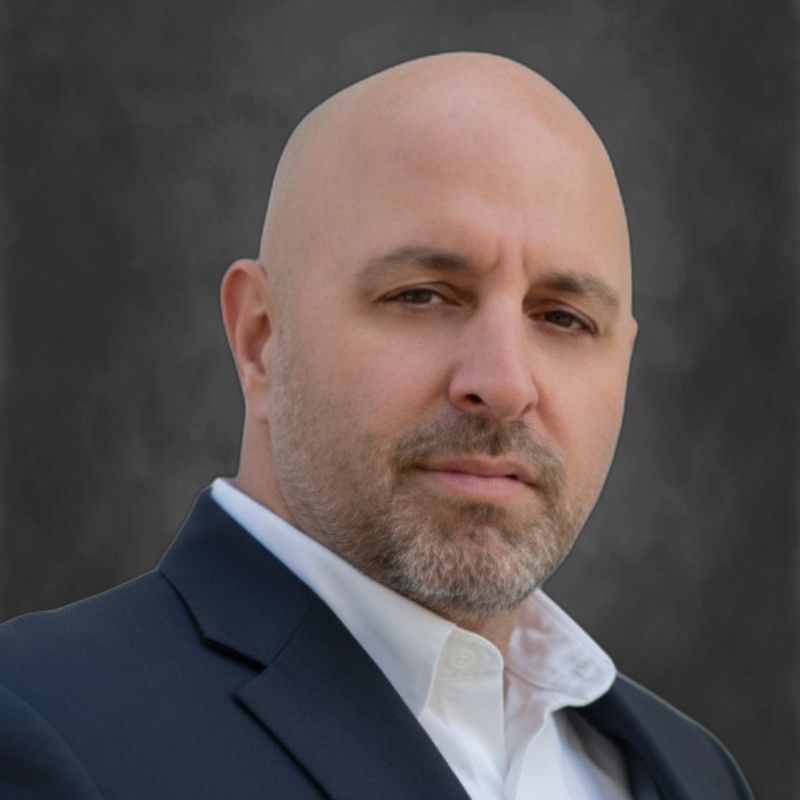
CEO/Co-Founder @ Oatmeal Health | AI Lung Cancer Screening | Almost Became a Doctor | Engineer | Follow to Share What I’ve Learned Along the Way
I help patients get the care they need earlier, preventing late-stage cancer.
That’s been the throughline across three companies and almost 20 years in healthcare. At ReferralMD, we fixed broken referral networks so patients didn’t fall through the cracks. At Oatmeal Health, it’s lung cancer: building the diagnostic and screening infrastructure so the 85% of cases caught too late get caught early instead.
Today as CEO of Oatmeal Health, I lead a team embedding AI into radiology workflows to turn routine lung CT scans into reimbursable cancer risk assessments. We partner with FQHCs to reach underserved communities, and with health systems and payers to make early detection economically sustainable. Think HeartFlow or Cleerly, but for lungs.
Between companies, I advised at Techstars and Plug and Play, mentoring founders building in digital health. That experience shaped how I think about what separates companies that ship from companies that stall: distribution, reimbursement, and clinical trust, not just technology.
I’m a CancerX alumnus, a 3x healthcare founder, and someone who believes the biggest problems in cancer aren’t scientific. They’re operational.
We’re hiring mission-driven builders at Oatmeal Health. If you want to work on something that matters, reach out.
When I’m not working, I’m traveling, mentoring, and keeping up with one very energetic husky. 🐾
Substack – The Oatmeal Bite:
Millions of patients get less care because of who they are, where they live, or how they look. I’m fighting to change that. CEO @OatmealHealth, a startup built for the underserved. The Oatmeal Bite: intel for clinicians, investors, and advocates.
Jonathan Govette
CEO of Oatmeal Health
Substack:
https://oatmealhealthjonathangovette.substack.com/