Share this article and save a life!
🚨 FQHC CEO, is your revenue model built for what just happened?
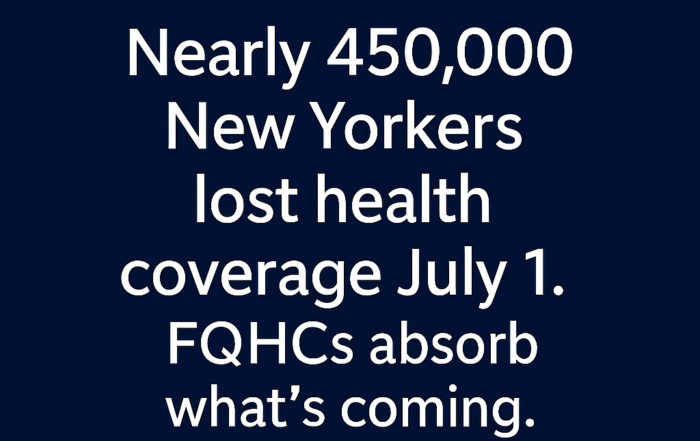
Nearly 450,000 New Yorkers just lost their health coverage. On July 1. Not a projection. Done.
📰 According to Time, those New Yorkers were enrolled in New York’s Essential Plan, a taxpayer-subsidized program established in 2015 under the Affordable Care Act. It had covered more than a million New Yorkers at extremely low cost. The coverage loss was triggered by HR 1, the “Big Beautiful Bill,” signed into law on July 4, 2025. The federal government withdrew the funding that allowed New York to use ACA tax credits for certain legally present immigrants. The state changed eligibility. Hundreds of thousands lost their plans overnight.
🔍 Here is what most people are missing. This is not a New York story. It is a preview. The Congressional Budget Office estimated that Medicaid changes under HR 1 would result in 7.8 million more people in the U.S. without health insurance by 2034. The Urban Institute projected the number could be higher and faster, up to 10.1 million fewer people enrolled in Medicaid by 2028. Starting January 1, 2027, adults in expanded Medicaid states must meet an 80 hours per month work requirement. States must now verify eligibility every six months instead of annually. These are not distant policy debates. They are operational realities for every FQHC in the country.
📊 The enrollment data is already moving. The federal government released data on June 26, 2026, showing that 19.2 million people enrolled in ACA Exchange plans in 2026. That is down about three million from the 22.1 million who enrolled in 2025. People are not migrating to other coverage. They are going uninsured. And Time notes that federally qualified health centers are already struggling because many of their patients are on Medicaid, and Medicaid often compensates them at a lower rate.
⚡ This is the pressure every FQHC CFO and CEO needs to plan around right now. More uninsured patients means more uncompensated visits. Less Medicaid revenue per visit means tighter margins on every encounter you already have. The patients do not stop coming. That is the whole point of the safety net. But the economics of absorbing this wave without a plan will break organizations that are not ready.
💡 The FQHCs that survive this period will be the ones that proactively close the gap between what they can bill and what they are actually capturing. Every undocumented eligible visit, every missed preventive service, every screening that was delivered but not coded, those are the dollars that keep the lights on when payer mix craters. The margin is already thin. It is about to get thinner.
🔥 The uninsured wave is not a future risk for FQHCs. It landed on July 1.
❓ FQHC CFOs and CEOs, what concrete steps has your organization taken this quarter to protect revenue as your payer mix shifts? Be specific. The community needs real answers, not talking points.
👉 Follow Jonathan Govette, CEO of Oatmeal Health, for daily healthcare insights on LinkedIn. Deeper dives in The Oatmeal Bite on Substack: https://oatmealhealthjonathangovette.substack.com
Share this article and save a life!
Author:
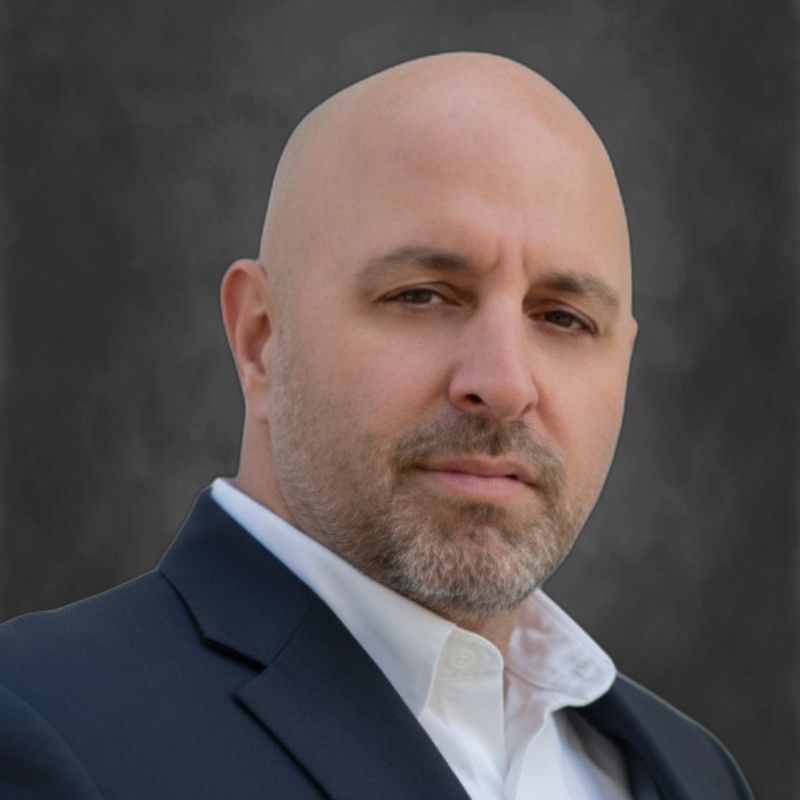
Jonathan Govette is a seasoned healthcare and technology executive with more than two decades of experience building, scaling, and advising digital health companies. He is the Co-Founder and CEO of Oatmeal Health, an AI-driven Lung Cancer Screening and Diagnostics company focused on expanding access to early detection for underrepresented populations, particularly patients served by Federally Qualified Health Centers and value-based health plans.
With a background in engineering, product development, and strategic partnerships, Jonathan has founded and led multiple health technology ventures across clinical care delivery, regulated medical software, and AI-enabled diagnostics. His work sits at the intersection of medicine, technology, and health equity, with a consistent focus on translating complex clinical problems into scalable, real-world solutions.
Jonathan has spent much of his professional life dedicated to improving outcomes for marginalized and underserved communities. He has designed and implemented frameworks that align clinical quality, reimbursement, and technology to sustainably advance health equity at scale. This mission is deeply personal and informs his leadership philosophy and long-term vision for healthcare transformation.
In addition to his operating experience, Jonathan is an author and long-time writer in the healthcare domain, with over 20 years of published work covering digital health, medical innovation, and healthcare systems. He is a frequent mentor to early-stage founders and regularly advises startups on product strategy, partnerships, and go-to-market execution in regulated healthcare environments.
Before entering industry full-time, Jonathan nearly pursued a career in medicine with an early path toward cardiothoracic surgery, an experience that continues to shape his clinical perspective and respect for frontline care delivery.
CEO | Oatmeal Health | AI Lung Cancer Startup | Engineer | Writer | Almost Became a Doctor (Cardiac Thoracic Surgeon) | 3x Health Tech Founder | Startup Mentor | Follow to share what I’ve learned along the way.