Share this article and save a life!
The AI doctor debate is asking the wrong question entirely.
July 12, 2026. Marc Andreessen posts on X that AI is already a better doctor than 99.99% of human doctors. A Silicon Valley benchmark goes viral. Everyone picks a side.
Then Mark Cuban replies. And his reply cuts straight to the thing nobody wants to talk about. 🎯
Cuban’s point was not that AI cannot read an MRI or catch a diagnosis a tired physician missed at 2 a.m. Nobody serious is arguing that.
His point was about what happens after the AI gives its answer.
Here is the reality he described, and every word of it is accurate:
– Insurers are already using AI to find ways to manipulate contracts.
– Hospitals are now hiring Revenue Cycle Management firms, charging as much as 10% of revenue, just to fight back against denial machines.
– About one in three American adults, around 82 million people, made at least one daily trade-off last year to cover healthcare costs.
– Health benefit costs per employee are headed above $18,500 in 2026, the steepest annual jump in fifteen years.
According to the Shortlysts report on Cuban’s response, he put it plainly: “For every future agent we give AI doctors to deal with this friction, the conglomerates will have multiple adversarial agents doing all they can to delay and deny, to minimize their cost and maximize their float.”
He called it the agentic version of Mad magazine Spy vs Spy. One side gets a faster tool to fight denials. The other side gets a faster tool to issue them. Neither side is the patient.
This is not pessimism. This is a structural observation.
Andreessen is making a capability argument. Cuban is making an incentives argument. These are not the same debate.
Capability is easy to win. Build a better model, run a blind test, declare victory. Done.
Incentives are hard to change. They require threatening the business model of trillion-dollar vertically integrated conglomerates who profit from the opacity of the current system. That is a different fight entirely.
Here is the counterpoint worth taking seriously: AI tools that help patients fight denials faster are genuinely useful right now. Cuban himself is backing Claimable, a startup that uses AI to help patients fight insurance denials. So he is not anti-AI. He is anti-naivete. And I respect that distinction enormously.
But the uncomfortable truth is this. 🔥
We have been promised that technology will fix healthcare for thirty years. Electronic health records were going to do it. Telehealth was going to do it. Big data was going to do it. Every cycle, the tools got better. The costs kept climbing. The denials kept coming.
The difference with AI is scale and speed. Which means if we plug it into a system with broken incentives, we do not get a better system. We get a faster, more efficient version of the broken one.
Cuban’s answer is direct: stop working with the healthcare conglomerates. Write agents that contract directly with providers. Eliminate the unnecessary middlemen. Force transparency on what care actually costs. He has been living this with Cost Plus Drug Company since 2022, selling generics at manufacturer cost plus a flat 15% markup, no PBM, no hidden pricing.
I am at Oatmeal Health every day trying to get lung cancer screenings and preventive care to underserved communities, and I can tell you the friction is real. It is not a technology problem. It is a who-profits-from-confusion problem.
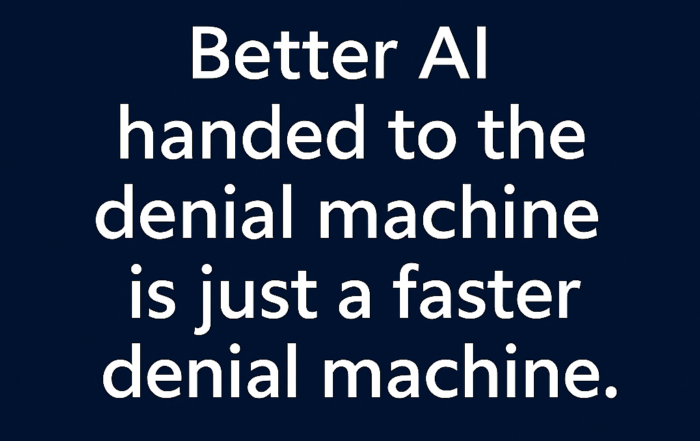
Better AI in the hands of the right actors, aligned with patient outcomes, is genuinely transformative. Better AI handed to the denial machine is just a faster denial machine.
The question is not whether AI is smarter than a doctor. The question is: who controls it, who benefits from it, and who gets left out.
That question will matter a lot more than any benchmark score.
👉 Follow Jonathan Govette, CEO of Oatmeal Health, for daily healthcare insights on LinkedIn. Deeper dives in The Oatmeal Bite on Substack: https://news.oatmealhealth.com
Share this article and save a life!
Author:
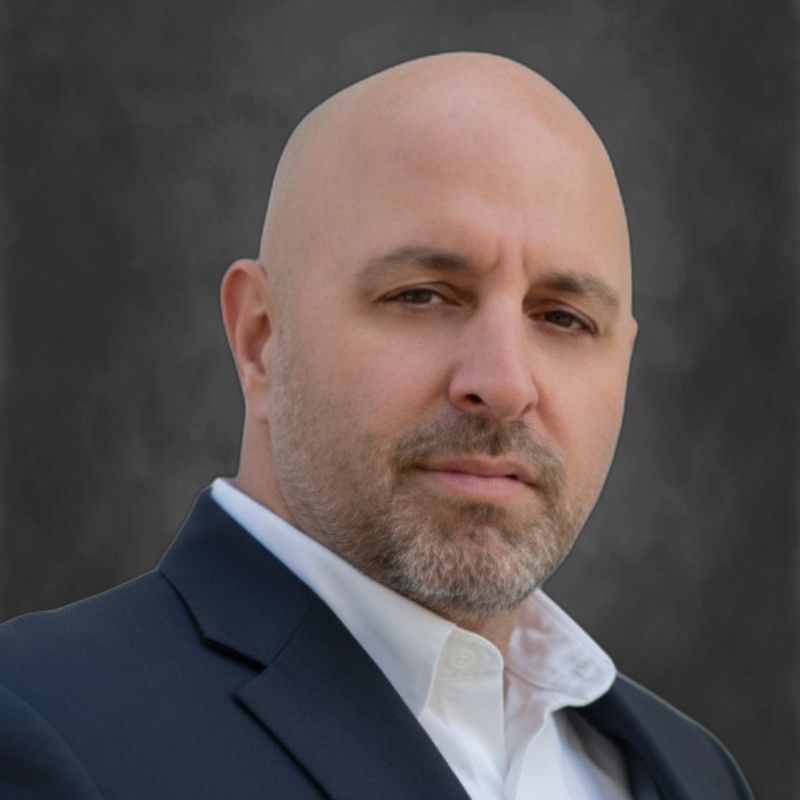
CEO/Co-Founder @ Oatmeal Health | AI Lung Cancer Screening | Almost Became a Doctor | Engineer | Follow to Share What I’ve Learned Along the Way
I help patients get the care they need earlier, preventing late-stage cancer.
That’s been the throughline across three companies and almost 20 years in healthcare. At ReferralMD, we fixed broken referral networks so patients didn’t fall through the cracks. At Oatmeal Health, it’s lung cancer: building the diagnostic and screening infrastructure so the 85% of cases caught too late get caught early instead.
Today as CEO of Oatmeal Health, I lead a team embedding AI into radiology workflows to turn routine lung CT scans into reimbursable cancer risk assessments. We partner with FQHCs to reach underserved communities, and with health systems and payers to make early detection economically sustainable. Think HeartFlow or Cleerly, but for lungs.
Between companies, I advised at Techstars and Plug and Play, mentoring founders building in digital health. That experience shaped how I think about what separates companies that ship from companies that stall: distribution, reimbursement, and clinical trust, not just technology.
I’m a CancerX alumnus, a 3x healthcare founder, and someone who believes the biggest problems in cancer aren’t scientific. They’re operational.
We’re hiring mission-driven builders at Oatmeal Health. If you want to work on something that matters, reach out.
When I’m not working, I’m traveling, mentoring, and keeping up with one very energetic husky. 🐾
Substack – The Oatmeal Bite:
Millions of patients get less care because of who they are, where they live, or how they look. I’m fighting to change that. CEO @OatmealHealth, a startup built for the underserved. The Oatmeal Bite: intel for clinicians, investors, and advocates.
Jonathan Govette
CEO of Oatmeal Health
Substack:
https://oatmealhealthjonathangovette.substack.com/