
Fewer missed lung cancers in the members you scan.
Your members already get low-dose chest CT, and most of them fall outside the screening guidelines. Lung-RADS sorts their nodules mostly by size, so some cancers wait. LungAI adds a cancer risk score to every nodule, inside the viewer your radiologist already uses.
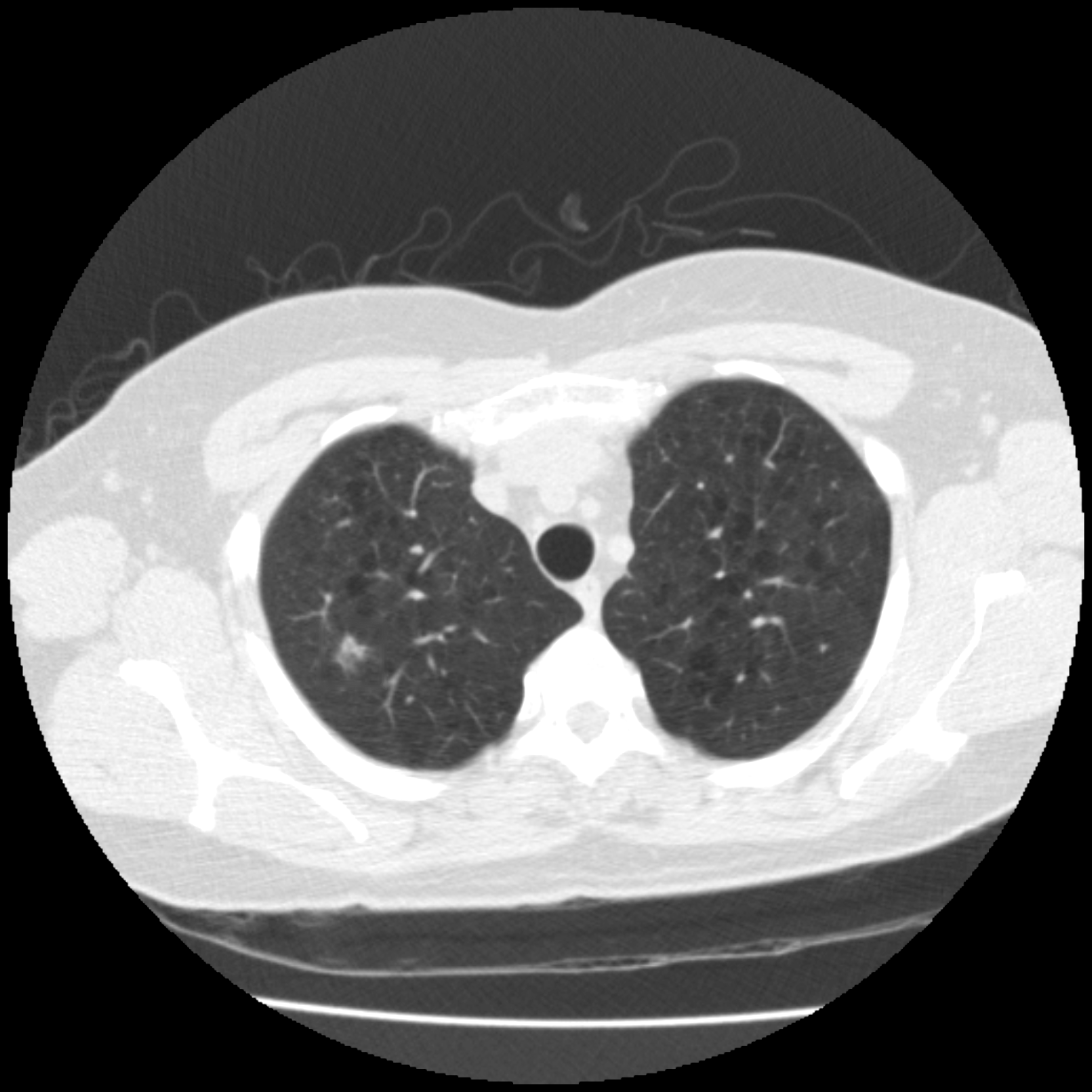
11.7 mm mean
6-month LDCT
Malignancy risk
LungAI is an investigational device, not FDA cleared and not available for sale in the United States. We expect an FDA decision in 2027. Until then, LungAI is used only in research.
What clinics screening outside the guidelines are up against
of lung cancer patients in a Northwestern study qualified for screening
Source: Northwestern Medicine, 2025
of lung cancers occur in people who never smoked
Source: American Cancer Society, 2026
of cancers in screening programs were missed on an earlier scan
Source: Bartlett et al., J Thorac Oncol 2021
of the time, two radiologists put the same nodule in different categories
Source: van Riel et al., Eur Radiol 2019
Missed and delayed lung cancers
Nodules are sorted mostly by size, and size alone doesn’t predict cancer.
A scan finds a nodule. Then what?
- A “probably benign” Lung-RADS 3 nodule waits 6 months, even when it is cancer
- Lung-RADS was built for smokers aged 50 to 80; many members are younger or never smoked
- Benign nodules mean rescans, worry and sometimes a needle biopsy for the member
Which nodules matter?
- A 0 to 10 cancer risk score for every nodule, in the viewer your radiologist already reads in
- Reads the nodule, the whole lung and the change from the prior scan, not just size
- Added to Lung-RADS in our study: 46% fewer cancers left on 12-month follow-up and 20% fewer benign biopsy referrals*
Rescan in 6 months
3-month CT or PET-CT
*LungAI is investigational, not FDA cleared and not available for sale in the U.S. Retrospective NLST data, preprint, not peer reviewed.
Better answers for members, and science with your name on it
Fewer missed cancers
Nodules that matter get a sharper next step, so fewer members hear about cancer late.
Fewer anxious rescans
A clear risk score helps your physicians explain benign findings with confidence.
Published together
A co-authored report on lung findings in a longevity population.
First in line
We expect an FDA decision in 2027. Founding clinics bring LungAI to members first.
Size isn’t the whole story. LungAI reads the rest.
A high score suggests moving the patient one Lung-RADS step up; a very low score, one step down. Same category system, same report, a sharper next step.
| Per 1,000 screening exams | Lung-RADS alone | + LungAI | Change |
|---|---|---|---|
| Cancers left on the 12-month rescan pathway | 3.1 | 1.6 | −46% |
| Cancers referred directly for biopsy | 18.3 | 23.9 | +31% |
| Benign nodules referred for biopsy | 32.7 | 26.2 | −20% |
Cancers LungAI would have moved up, by Lung-RADS category
cancers flagged for a 6-month rescan instead of 12
1.3% vs 0.2% malignant above vs. below the cutoff
cancers flagged for a 3-month CT or PET-CT
16.7% vs 0.9% malignant above vs. below the cutoff
cancers flagged for biopsy or resection
46.2% vs 1.0% malignant above vs. below the cutoff
nodules LungAI stepped down were cancer
A safe step-down for the lowest-risk nodules in the highest categories
Inside the current viewer
The score appears in the reader and PACS your radiologist already uses. No new login, no new screen.
One step, up or down
LungAI never replaces the Lung-RADS category. It informs the next step within the same system.
Reads more than size
The nodule, the whole lung and the change from the prior scan, combined into one 0 to 10 score.
LungAI is an investigational device, not FDA cleared and not available for sale in the United States. We expect an FDA decision in 2027. Results: medRxiv preprint, Nov 2026 (doi 10.64898/2026.11.09.26367662), not peer reviewed. Retrospective analysis of the held-out NLST test set (2,747 low-dose CT exams, 1,244 patients, 89 cancers) vs. Lung-RADS v2022 assigned by a board-certified radiologist on an annotated subset and projected to the full cohort by contingency weighting.
Work with us on the research now. Bring LungAI to your members after FDA review.
Join the research
Enroll members and share de-identified past chest CTs in our clinical study, which runs under the IRB at our partner Mass General Brigham.
Case review, then co-author
We go through the results with your physicians: what the score would have changed. Founding clinics shape the work and can co-author.
Bring LungAI to your members
We expect an FDA decision in 2027. Then we work with you to bring LungAI to your members.
*LungAI added to Lung-RADS v2022, per 1,000 screening exams: retrospective held-out NLST data, medRxiv preprint, Nov 2026 (doi 10.64898/2026.11.09.26367662), not peer reviewed. LungAI is an investigational device, not FDA cleared and not available for sale in the United States. We expect an FDA decision in 2027. Example case is illustrative. Lung-RADS® is a registered trademark of the American College of Radiology.
Sources: 35%: Northwestern Medicine, 2025. 10 to 20% never smoked: American Cancer Society, 2026. Up to 15% missed: Bartlett et al., J Thorac Oncol 2021. 29%: van Riel et al., Eur Radiol 2019.
Let’s look at your members’ nodules together.
Tell us how your physicians handle nodules today, and we’ll talk through whether a study at your clinic makes sense.