
Fewer missed lung cancers for the firefighters you scan.
Cities, states and unions already pay for lung CT scans for firefighters. But the rules for reading those scans were built for older smokers, so some cancers get told to wait. We’re building a second opinion that flags the nodules that matter, on the scans you already fund, with nothing new for crews.
11.7 mm mean
Rescan in 6 months
Look now
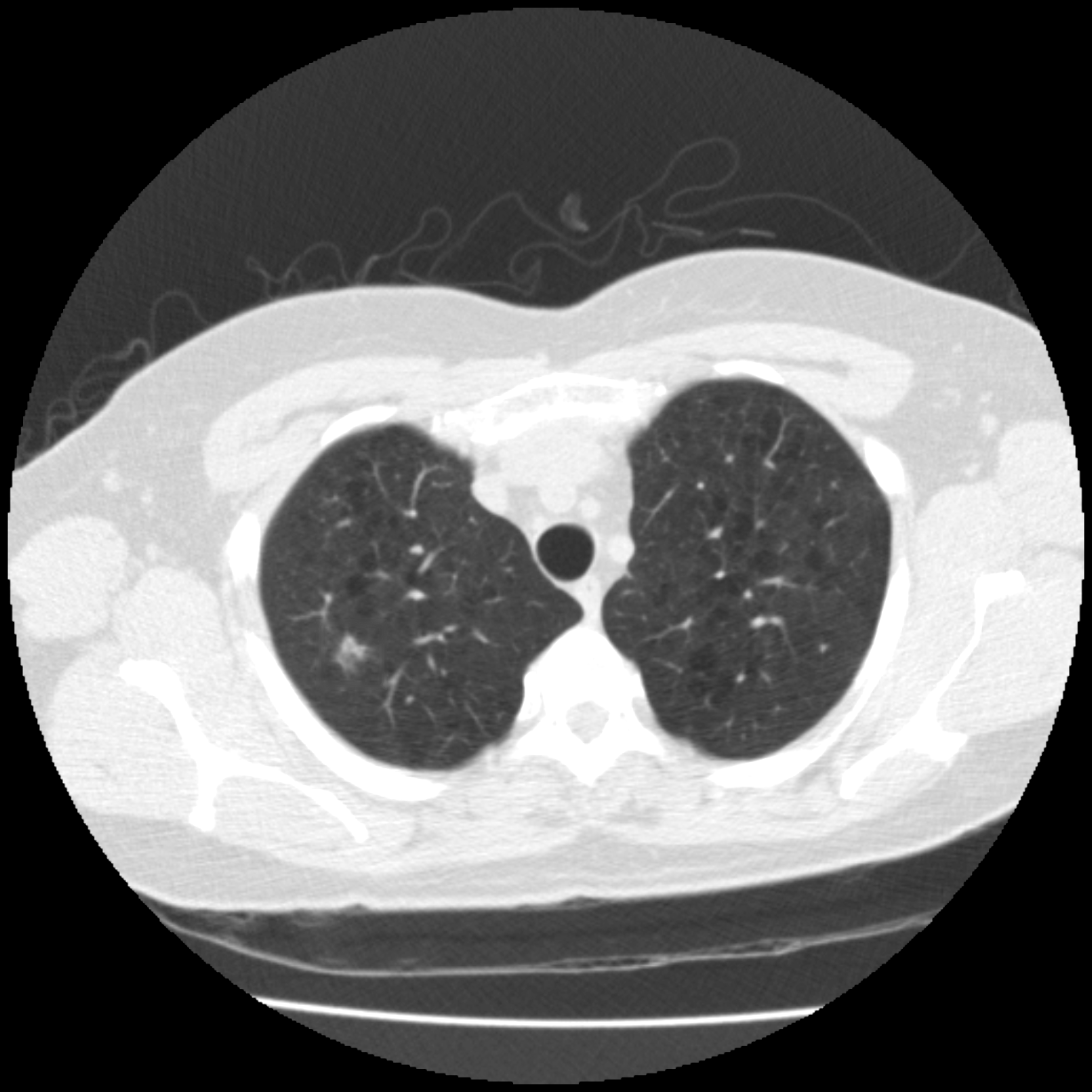
A scan finds a small nodule. The read: probably benign, come back in 6 months.
The nodule was lung cancer, and it had six more months to grow.
A second opinion scores the same nodule 9.7 out of 10: look now, not in 6 months.
Illustrative, based on a real case from a national screening trial (NLST). The second opinion (LungAI) is investigational.
The second opinion (LungAI) is an investigational device, not FDA cleared and not available for sale in the United States. We expect an FDA decision in 2027. Until then, it is used only in research.
What firefighter programs are up against
cause of line-of-duty death for firefighters is cancer
Source: International Association of Fire Fighters (via WCPO, 2025)
of firefighters with high-risk nodules on their scan had never smoked
Source: study of 1,347 Chicago firefighters (AuntMinnie; JoVE)
of cancers in screening programs were missed on an earlier scan
Source: Bartlett et al., J Thorac Oncol 2021
of the time, two doctors reading the same scan disagree on what to do next
Source: van Riel et al., Eur Radiol 2019
Missed and delayed lung cancers
Lung nodules are sorted mostly by size, and size alone doesn’t tell you if it’s cancer.
A scan finds a nodule. Then what?
- A nodule called “probably benign” can wait 6 months or a year, even when it is cancer
- The rules were written for smokers aged 50 to 80; most firefighters you scan are younger, never smoked, or both
- Meanwhile harmless nodules get needle biopsies, and 15% of those collapse a lung
A second opinion on every nodule
- Software that gives the doctor reading the scan a 0 to 10 cancer risk score for each nodule
- Looks at the nodule, the whole lung and how it changed since the last scan, not just size
- In our study, it cut the cancers left waiting a year by almost half (46%)*
Probably benign: wait 6 months
High risk: look now
*LungAI is investigational, not FDA cleared and not available for sale in the U.S. Retrospective NLST data, preprint, not peer reviewed.
Protect your members, and build the evidence for them
Fewer missed cancers
Nodules that matter get looked at sooner, so fewer firefighters hear about their cancer too late.
Fewer needless biopsies
Less time off duty and fewer procedures for nodules that were never cancer.
Evidence for your members
Data your union can use to get firefighting counted in screening rules and coverage.
Nothing new for crews
Works on the scans you already fund, read by the same doctors.
Join the research now. Bring it into your program after FDA review.
Join the research
Enroll firefighters and share past scans in our clinical study, which runs under the IRB at our partner Mass General Brigham.
Shape the evidence
Founding sites help design the work and can co-author what we publish on firefighters.
Bring it into your program
We expect an FDA decision in 2027. Then we bring it into the program you already fund.
*Retrospective study on held-out data from the National Lung Screening Trial (NLST), medRxiv preprint, Nov 2026 (doi 10.64898/2026.11.09.26367662), not peer reviewed. The second opinion (LungAI) is an investigational device, not FDA cleared and not available for sale in the United States. We expect an FDA decision in 2027. Story is illustrative.
Sources: No. 1 cause of line-of-duty death: International Association of Fire Fighters (via WCPO, 2025). 57%: study of 1,347 Chicago firefighters (AuntMinnie; JoVE). Up to 15% missed: Bartlett et al., J Thorac Oncol 2021. 29%: van Riel et al., Eur Radiol 2019. 15% collapsed lung: Wiener et al., Ann Intern Med 2011.
Join the Firefighter Lung Health Collaborative.
We’re inviting a few firefighter programs to be founding sites. Tell us about your program and we’ll compare notes on what your scans are showing.