Share this article and save a life!
A simple stool test, offered every 2 years, cut colon cancer deaths in half. 🧬
That is not a headline from a clinical trial in a controlled setting. That is what happened in the real world, over 21 years, across 2.2 million people.
According to Petra, the Jordan News Agency reporting on a study published August 5, 2026, the Basque Country’s colorectal cancer screening program cut mortality among adults aged 50 to 69 by 50.1 percent. Mortality dropped from 39.7 to 19.8 deaths per 100,000 people. Without the program, researchers estimated mortality in that age group would have been 46.2 percent higher.
The tool was not a colonoscopy. It was FIT, the Fecal Immunochemical Test, a non-invasive method that detects trace blood in stool. Offered every two years to asymptomatic men and women aged 50 to 69, with follow-up colonoscopy for positive results.
Here is what the numbers actually looked like:
– The program identified 4,892 colorectal cancer cases over the study period
– 70.8% of tumors were detected at stage I or II, when treatment is less invasive and survival rates are markedly higher
– The mortality decline began just 3 years after the program launched in 2009
– Researchers analyzed 16,298 cases linked to colorectal cancer from 2004 to 2024
This is the gap that keeps me up at night.
📌 The technology to do this already exists. FIT is not expensive. It requires no bowel prep, no anesthesia, no procedure room. It is a test someone can do at home. And yet, in the U.S., we still struggle to get eligible adults screened at all.
Three stakeholder lenses worth holding at once:
The patient: A 55-year-old does not want a colonoscopy. Telling them they have options, including a test they can do at home, changes the conversation. Convenience is access.
The provider: Stage I and II detection is not just a mortality win. It is fewer complex treatment pathways, fewer readmissions, and a care team that can focus on outcomes rather than damage control.
The health system or payer: A population-level program that reduces mortality by half over two decades is not a cost. It is a cost-avoidance strategy at scale. The Basque data makes that case with 21 years of evidence.
Save this post if you run a population health program. The Basque framework is worth mapping against your own outreach model:
1. Identify eligible adults aged 50 to 69 who are asymptomatic and not current on screening
2. Offer FIT as the default first option, with clear instructions and mailed kits where possible
3. Build a structured follow-up pathway for any positive result, with colonoscopy access included
4. Track stage-at-detection as your primary outcome metric, not just completion rates
The evidence has been in front of us for a long time. The question is whether we are willing to build the infrastructure to use it.
👉 Follow Jonathan Govette, CEO of Oatmeal Health, for daily healthcare insights on LinkedIn. Deeper dives in The Oatmeal Bite on Substack: https://news.oatmealhealth.com
Share this article and save a life!
Author:
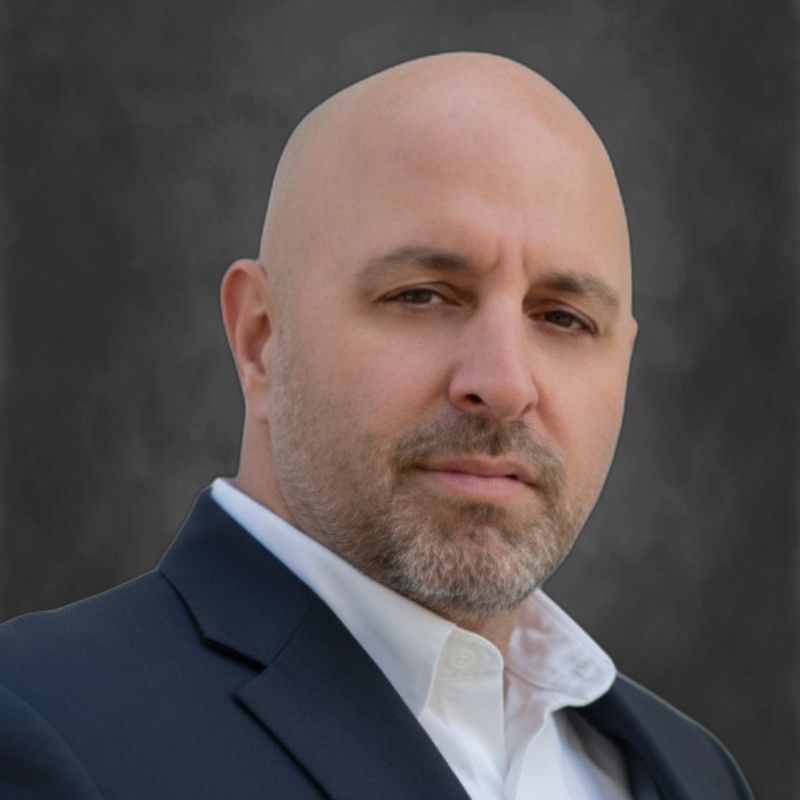
CEO/Co-Founder @ Oatmeal Health | AI Lung Cancer Screening | Almost Became a Doctor | Engineer | Follow to Share What I’ve Learned Along the Way
I help patients get the care they need earlier, preventing late-stage cancer.
That’s been the throughline across three companies and almost 20 years in healthcare. At ReferralMD, we fixed broken referral networks so patients didn’t fall through the cracks. At Oatmeal Health, it’s lung cancer: building the diagnostic and screening infrastructure so the 85% of cases caught too late get caught early instead.
Today as CEO of Oatmeal Health, I lead a team embedding AI into radiology workflows to turn routine lung CT scans into reimbursable cancer risk assessments. We partner with FQHCs to reach underserved communities, and with health systems and payers to make early detection economically sustainable. Think HeartFlow or Cleerly, but for lungs.
Between companies, I advised at Techstars and Plug and Play, mentoring founders building in digital health. That experience shaped how I think about what separates companies that ship from companies that stall: distribution, reimbursement, and clinical trust, not just technology.
I’m a CancerX alumnus, a 3x healthcare founder, and someone who believes the biggest problems in cancer aren’t scientific. They’re operational.
We’re hiring mission-driven builders at Oatmeal Health. If you want to work on something that matters, reach out.
When I’m not working, I’m traveling, mentoring, and keeping up with one very energetic husky. 🐾
Substack – The Oatmeal Bite:
Millions of patients get less care because of who they are, where they live, or how they look. I’m fighting to change that. CEO @OatmealHealth, a startup built for the underserved. The Oatmeal Bite: intel for clinicians, investors, and advocates.
Jonathan Govette
CEO of Oatmeal Health
Substack:
https://oatmealhealthjonathangovette.substack.com/