Share this article and save a life!
Are you still billing fee-for-service in 2026? 🏥
If you are, CMS just told you exactly what they think of that.
On July 14, CMS dropped the proposed Physician Fee Schedule for Calendar Year 2027. And buried inside a dense regulatory document is a message that every physician practice, FQHC CEO, and health system CFO needs to hear right now.
The gap between those inside value-based care and those outside it just got wider.
Here is what the proposed rule actually says, according to the CMS fact sheet:
– Qualifying APM participants (QPs) get a +0.75% conversion factor update for CY 2027
– Non-QPs get only a +0.25% update
– The proposed QP conversion factor drops to $33.17, a decrease of $0.40 (-1.19%) from the current $33.57
– The proposed non-QP conversion factor drops to $32.84, a decrease of $0.56 (-1.68%) from the current $33.40
– A temporary 2.50% boost from the Working Families Tax Cut legislation that inflated CY 2026 rates expires entirely, pulling everyone down
That last point is the one most people are glossing over.
The 2.50% one-year bump that cushioned payments in 2026 disappears January 1, 2027. That is not a cut on paper. That is money leaving your practice.
🔎 There are also structural changes to how E/M visits get paid.
When the same physician performs an E/M visit and a procedure with a global period on the same day, CMS is proposing to pay the most expensive service at 100% and all additional services at 50%. The logic is efficiency. The reality is reduced revenue for the physicians who see complex patients and do procedures.
On the other side of that equation, CMS is rewarding coordination.
The G2211 complexity add-on is transitioning to a modifier that increases payment for the associated E/M code by 16%. Practitioners inside Shared Savings Program ACOs get an additional modifier that increases payment by 32%.
16% vs 32%. Same patients. Completely different payment depending on your program participation.
💡 Here is what most people are missing.
This is not a blip. This is a compounding structural shift. Every year you stay outside an Advanced APM, the gap between what you earn and what your value-based peers earn grows. The conversion factors, the modifier access, the bonus eligibility. All of it is being engineered to make the status quo financially unsustainable.
For FQHCs and community health centers, this matters enormously. The proposed rule also touches Rural Health Clinic and FQHC policies specifically. Your patients are the most complex. Your margins are the thinnest. And the payment system is now actively rewarding the infrastructure you may not yet have.
I have spent years working on the front lines of preventive care access. The communities we serve at Oatmeal Health cannot afford for their providers to be caught flat-footed when these rules go final.
The comment period is open. Final rule lands before January 1, 2027. The time to understand this is now, not in December.
👉 Follow Jonathan Govette, CEO of Oatmeal Health, for daily healthcare insights on LinkedIn. Deeper dives in The Oatmeal Bite on Substack: https://news.oatmealhealth.com
Share this article and save a life!
Author:
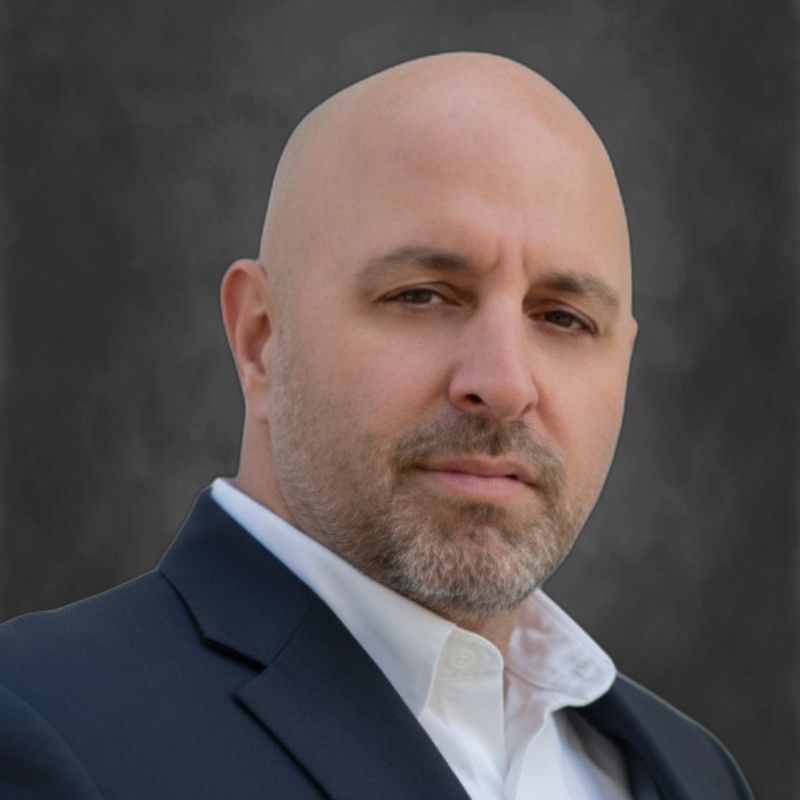
CEO/Co-Founder @ Oatmeal Health | AI Lung Cancer Screening | Almost Became a Doctor | Engineer | Follow to Share What I’ve Learned Along the Way
I help patients get the care they need earlier, preventing late-stage cancer.
That’s been the throughline across three companies and almost 20 years in healthcare. At ReferralMD, we fixed broken referral networks so patients didn’t fall through the cracks. At Oatmeal Health, it’s lung cancer: building the diagnostic and screening infrastructure so the 85% of cases caught too late get caught early instead.
Today as CEO of Oatmeal Health, I lead a team embedding AI into radiology workflows to turn routine lung CT scans into reimbursable cancer risk assessments. We partner with FQHCs to reach underserved communities, and with health systems and payers to make early detection economically sustainable. Think HeartFlow or Cleerly, but for lungs.
Between companies, I advised at Techstars and Plug and Play, mentoring founders building in digital health. That experience shaped how I think about what separates companies that ship from companies that stall: distribution, reimbursement, and clinical trust, not just technology.
I’m a CancerX alumnus, a 3x healthcare founder, and someone who believes the biggest problems in cancer aren’t scientific. They’re operational.
We’re hiring mission-driven builders at Oatmeal Health. If you want to work on something that matters, reach out.
When I’m not working, I’m traveling, mentoring, and keeping up with one very energetic husky. 🐾
Substack – The Oatmeal Bite:
Millions of patients get less care because of who they are, where they live, or how they look. I’m fighting to change that. CEO @OatmealHealth, a startup built for the underserved. The Oatmeal Bite: intel for clinicians, investors, and advocates.
Jonathan Govette
CEO of Oatmeal Health
Substack:
https://oatmealhealthjonathangovette.substack.com/