Share this article and save a life!
The world has a third-largest Ebola outbreak. Right now.
And most people in healthcare have barely looked up from their inboxes.
According to The Analyst Desk, the Ebola outbreak in the Democratic Republic of Congo, caused by the Bundibugyo strain, just became the third-largest Ebola outbreak on record. Cases climbed from roughly 1,460 cases and 452 deaths in early July to 1,947 cases and 704 deaths by July 9. That is the death count rising by roughly 50 in 100 in about ten days. 🌍
Let that number sink in for a second.
⚠️ Here is what the data actually shows:
– Case-fatality rate stands near 34 in 100, meaning close to 1 in 3 confirmed patients has died
– 112 healthcare workers have been infected, with 32 to 35 of them dead
– Ituri province alone recorded 1,808 cases and 631 deaths by mid-July
– WHO says confirmed cases may be undercounted 2 to 4 times over
– 80 in 100 of new patients in Ituri are not on any existing contact list
That last point is the one that should stop you cold.
When 80% of new cases cannot be traced to a known contact, you have lost the ability to get ahead of it. Transmission chains are being lost faster than they can be traced.
🔬 The response is being strangled at every level:
No licensed vaccine or treatment exists for the Bundibugyo strain. A treatment trial pairing an antibody drug with remdesivir only began July 2. A vaccine candidate just entered its first human trial this month. Meanwhile, armed conflict, worker strikes over unpaid wages and protective equipment, and treatment centers at saturation are compounding the collapse.
The US renewed its entry restriction on travelers from affected countries on July 13 for another 30 days. That buys time, not solutions.
Two views worth holding at the same time:
Public health institutions will point to the speed of the trial launches as proof the system is responding. Frontline workers in Ituri will tell you the system arrived too late and too underfunded to matter on the ground.
Both things are true.
💊 Meanwhile, back in the US:
The FDA approved Lipfendra, the first once-daily pill PCSK9 inhibitor for high cholesterol, on July 16. It cut LDL by roughly 56 to 60 in every 100 units compared to placebo in trials. Medicare’s flat $50-a-month bridge to GLP-1 weight-loss drugs quietly kicked in on July 1.
Big moves. Real progress. And I am glad for them.
But the contrast between a week of American drug approvals and a collapsing outbreak response in one of the most conflict-stricken places on earth is a reminder of how uneven global health infrastructure still is.
📋 The Healthcare Leaders Situational Checklist This Week:
1. Are your outbreak surveillance feeds monitoring DRC case counts?
2. Does your organization have a protocol for travel health advisories tied to State Dept restrictions?
3. Are you tracking whether the Bundibugyo trial data changes any preparedness planning?
4. Do you know where your supply chain intersects with regions under active outbreak pressure?
Save this post if you brief leadership teams on global health risk. These are the questions worth asking before a situation escalates into your boardroom.
The DRC outbreak is not a distant news item. It is a live stress test of every system we assume works, surveillance, containment, supply, workforce protection.
We should all be watching more closely than we are.
👉 Follow Jonathan Govette, CEO of Oatmeal Health, for daily healthcare insights on LinkedIn. Deeper dives in The Oatmeal Bite on Substack: https://news.oatmealhealth.com
Share this article and save a life!
Author:
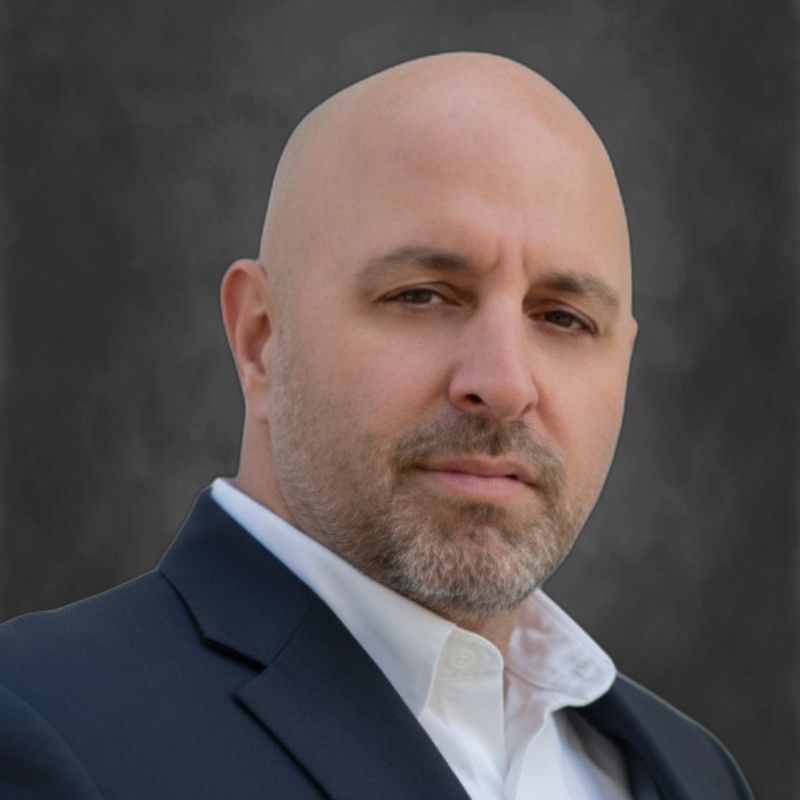
CEO/Co-Founder @ Oatmeal Health | AI Lung Cancer Screening | Almost Became a Doctor | Engineer | Follow to Share What I’ve Learned Along the Way
I help patients get the care they need earlier, preventing late-stage cancer.
That’s been the throughline across three companies and almost 20 years in healthcare. At ReferralMD, we fixed broken referral networks so patients didn’t fall through the cracks. At Oatmeal Health, it’s lung cancer: building the diagnostic and screening infrastructure so the 85% of cases caught too late get caught early instead.
Today as CEO of Oatmeal Health, I lead a team embedding AI into radiology workflows to turn routine lung CT scans into reimbursable cancer risk assessments. We partner with FQHCs to reach underserved communities, and with health systems and payers to make early detection economically sustainable. Think HeartFlow or Cleerly, but for lungs.
Between companies, I advised at Techstars and Plug and Play, mentoring founders building in digital health. That experience shaped how I think about what separates companies that ship from companies that stall: distribution, reimbursement, and clinical trust, not just technology.
I’m a CancerX alumnus, a 3x healthcare founder, and someone who believes the biggest problems in cancer aren’t scientific. They’re operational.
We’re hiring mission-driven builders at Oatmeal Health. If you want to work on something that matters, reach out.
When I’m not working, I’m traveling, mentoring, and keeping up with one very energetic husky. 🐾
Substack – The Oatmeal Bite:
Millions of patients get less care because of who they are, where they live, or how they look. I’m fighting to change that. CEO @OatmealHealth, a startup built for the underserved. The Oatmeal Bite: intel for clinicians, investors, and advocates.
Jonathan Govette
CEO of Oatmeal Health
Substack:
https://oatmealhealthjonathangovette.substack.com/