Share this article and save a life!
More FDA clearances in radiology AI should mean safer imaging. It does not.
The number on the scoreboard looks impressive. According to AI Certs, academic analysts verified 950 cleared AI tools as of August 2024, and industry media now cite 1,400 to 1,500 authorizations through mid-2026. Radiology captures roughly 70% of that entire list. Chest imaging triage and intracranial hemorrhage detection lead the pack.
We are winning the clearance race. We may be losing the evidence race.
Here is the part that should make every health system pause:
A JAMA Health Forum study mapped 182 recall events across 60 cleared tools. Nearly half of those recalls occurred within twelve months of authorization. Researcher Tinglong Dai called the findings “stunning.” And many of the recalled products lacked publicly reported clinical validation before they hit the market.
The clearance mechanism driving all of this? About 95% of AI tools used the 510(k) pathway, which typically requires bench tests rather than prospective clinical trials. You are not proving your tool works on real patients. You are proving it is substantially equivalent to something that already exists.
Substantial equivalence is not the same as clinical safety.
Here is why this matters more than people think:
Radiology has the most cleared tools. It also has the most patient volume, the highest stakes for missed findings, and the least margin for silent algorithm failure. When a chest imaging triage tool fails quietly, a radiologist does not catch it. That is the whole point of the tool.
The Clearance Confidence Fallacy: Three things the 510(k) pathway does NOT guarantee
• That the tool has been validated on a diverse patient population
• That performance holds up post-deployment in real-world conditions
• That recall history was reviewed before your contract was signed
Health systems are now negotiating with vendors without that baseline information. Procurement teams are starting to demand stronger evidence packages, but they are doing it reactively, after the recalls, not before.
The contrast is stark.
Publicly traded manufacturers saw recalls concentrate disproportionately on their products. Yet these are the same companies with the largest sales teams, the biggest booth presence at RSNA, and the most polished ROI decks.
Sales sophistication and clinical reliability are not the same thing.
Worth saving if you are evaluating imaging AI vendors this quarter: before signing any contract, ask for the external validation dataset, the postmarket monitoring plan, and the recall history. If a vendor cannot produce all three, that is your answer.
I believe the next two years in radiology AI will not be defined by who gets cleared fastest. They will be defined by who survives the accountability reckoning that is already underway.
The 510(k) pathway built a crowded market. Evidence will thin that market down to the tools that actually work.
👉 Follow Jonathan Govette, CEO of Oatmeal Health, for daily healthcare insights on LinkedIn. Deeper dives in The Oatmeal Bite on Substack: https://news.oatmealhealth.com
Share this article and save a life!
Author:
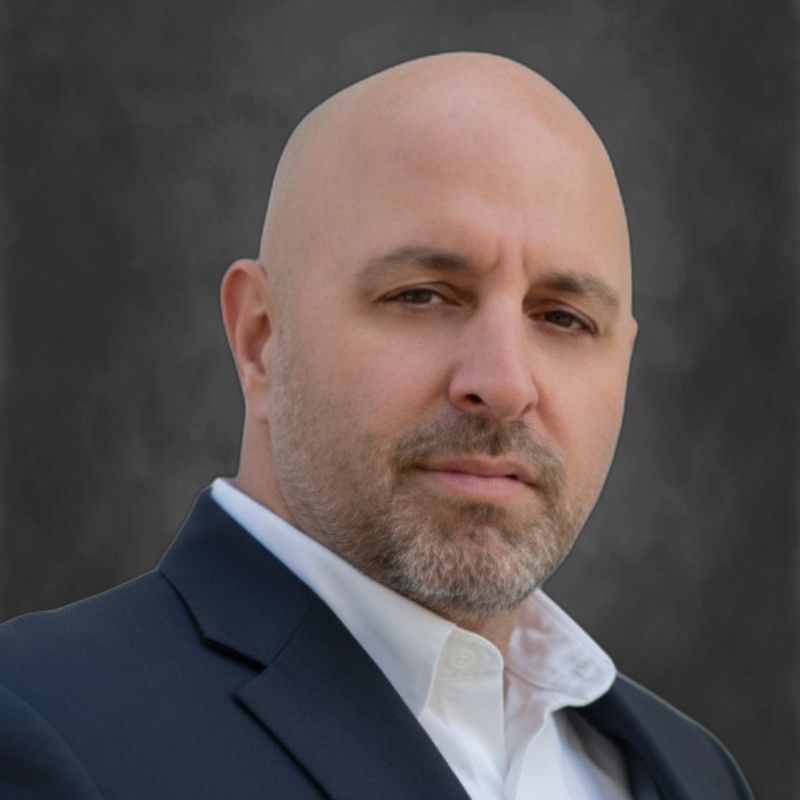
CEO/Co-Founder @ Oatmeal Health | AI Lung Cancer Screening | Almost Became a Doctor | Engineer | Follow to Share What I’ve Learned Along the Way
I help patients get the care they need earlier, preventing late-stage cancer.
That’s been the throughline across three companies and almost 20 years in healthcare. At ReferralMD, we fixed broken referral networks so patients didn’t fall through the cracks. At Oatmeal Health, it’s lung cancer: building the diagnostic and screening infrastructure so the 85% of cases caught too late get caught early instead.
Today as CEO of Oatmeal Health, I lead a team embedding AI into radiology workflows to turn routine lung CT scans into reimbursable cancer risk assessments. We partner with FQHCs to reach underserved communities, and with health systems and payers to make early detection economically sustainable. Think HeartFlow or Cleerly, but for lungs.
Between companies, I advised at Techstars and Plug and Play, mentoring founders building in digital health. That experience shaped how I think about what separates companies that ship from companies that stall: distribution, reimbursement, and clinical trust, not just technology.
I’m a CancerX alumnus, a 3x healthcare founder, and someone who believes the biggest problems in cancer aren’t scientific. They’re operational.
We’re hiring mission-driven builders at Oatmeal Health. If you want to work on something that matters, reach out.
When I’m not working, I’m traveling, mentoring, and keeping up with one very energetic husky. 🐾
Substack – The Oatmeal Bite:
Millions of patients get less care because of who they are, where they live, or how they look. I’m fighting to change that. CEO @OatmealHealth, a startup built for the underserved. The Oatmeal Bite: intel for clinicians, investors, and advocates.
Jonathan Govette
CEO of Oatmeal Health
Substack:
https://oatmealhealthjonathangovette.substack.com/