Share this article and save a life!
Radiologists, why does 95% of the AI you piloted never reach a patient?
That number should stop you cold.
According to Rad AI, citing the MIT Nanda report, the AI pilot failure rate across healthcare sits at 95%. Not 30%. Not 50%. Ninety-five percent of AI pilots succeed on paper, then stall in practice.
That is not a technology problem. That is a healthcare culture problem.
And in radiology, it is getting harder to ignore.
Here is the data picture Rad AI laid out in a July 2026 piece worth reading:
• 95% of AI pilots fail to scale beyond the pilot stage, per the MIT Nanda report
• Implementation costs alone can exceed $200,000, per work out of Duke University
• The REVEAL-HF trial tested a well-validated mortality risk score surfaced directly inside the EHR. Clinicians tuned it out. Outcomes did not shift.
• The Epic Sepsis Model showed respectable overall AUROC scores, then accuracy collapsed at the exact early time points when intervention matters most
A model can perform beautifully in aggregate and still fail the only moments clinicians actually need it.
That last line is the one most people gloss over.
At the Johns Hopkins Research Symposium on Engineering in Healthcare, the executive director for radiology strategy and innovation described how his team evaluated a breast cancer AI tool. He did not open with utilization curves or sensitivity charts. He asked radiologists one question.
“Do you sleep better at night?”
The answer was overwhelmingly yes. That was enough to move the tool out of pilot mode and into routine clinical use.
Simplicity beat complexity. Trust beat metrics.
—
I think about this constantly as someone building in healthcare AI. The industry spent years demanding transparency: show us your model card, your data, your validation studies. That was Phase I.
Phase II is harder. It asks: what actually changed?
Did it reduce harm? Did it free up five minutes of a clinician’s day? If the answer is no, it does not matter how elegant the ROC curve looks.
Here is a framework I am calling The Radiology AI Proof Stack. Save this the next time your team is evaluating a new imaging AI vendor.
The Radiology AI Proof Stack:
1. Clinical trust: would radiologists stake their name on this output?
2. Workflow fit: does it reduce clicks or add them?
3. Outcome shift: what measurably changed after deployment?
4. Failure mode clarity: when it is wrong, who absorbs the liability?
5. Scale evidence: has it moved beyond pilot at more than one site?
Most tools clear level one or two. Almost none clear all five.
The uncomfortable truth: accountability today sits almost entirely with the radiologist, not the vendor. That single fact shapes every procurement conversation, every governance decision, every clinical behavior. Until liability shifts, AI stays a tool, not a transformation.
The next era of radiology AI will not be won by the most impressive demo. It will be won by whoever can answer all five levels of that stack with real evidence.
👉 Follow Jonathan Govette, CEO of Oatmeal Health, for daily healthcare insights on LinkedIn. Deeper dives in The Oatmeal Bite on Substack: https://news.oatmealhealth.com
Share this article and save a life!
Author:
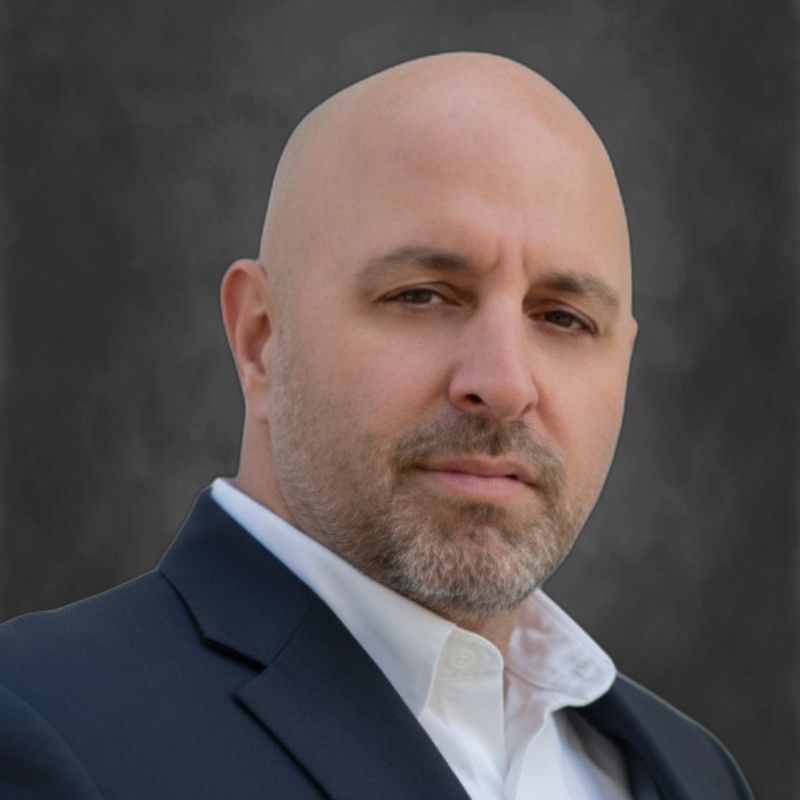
CEO/Co-Founder @ Oatmeal Health | AI Lung Cancer Screening | Almost Became a Doctor | Engineer | Follow to Share What I’ve Learned Along the Way
I help patients get the care they need earlier, preventing late-stage cancer.
That’s been the throughline across three companies and almost 20 years in healthcare. At ReferralMD, we fixed broken referral networks so patients didn’t fall through the cracks. At Oatmeal Health, it’s lung cancer: building the diagnostic and screening infrastructure so the 85% of cases caught too late get caught early instead.
Today as CEO of Oatmeal Health, I lead a team embedding AI into radiology workflows to turn routine lung CT scans into reimbursable cancer risk assessments. We partner with FQHCs to reach underserved communities, and with health systems and payers to make early detection economically sustainable. Think HeartFlow or Cleerly, but for lungs.
Between companies, I advised at Techstars and Plug and Play, mentoring founders building in digital health. That experience shaped how I think about what separates companies that ship from companies that stall: distribution, reimbursement, and clinical trust, not just technology.
I’m a CancerX alumnus, a 3x healthcare founder, and someone who believes the biggest problems in cancer aren’t scientific. They’re operational.
We’re hiring mission-driven builders at Oatmeal Health. If you want to work on something that matters, reach out.
When I’m not working, I’m traveling, mentoring, and keeping up with one very energetic husky. 🐾
Substack – The Oatmeal Bite:
Millions of patients get less care because of who they are, where they live, or how they look. I’m fighting to change that. CEO @OatmealHealth, a startup built for the underserved. The Oatmeal Bite: intel for clinicians, investors, and advocates.
Jonathan Govette
CEO of Oatmeal Health
Substack:
https://oatmealhealthjonathangovette.substack.com/