

Virtual Radiology Supervision Goes Permanent
The biggest radiology change since PACS just became permanent. CMS just fundamentally rewrote how radiology supervision works in America. Starting January 1, 2026, radiologists can permanently supervise diagnostic imaging tests virtually using real-time audiovisual technology. No more temporary extensions. No more uncertainty. This is now the law of the land. Think about what this actually means: A radiologist in Chicago can supervise an MRI in rural Montana. A subspecialist in Boston can oversee complex procedures in underserved Mississippi. Weekend coverage no longer requires physical presence in multiple facilities. The numbers tell the story: 📊 75% of rural hospitals struggle to find radiologists 🏥 Average wait time for imaging: 31 days in rural areas ⏰ After-hours coverage costs: $500,000+ annually per ...
Rural Health Gets $50B Lifeline
CMS just dropped $50 billion on rural America. Yesterday's announcement changes everything for rural healthcare. 📍 The Rural Health Transformation Program will distribute $10 billion annually through 2030, with every single state receiving funding. Half gets split equally, half based on need. Texas and Alaska are getting the largest shares. Arizona alone gets $167 million for maternal mortality programs. But here's what makes this different: States must invest in at least three transformation areas, including AI implementation, remote monitoring, robotics, and cybersecurity. This isn't just throwing money at the problem, it's forcing innovation. Think about what this means: Rural hospitals struggling to keep doors open suddenly have capital for telehealth infrastructure. FQHCs can finally afford remote patient monitoring for their ...
HHS Seeks Public Input on AI Healthcare Revolution
HHS just asked the most important question in healthcare: How do we fix payment and regulations to actually enable AI adoption? On December 4, the Department released its AI strategy alongside a Request for Information that cuts straight to the core problem. They're not asking IF we should use AI in healthcare anymore. They're asking HOW to restructure the entire system to make it work. Think about the implications here. We have over 1,300 FDA-approved AI medical devices. Yet most collect dust because Medicare won't pay for them. Only 2 CPT codes exist for newer AI applications despite hundreds of cleared devices. HHS is essentially saying: Tell us how to blow up these barriers. The RFI seeks input on three ...
AI Virtual Nurses Transform Hospital Care
Hospitals just made every room self-aware with AI. And the results are stunning. Houston Methodist, University Hospitals, and Emory Healthcare have deployed AI-powered virtual nursing across thousands of beds in 2025. These aren't just cameras on the wall. These are intelligent systems with LIDAR sensors, thermal imaging, and AI algorithms that continuously analyze patient movement patterns, gait stability, and risk factors in real-time. The room literally knows when a patient is about to fall before they do. 📊 Early results from implementations: • 30% reduction in patient falls at Houston Methodist • 45 minutes saved per nurse shift for documentation • 40% decrease in code blues at Hackensack Meridian • $9 million in sitter cost savings annually • 74% of ...
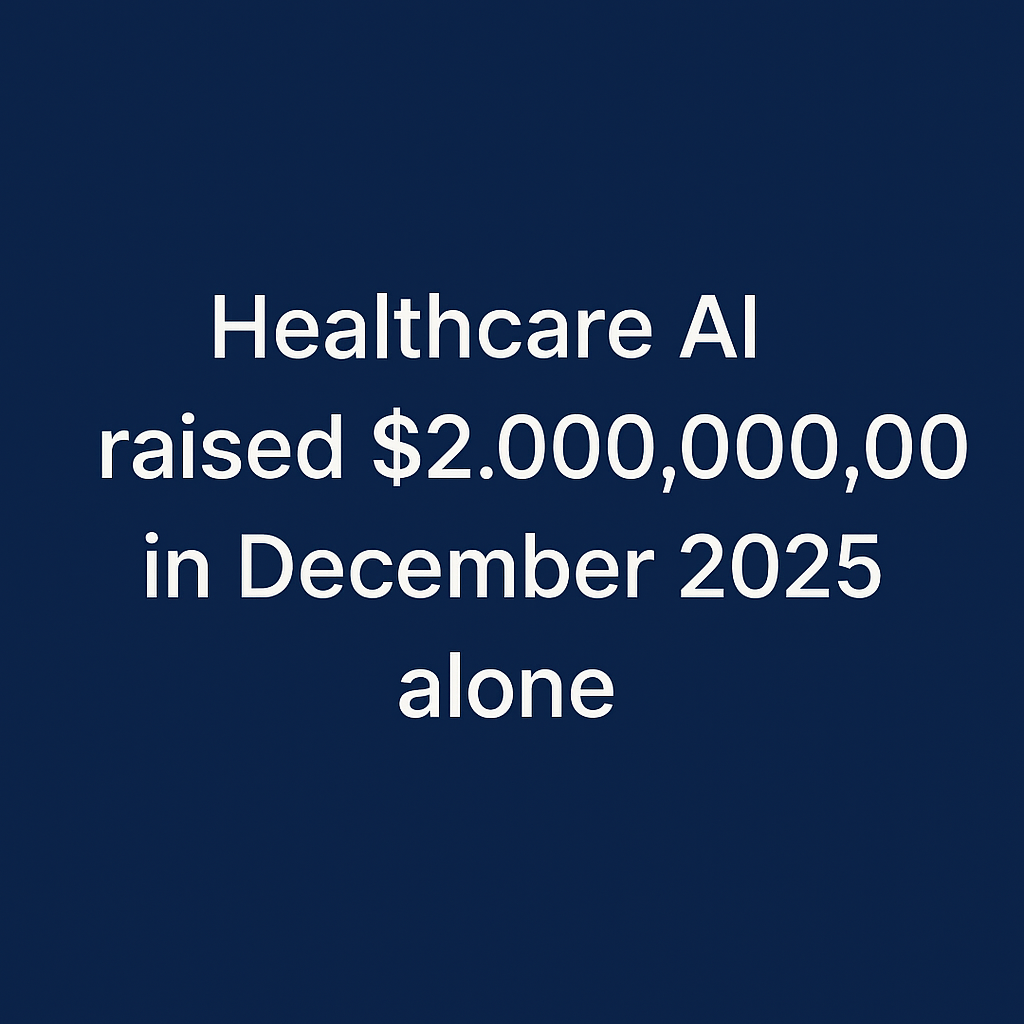
Healthcare AI Funding Explosion December 2025
Healthcare AI just raised $2 billion in 3 weeks. Are we ready? The numbers are staggering: • Angle Health: $134 million for AI-powered benefits modernization • Paradigm Health: $78 million for clinical research AI automation • Artera: $65 million for autonomous care support systems • Abridge: $300 million for ambient AI documentation • Ambience Healthcare: $243 million for clinical AI scribes • Commure: $200 million for ambient AI platforms That's just December 2025. Not the whole year. Just three weeks. 💡 Here's what's really happening: Startups are capturing 85% of generative AI healthcare spending while established health systems scramble to keep up. Mayo Clinic announced a $1 billion AI investment. Advocate Health is deploying dozens of AI projects simultaneously. The ...
FDA Deploys Agentic AI Agency-Wide
The FDA just made its boldest move in 118 years of existence. They've deployed agentic AI systems across the entire agency. Not chatbots. Not basic automation. Actual AI agents that can autonomously execute complex regulatory workflows while humans maintain oversight. 🚀 What this means: Pre-market reviews that took months? Now potentially weeks. Post-market surveillance catching safety signals? Near real-time. Inspection reports and administrative backlogs? Dramatically reduced. The numbers tell the story: • Over 1,000 AI medical devices awaiting review • 873 radiology AI algorithms approved in 2025 alone • Review delays threatening patient access to innovation • Workforce reductions pressuring the agency Here's what's revolutionary: These aren't simple tools. They're hosted in high-security GovCloud, protected from training on submitted data, ...
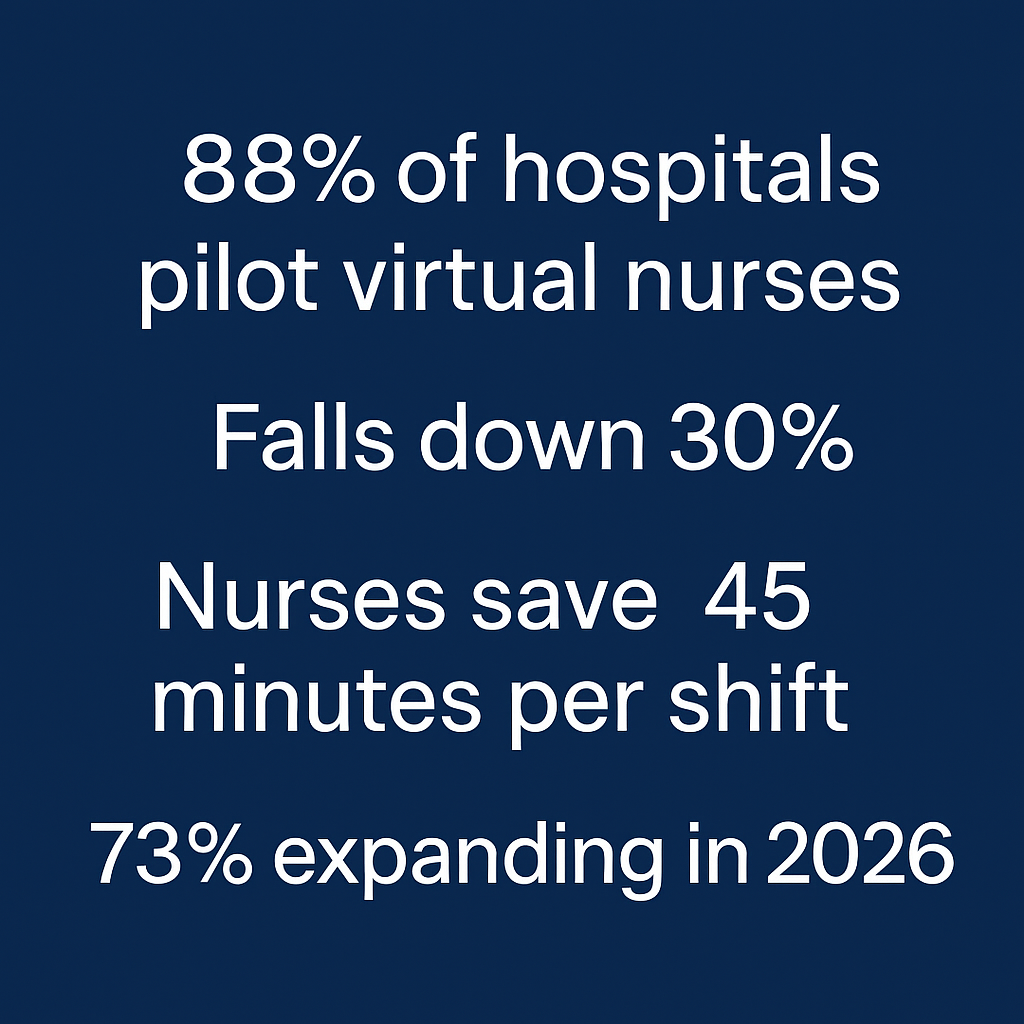
Virtual Nurses Transform Hospital Care
88% of hospitals are now piloting virtual nurses. The results? Mind-blowing. Houston Methodist just deployed self-aware hospital rooms that can predict patient falls before they happen. University Hospitals launched AI-powered virtual nursing across their entire Lake West campus. Cedars-Sinai's platform now manages 42,000+ patients remotely. Here's what's actually happening on the ground: 📊 The numbers are staggering: • Falls reduced by 10-30% on high-risk units • Nurses save 20-45 minutes per shift on documentation • Sitter hours cut by 30-50% • Hospital stays shortened by 7% • 73% of hospitals expanding programs in 2026 The technology is fascinating. These aren't just cameras and microphones. We're talking about AI-enabled rooms with embedded sensors, predictive algorithms, and two-way communication systems. Virtual nurses ...
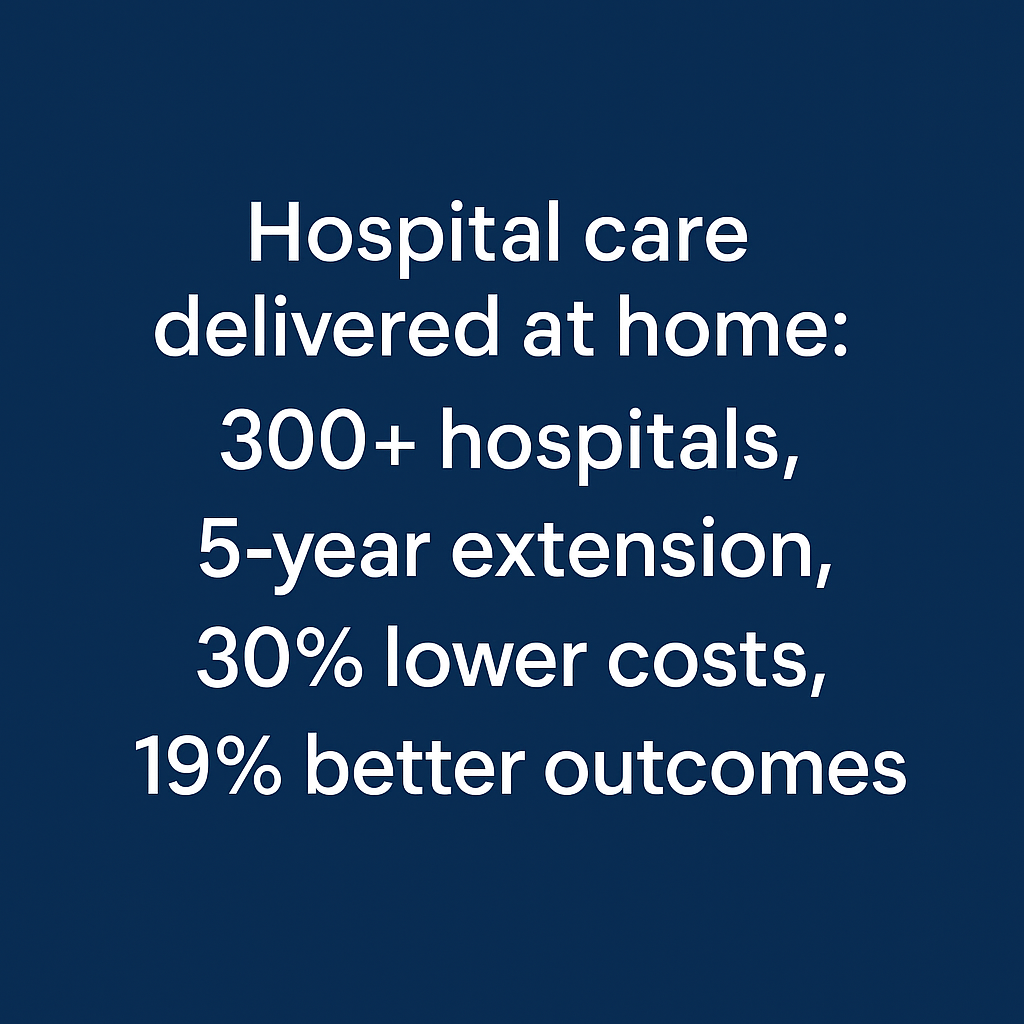
Hospital at Home Gets 5-Year Extension
Your hospital bed just moved to your living room, permanently. The House just secured the future of healthcare delivery with a simple voice vote. 🏥 On December 17, they passed the Hospital Inpatient Services Modernization Act, extending Medicare's Hospital at Home program through 2031. This isn't just another policy extension. It's a fundamental shift in how we think about acute care. Consider what this means: • 300+ hospitals can continue offering hospital-level care in patients' homes • Patients avoid hospital-acquired infections (which affect 1 in 31 hospital patients) • Families stay together during medical crises • Rural communities gain access to specialty care without 100-mile drives • Health systems save 30% on costs per admission The program was set to ...

FDA Qualifies First AI for Drug Development
The FDA just changed drug development forever. For the first time, an AI pathology tool has been officially qualified to assess liver disease in clinical trials. This isn't another radiology approval, this is AI directly influencing how new drugs get tested and approved. Here's why this matters: MASH (metabolic dysfunction-associated steatohepatitis) affects 115 million Americans. Until now, drug trials required human pathologists to manually score thousands of liver biopsies, creating massive bottlenecks and subjective variability. The qualified AI tool can now: ✓ Standardize disease assessment across trials ✓ Accelerate patient enrollment ✓ Reduce inter-reader variability ✓ Cut drug development timelines But here's what's fascinating: While we've seen 1,000+ AI tools approved for clinical diagnosis, this is the first qualified specifically ...