
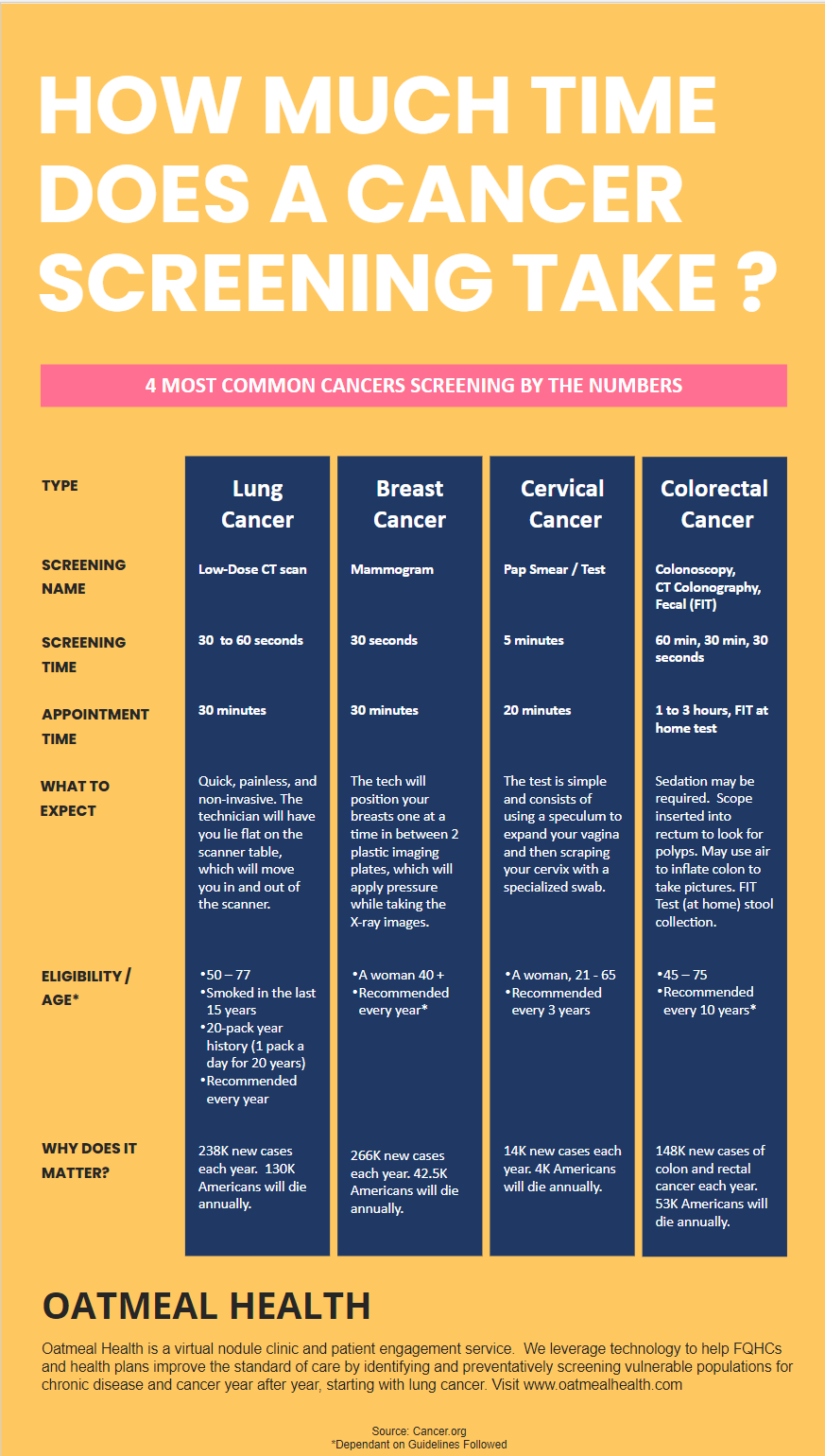
How Much Time Does a Cancer Screening Take: 4 Most common cancers screening by the numbers
Early detection and regular screening are crucial for reducing the risk of cancer and improving the chances of successful treatment. Patients should discuss their individual risk factors and screening options with their healthcare providers to determine the appropriate screening schedule for their needs. Share this Image On Your SitePlease include attribution to https://oatmealhealth.com with this graphic. 1. Lung Cancer Screening: Lung cancer is the leading cause of cancer deaths worldwide, with a high mortality rate. Screening can help detect lung cancer early when it's more treatable. The type of screening performed for lung cancer is a low-dose CT (computed tomography) scan, which uses X-rays to create detailed images of the lungs. Screening time: A low-dose CT scan ...
Lung Cancer Screening Call Center Checklist and Talking Points
Asking patients about their smoking history is an important part of cancer screening because smoking is a major risk factor for many types of cancer. Studies have shown that smoking is responsible for approximately 30% of all cancer deaths in the United States, and it is the leading cause of preventable cancer deaths worldwide. When a patient is screened for cancer, healthcare professionals want to identify any potential risk factors that may increase the patient's chances of developing the disease. Smoking is a well-established risk factor for a variety of cancers, including lung, throat, mouth, esophagus, bladder, kidney, pancreas, and cervix cancers. By asking patients about their smoking history, healthcare professionals can determine if the patient is at an increased ...
From Invisible to Invaluable: How to Effectively Outreach to Underinsured and Uninsured FQHC Patient Populations
The healthcare industry is constantly evolving, and with that evolution come new challenges. One of the most significant challenges healthcare providers face today is how to effectively market to underinsured and uninsured patient populations in the community. These populations are often invisible to traditional outreach efforts, and as a result, healthcare providers struggle to reach and engage them. However, with the right approach and strategies, healthcare providers can turn these invisible populations into invaluable patients. In this article, we will explore the specific tactics and strategies that healthcare providers can use to effectively market to underinsured and uninsured patient populations in the community. Identifying Your Target Audience The first step in effectively marketing to underinsured and uninsured patient populations ...
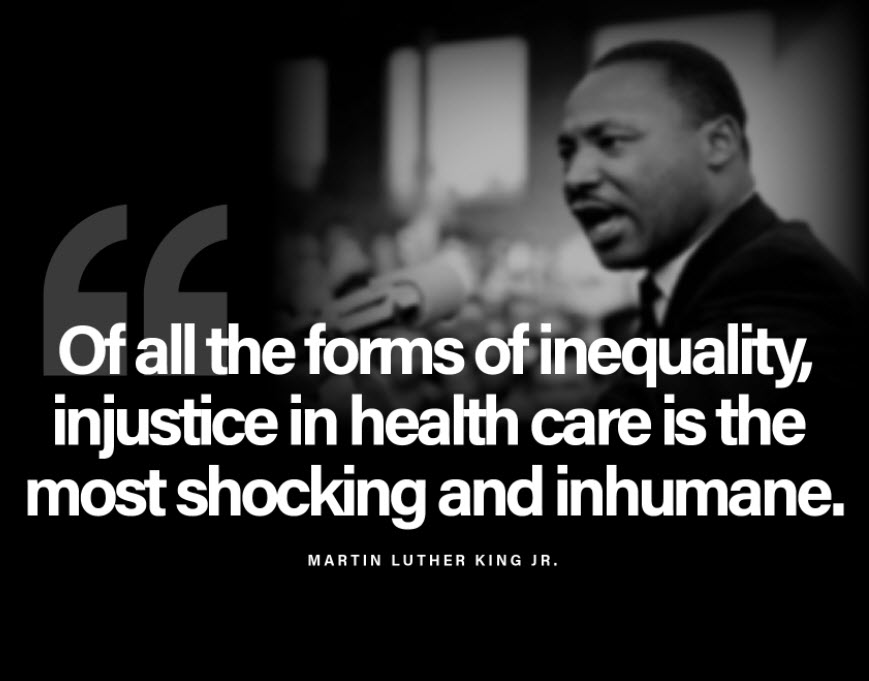
The Injustice of Health: America’s Worsening Disparities and How FQHCs can Help
African American/Black individuals have a disproportionate cancer burden, including the highest mortality and the lowest survival of any racial/ethnic group for most cancers. Every 3 years, the American Cancer Society estimates the number of new cancer cases and deaths for Black people in the United States and compiles the most recent data on cancer incidence (herein through 2018), mortality (through 2019), survival, screening, and risk factors using population-based data from the National Cancer Institute and the Centers for Disease Control and Prevention. In 2022, there will be approximately 224,080 new cancer cases and 73,680 cancer deaths among Black people in the United States. During the most recent 5-year period, Black men had a 6% higher incidence rate but 19% higher ...

FQHC Partnership Blueprint: How to Develop a Winning Strategy
The Importance of Partnership Management in FQHCs Federally Qualified Health Centers (FQHCs) play a crucial role in providing access to healthcare for underserved communities. However, the challenges facing FQHCs are significant and multifaceted, including financial constraints, workforce shortages, and increased demand for services. One effective strategy for addressing these challenges is through the development of formal partnerships with other organizations. This guide will provide a detailed overview of the key legal ideas and concepts involved in developing a partnership management process for FQHCs, with a focus on achieving specific, goal-oriented results. The Legal Framework for FQHC Partnerships The legal framework for FQHC partnerships is complex, and it is essential to have a thorough understanding of the various ...

Revolutionary AI Predicts Lung Cancer Risk with High Accuracy
It is no surprise that the smart crew at MIT and Mass General have shown that they can predict lung cancer from a single CT scan. It will be a while before this is standard of care, however, this method, or blood tests, or breath tests, will be very helpful in the quest to get the right patient screened at the right time, including others with increased risk of lung cancer, including patients without a history of smoking. Researchers at Mass General Cancer Center and Massachusetts Institute of Technology created a tool known as Sybil. "Based on analyses of LDCT scans from patients in the U.S. and Taiwan, Sybil accurately predicted the risk of lung cancer for individuals with or without a significant ...
7 Essential Recommendations for FQHC Leaders to Ensure Success and Sustainability
Federally Qualified Healthcare Centers (FQHCs) play a crucial role in the healthcare delivery system of the United States. According to NACHC, they serve around 30 million people, or 1 in 11 Americans, through their 1,400 centers, nearly 16,000 healthcare service sites, and 126 additional look-alike centers. Despite their importance, there is limited information available on these centers, their leaders, and the trends affecting them. Recent interviews of FQHC CEOs by Oatmeal Health have highlighted some of the unique challenges faced by these organizations in terms of leadership, competition, and financial sustainability. The interviews found that community health centers must adopt a business mindset in order to stay open and continue serving their communities. To help FQHCs sustain their organizations ...
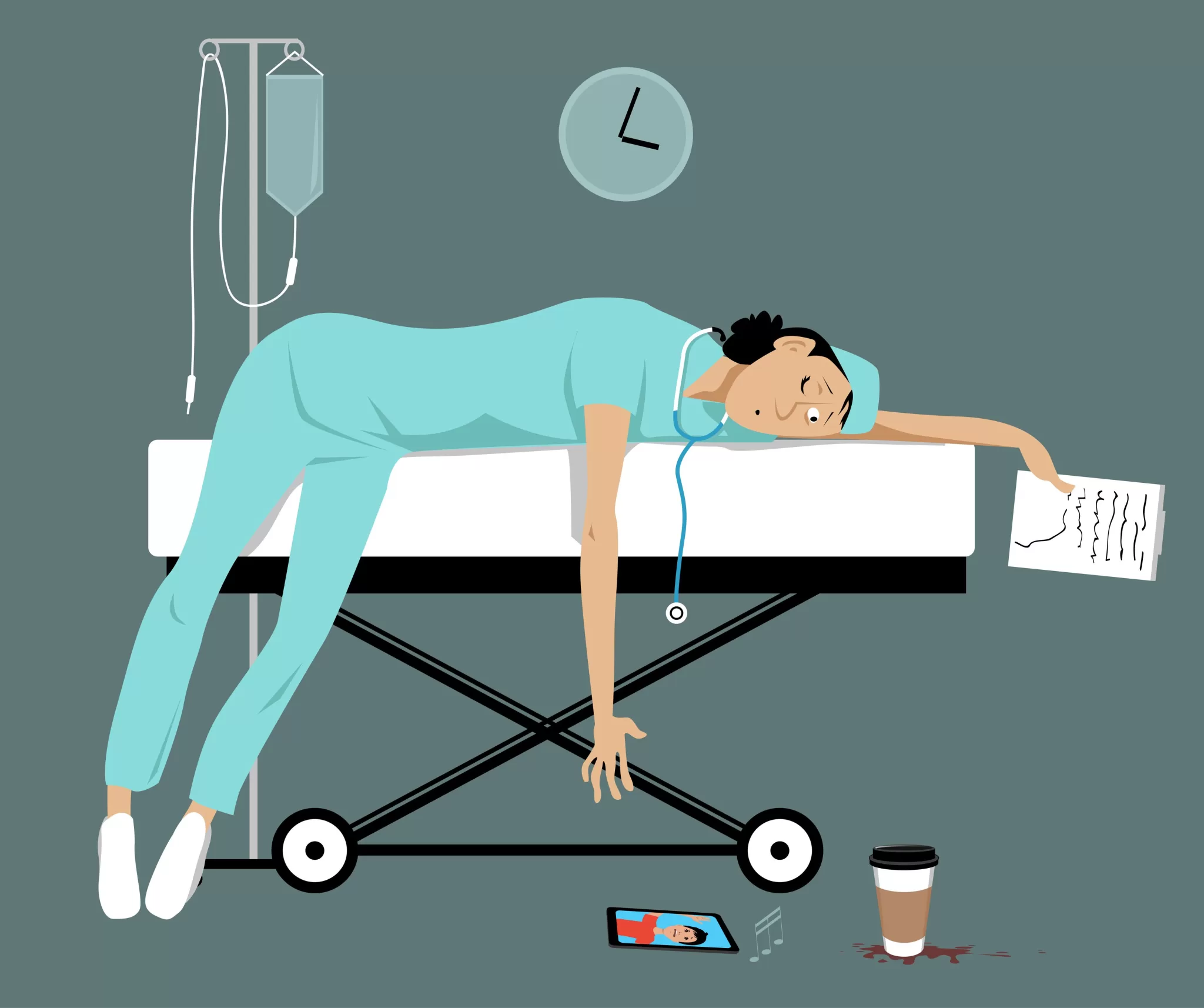
The Truth about Physician Burnout: A National Crisis
Physicians are not “burning out”. Physicians are being “driven out.” Call this crisis what it is… Abuse. Try telling an emotionally abused spouse that they need “mindfulness training”. You’ll get a mouthful of mindful. Offer deep breathing classes to treat your toxic workplace. Employees will hold their breath to leave. Abuse cannot be treated with yoga. The 400 physician suicides each year are not from weakness within physicians. The brightest and best are being poisoned by an “industry” that abuses them. Calling this crisis “Burnout” is only a convenient way for the “industry” to deny its role in the destruction of a noble profession. “Healthcare does not need to change, it’s these physicians that need to change,” says the Chief ...
Oatmeal Health Expands Cancer Screening Services to Arizona and Announces a Partnership with El Rio Health
Oatmeal Health Startup Partners with El Rio Health to Expand Lung Cancer Screenings to Underserved Americans In Arizona Oatmeal Health, a technology-enabled virtual nodule cancer clinic and patient engagement startup providing high-quality lung cancer screenings for high-risk underserved Americans, today announced a partnership with El Rio Health, an FQHC with 13 locations in Tucson Arizona. Doug Spegman M.D., MSPH, FACP, Chief Clinical Officer for El Rio Health “Partnering with Oatmeal Health on this proof-of-concept project is important in terms of advancing lung cancer screening as a public health initiative. Equally important is bringing this opportunity to the patients we serve within the community health center movement who frequently suffer disproportionately, barriers to healthcare and lack of access to innovations in ...