Share this article and save a life!
Healthcare AI just had one of its biggest funding weeks of 2026.
And most healthcare executives still have no idea what was just funded, or why it matters for their organizations.
Here is what the capital flow looks like right now.
Venture investors poured hundreds of millions into healthcare AI companies in May 2026 alone. The themes driving these rounds are not what most people expect. It is not chatbots. It is not consumer wellness apps. The money is going into clinical infrastructure.
Three categories are dominating the investment thesis this month:
1. Diagnostic automation, AI tools that read imaging, pathology slides, and lab results faster and more accurately than traditional workflows.
2. Care coordination intelligence, platforms that identify high-risk patients earlier, close care gaps automatically, and reduce unnecessary ER visits.
3. Revenue cycle automation, AI that handles claims, denials, and coding at a scale no human team can match.
Why does this matter to you as a healthcare leader?
Because the companies receiving this capital today will be the vendors knocking on your door in 12 to 24 months. Understanding what is being built now helps you make smarter procurement and partnership decisions later.
There is also a less obvious signal here.
When institutional capital concentrates in a specific category, it accelerates the timeline for that technology to reach clinical adoption. Reimbursement pathways follow funding. Regulatory submissions follow funding. Integration partnerships follow funding.
In other words, the investment activity of May 2026 is a preview of what your clinical and operational environment will look like by 2027 and 2028.
The critical question for hospital systems and FQHCs alike is not whether to adopt AI. That debate is essentially over. The real question is which AI partners will have the financial durability to still be standing when your contracts come up for renewal.
Startups that raised 18 months ago and spent heavily on growth are now entering their most vulnerable window. New entrants funded in 2026 are starting leaner, more focused, and more integrated with existing EHR infrastructure.
That changes the vendor evaluation calculus entirely.
🔍 The smartest health systems are not just evaluating AI tools. They are evaluating the balance sheets and runway behind those tools.
Are you tracking the funding landscape as part of your vendor strategy?
♻️ Repost if healthcare leaders should follow the money to understand where medicine is heading next.
👉 Follow me for daily, real-time updates on healthcare technology and business news.
Share this article and save a life!
Author:
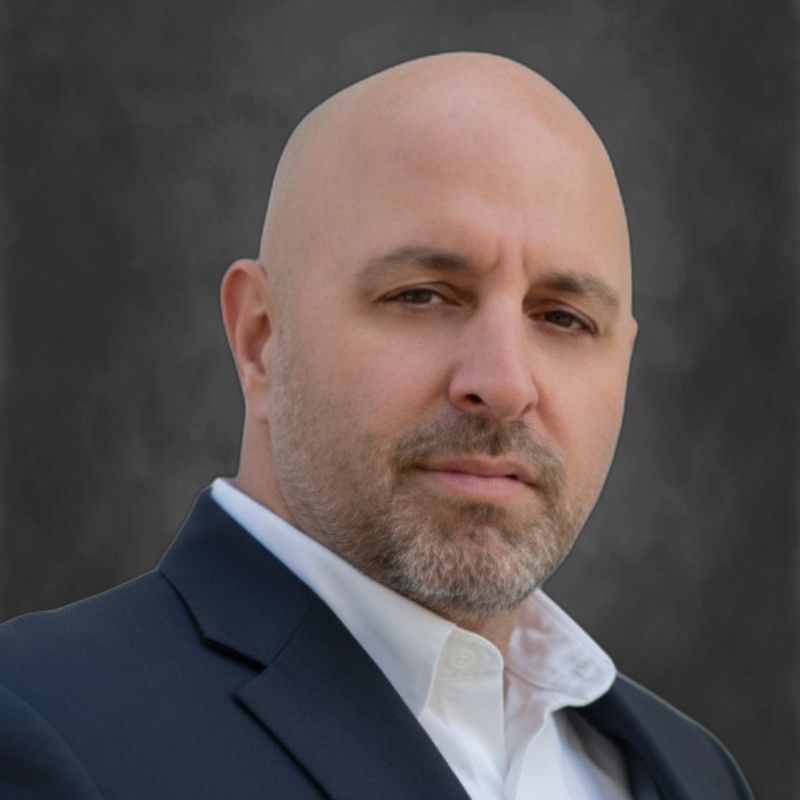
CEO/Co-Founder @ Oatmeal Health | AI Lung Cancer Screening | Almost Became a Doctor | Engineer | Follow to Share What I’ve Learned Along the Way
I help patients get the care they need earlier, preventing late-stage cancer.
That’s been the throughline across three companies and almost 20 years in healthcare. At ReferralMD, we fixed broken referral networks so patients didn’t fall through the cracks. At Oatmeal Health, it’s lung cancer: building the diagnostic and screening infrastructure so the 85% of cases caught too late get caught early instead.
Today as CEO of Oatmeal Health, I lead a team embedding AI into radiology workflows to turn routine lung CT scans into reimbursable cancer risk assessments. We partner with FQHCs to reach underserved communities, and with health systems and payers to make early detection economically sustainable. Think HeartFlow or Cleerly, but for lungs.
Between companies, I advised at Techstars and Plug and Play, mentoring founders building in digital health. That experience shaped how I think about what separates companies that ship from companies that stall: distribution, reimbursement, and clinical trust, not just technology.
I’m a CancerX alumnus, a 3x healthcare founder, and someone who believes the biggest problems in cancer aren’t scientific. They’re operational.
We’re hiring mission-driven builders at Oatmeal Health. If you want to work on something that matters, reach out.
When I’m not working, I’m traveling, mentoring, and keeping up with one very energetic husky. 🐾
Substack – The Oatmeal Bite:
Millions of patients get less care because of who they are, where they live, or how they look. I’m fighting to change that. CEO @OatmealHealth, a startup built for the underserved. The Oatmeal Bite: intel for clinicians, investors, and advocates.
Jonathan Govette
CEO of Oatmeal Health
Substack:
https://oatmealhealthjonathangovette.substack.com/