Share this article and save a life!
Revenue up 10x. Sequoia and First Round both said yes. 🔬
When I read that Healthleap’s revenue grew more than tenfold over the past year, I sat with that number for a minute. That is not typical Series A traction. That is a signal that hospitals are not just piloting this platform. They are paying for it at scale.
Healthleap just closed $38 million in combined seed and Series A funding, according to TechCrunch. The $8 million seed was co-led by Sequoia Capital and First Round Capital. The $30 million Series A was led by Hummingbird Ventures. The company is not disclosing its valuation.
Founded in South Africa in 2022 by siblings Jemima and Josiah Meyer, Healthleap started as a clinical nutrition tool for dietitians. Then they saw the bigger problem and pivoted hard.
The core insight is worth understanding:
🔹 Structured EHR fields capture labs, vitals, and weights
🔹 Clinicians’ written notes hold the real diagnostic signals: poor appetite, weight loss, muscle loss, trouble swallowing
🔹 Healthleap’s language models extract affirmative and negated mentions of those clinical concepts nightly
🔹 Every adult inpatient’s record gets scored and delivered into care team workflows each morning
🔹 The software does not diagnose. It flags. That distinction matters for adoption and regulatory exposure.
The platform is now live in more than 50 hospitals, including Penn Medicine, Cedars-Sinai, and Emory Healthcare. Current focus: malnutrition and delirium. Roadmap: more than 40 major conditions, plus expansion into outpatient and home care.
As a founder, the structure of this round tells a story. Sequoia and First Round rarely co-lead the same seed. That combination signals conviction before traction was obvious. Then Hummingbird leading the A at 10x revenue growth means they priced a company that has already earned the right to scale.
The hospitals running this platform are not doing it because it is interesting. They are doing it because conditions like malnutrition and delirium are notoriously underidentified on admission, and both carry serious cost and outcome implications if caught late.
The AI here is not replacing a clinician’s judgment. It is doing the exhaustive chart review at 2 a.m. that no one has capacity to do manually for every inpatient. That is a workflow fit story, not just an AI story. And that distinction is why it is actually deploying in 50 hospitals rather than sitting in a proof-of-concept.
The expansion into outpatient and home care is the move to watch. The acute setting proved the model. The next surface area is where the volume lives.
👉 Follow Jonathan Govette, CEO of Oatmeal Health, for daily healthcare insights on LinkedIn. Deeper dives in The Oatmeal Bite on Substack: https://news.oatmealhealth.com
Share this article and save a life!
Author:
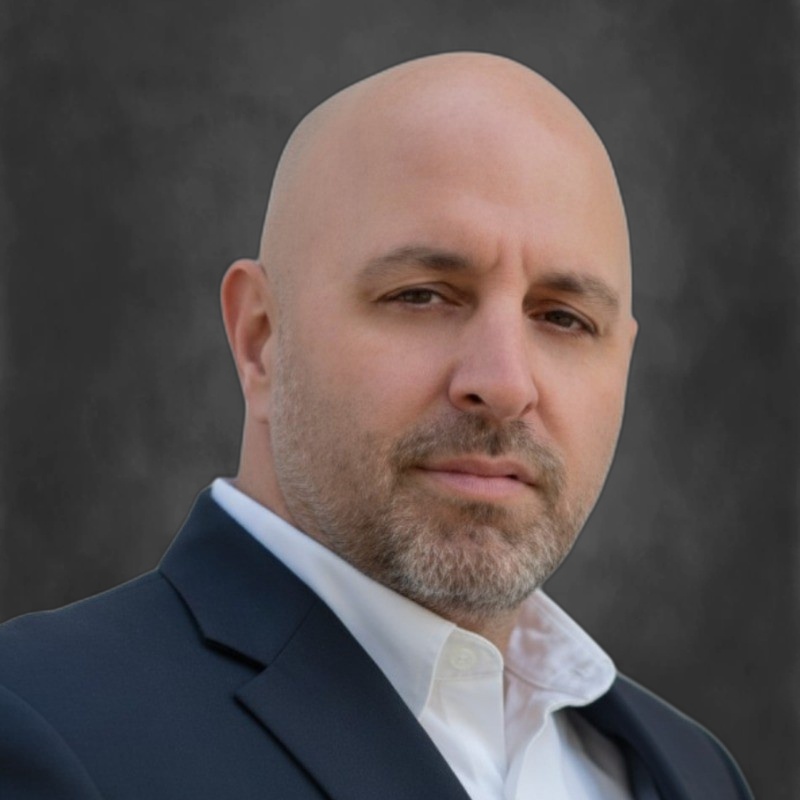
CEO/Co-Founder @ Oatmeal Health | AI Lung Cancer Screening | Almost Became a Doctor | Engineer | Follow to Share What I’ve Learned Along the Way
I help patients get the care they need earlier, preventing late-stage cancer.
That’s been the throughline across three companies and almost 20 years in healthcare. At ReferralMD, we fixed broken referral networks so patients didn’t fall through the cracks. At Oatmeal Health, it’s lung cancer: building the diagnostic and screening infrastructure so the 85% of cases caught too late get caught early instead.
Today as CEO of Oatmeal Health, I lead a team embedding AI into radiology workflows to turn routine lung CT scans into reimbursable cancer risk assessments. We partner with FQHCs to reach underserved communities, and with health systems and payers to make early detection economically sustainable. Think HeartFlow or Cleerly, but for lungs.
Between companies, I advised at Techstars and Plug and Play, mentoring founders building in digital health. That experience shaped how I think about what separates companies that ship from companies that stall: distribution, reimbursement, and clinical trust, not just technology.
I’m a CancerX alumnus, a 3x healthcare founder, and someone who believes the biggest problems in cancer aren’t scientific. They’re operational.
We’re hiring mission-driven builders at Oatmeal Health. If you want to work on something that matters, reach out.
When I’m not working, I’m traveling, mentoring, and keeping up with one very energetic husky. 🐾
Substack – The Oatmeal Bite:
Millions of patients get less care because of who they are, where they live, or how they look. I’m fighting to change that. CEO @OatmealHealth, a startup built for the underserved. The Oatmeal Bite: intel for clinicians, investors, and advocates.
Jonathan Govette
CEO of Oatmeal Health
Substack:
https://oatmealhealthjonathangovette.substack.com/