Share this article and save a life!
CMS just removed 189,000 people from ACA coverage. Here is what that means.
This is not a small audit finding. It is a signal that the rules of federal healthcare enrollment enforcement are being rewritten in real time.
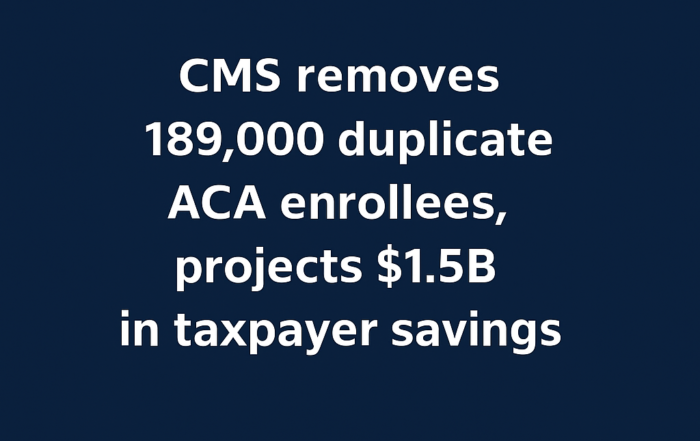
According to a CMS press release published October 14, the agency identified 189,000 people in 2026 who had subsidized Obamacare coverage through the Federal Marketplace while also enrolled in Medicare, Medicaid, or CHIP, or who were listed as deceased. CMS ended their subsidies.
The projected savings: approximately $1.5 billion over the next year.
That number gets bigger when you zoom out. CMS Administrator Dr. Mehmet Oz stated the administration has already saved nearly $6 billion since restoring duplicate enrollment enforcement in 2025. In that first year, CMS ended duplicate Obamacare subsidies for approximately 551,000 enrollees already receiving Medicaid.
How did we get here? According to CMS, the Biden Administration paused Medicaid and CHIP periodic data matching checks for the duration of its term, four full years. That pause allowed hundreds of thousands of individuals to be enrolled in multiple federal health insurance programs simultaneously.
The mechanics matter:
🔹 Federal regulations require Exchanges to periodically check for dual enrollments in Medicaid, a process called Medicaid/CHIP Periodic Data Matching.
🔹 These checks were strengthened under the first Trump Administration and required at least twice a year.
🔹 Individuals flagged for duplicate coverage receive 30 days to dispute the finding before subsidies are ended.
🔹 After 30 days, appeals are still possible, and those with lapsing Medicaid coverage can regain marketplace subsidies.
At the same time, HHS Secretary Robert F. Kennedy Jr. delegated authority to CMS to exclude individual providers from Medicare and Medicaid. According to TechTarget’s reporting, that authority had been held exclusively by the HHS Office of Inspector General since 1988. The OIG has banned nearly 85,000 entities over that time.
Now CMS and OIG both have that power.
Two different enforcement actions, announced the same day, pointing in the same direction: the federal government is tightening its grip on who gets paid and who gets covered.
What most people are glossing over is the structural shift underneath the headline numbers. Fraud enforcement in federal health programs has historically been slow, siloed, and reactive. Putting exclusion authority inside CMS, the agency that actually runs Medicare and Medicaid, collapses the gap between investigation and action.
That can be a good thing. Faster removal of bad actors protects program dollars and patients. But it also concentrates enormous administrative power in a single agency led by a political appointee, with fewer checks between allegation and consequence for providers.
At Oatmeal Health, we work with community health centers and safety-net providers every day. The vast majority are doing the work with integrity, on thin margins, in communities that have nowhere else to go. Broader enforcement authority, applied carelessly, can sweep in legitimate providers alongside bad actors.
The goal of protecting taxpayer dollars is right. The method and the accountability structures around it deserve serious scrutiny.
👉 Follow Jonathan Govette, CEO of Oatmeal Health, for daily healthcare insights on LinkedIn. Deeper dives in The Oatmeal Bite on Substack: https://news.oatmealhealth.com
Share this article and save a life!
Author:
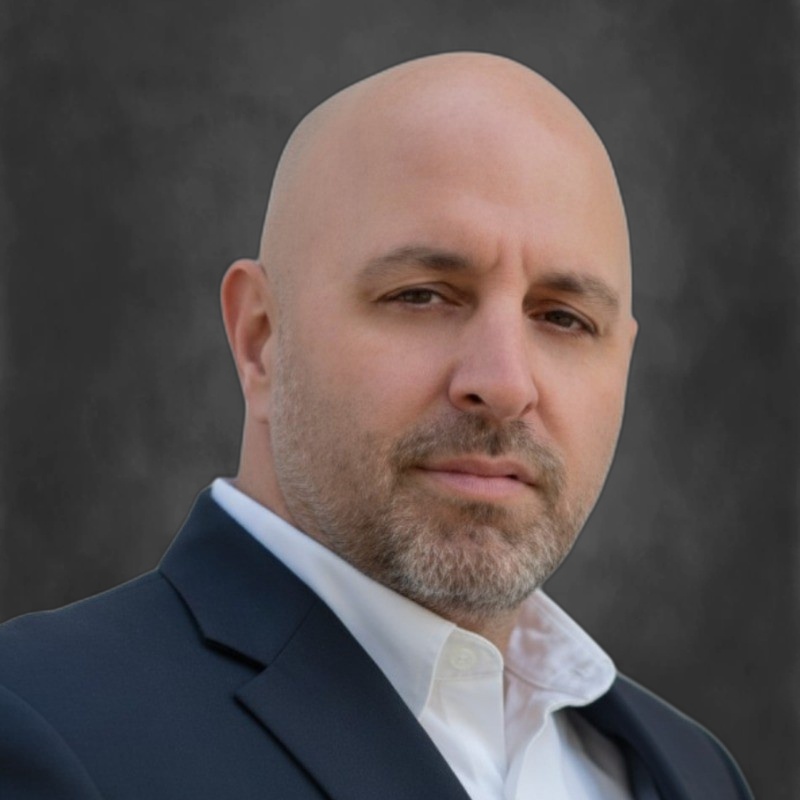
CEO/Co-Founder @ Oatmeal Health | AI Lung Cancer Screening | Almost Became a Doctor | Engineer | Follow to Share What I’ve Learned Along the Way
I help patients get the care they need earlier, preventing late-stage cancer.
That’s been the throughline across three companies and almost 20 years in healthcare. At ReferralMD, we fixed broken referral networks so patients didn’t fall through the cracks. At Oatmeal Health, it’s lung cancer: building the diagnostic and screening infrastructure so the 85% of cases caught too late get caught early instead.
Today as CEO of Oatmeal Health, I lead a team embedding AI into radiology workflows to turn routine lung CT scans into reimbursable cancer risk assessments. We partner with FQHCs to reach underserved communities, and with health systems and payers to make early detection economically sustainable. Think HeartFlow or Cleerly, but for lungs.
Between companies, I advised at Techstars and Plug and Play, mentoring founders building in digital health. That experience shaped how I think about what separates companies that ship from companies that stall: distribution, reimbursement, and clinical trust, not just technology.
I’m a CancerX alumnus, a 3x healthcare founder, and someone who believes the biggest problems in cancer aren’t scientific. They’re operational.
We’re hiring mission-driven builders at Oatmeal Health. If you want to work on something that matters, reach out.
When I’m not working, I’m traveling, mentoring, and keeping up with one very energetic husky. 🐾
Substack – The Oatmeal Bite:
Millions of patients get less care because of who they are, where they live, or how they look. I’m fighting to change that. CEO @OatmealHealth, a startup built for the underserved. The Oatmeal Bite: intel for clinicians, investors, and advocates.
Jonathan Govette
CEO of Oatmeal Health
Substack:
https://oatmealhealthjonathangovette.substack.com/